
Picking the right Beirut engineering consulting bureau for your Dubai project is about more than just flicking through a portfolio of impressive buildings. You’re looking for a partner whose experience in this unique market is second nature—part of their DNA. A top-tier firm isn’t just defined by what they build, but how they build it, masterfully blending aesthetic vision with a rock-solid understanding of Dubai's specific regulations and environmental realities.
What Defines a Top Engineering Bureau in Dubai
In Dubai’s high-stakes construction world, a consultant's real value comes down to their ability to turn ambitious ideas into tangible, compliant, and durable assets. This isn't something you learn overnight; it's a skill honed over years of hands-on work within the city's complex ecosystem.
A premier firm has a deep, practical knowledge that shines through in every decision, from the first sketch to the final sign-off. They don’t just follow the rulebook; they anticipate hurdles and engineer solutions that are both creative and, crucially, buildable in the local context. Their reputation isn't just with clients—it's with the authorities who give projects the green light.
Proven Track Record and Regional Authority
Experience is the single biggest differentiator. A bureau that’s been in the Dubai market for a long time offers a level of insight that newer firms just can't compete with. They’ve seen it all—economic cycles, evolving building codes, and technological shifts—and have a wealth of practical wisdom to show for it.
Firms with decades of experience in the UAE's growth story provide unparalleled value. They have managed countless projects, from bespoke villas and mid-rise residential buildings to commercial complexes and industrial facilities. This long history demonstrates the kind of trust developers put in seasoned experts.
This kind of long-term presence gives you real, tangible benefits:
- Established Relationships: They already have strong professional ties with key players like Dubai Municipality and DEWA, which can make the approvals process much smoother.
- Predictive Problem-Solving: They can spot potential snags—whether it’s with soil conditions, material supply chains, or tricky regulatory interpretations—before they turn into expensive delays.
- Contextual Design: Their designs for villas, low-rise, and mid-rise buildings are instinctively suited to the local climate and cultural expectations, ensuring the final structure is both functional and built to last.
Navigating Local Nuances with Precision
Every city has its own quirks, and Dubai is no different. A top-tier engineering consultant knows these subtleties inside and out. They understand which materials will stand up to the punishing summer heat and how to design MEP systems for peak efficiency in a desert climate, especially for residential and commercial projects up to G+12.
The true test of a consultant's worth is their ability to make the complex simple for their client. They act as a translator between your vision, the contractor's execution, and the authorities' requirements, making sure nothing gets lost in translation.
This local expertise is priceless. While plenty of firms can design a beautiful building, only a seasoned local partner can ensure it gets built on time and on budget, without getting tangled up in endless regulatory red tape. For a deeper look at what sets the best firms apart, you can learn more about the critical role of an Arab engineering bureau in our related article.
At Freeline Engineering Consultants, we bring together nearly three decades of dedicated Dubai experience with a forward-thinking design philosophy. We pride ourselves on this exact blend of deep local knowledge and expressive creativity, making sure your project is not just beautifully designed but expertly steered through every single stage.
If you’re ready to partner with a firm that truly understands what success looks like in Dubai, let's talk about your vision. Contact us today to discuss how our proven expertise can bring your project to life.
Vetting Technical Skills for Your Project Vision
A grand vision is just the starting point. The real success of your project hinges on the technical muscle that brings that vision to life. When you’re choosing a Beirut engineering consulting bureau for a project in Dubai, you have to look past the glossy portfolio and get to the heart of their technical skills. It's all about matching their in-house expertise with the specific demands of your building, whether it's a luxury villa, a commercial complex, or a mid-rise residential tower.
This isn’t just about asking if they can do the job. It’s a deep dive into how they solve real-world engineering puzzles. You need a partner who truly gets structural efficiency, seamless MEP (Mechanical, Electrical, and Plumbing) integration, and smart material choices for Dubai’s tough climate.
Assessing Core Engineering Disciplines
A top-tier consultant isn't just a project manager; they have a strong, integrated team of experts under one roof. When a firm relies too heavily on outside specialists, it’s a recipe for communication breakdowns and fuzzy accountability. Your goal is to find a bureau where the architectural, structural, and MEP teams are in sync from day one.
You can get a feel for this during your initial meetings by asking pointed questions:
- On Structural Integrity: "Can you show me a residential or commercial project where your structural design actually created more usable floor space without compromising safety?"
- On MEP Integration: "Walk me through how you coordinate MEP systems with the architectural vision. How do you ensure aesthetics and function both win?"
- On Material Science: "For projects here in Dubai, what specific materials have you used to fight humidity and cut down on long-term maintenance in villas or low-rise buildings?"
These questions shift the conversation from vague promises to concrete examples, revealing the real depth of their hands-on knowledge.
The real strength of an engineering bureau isn’t in the list of services they offer, but in how seamlessly they integrate them. A cohesive in-house team is the engine room of a successful project, making sure every single part works in harmony.
This is the typical workflow, moving from the big structural ideas to the nitty-gritty of detailed engineering and finally, project management.
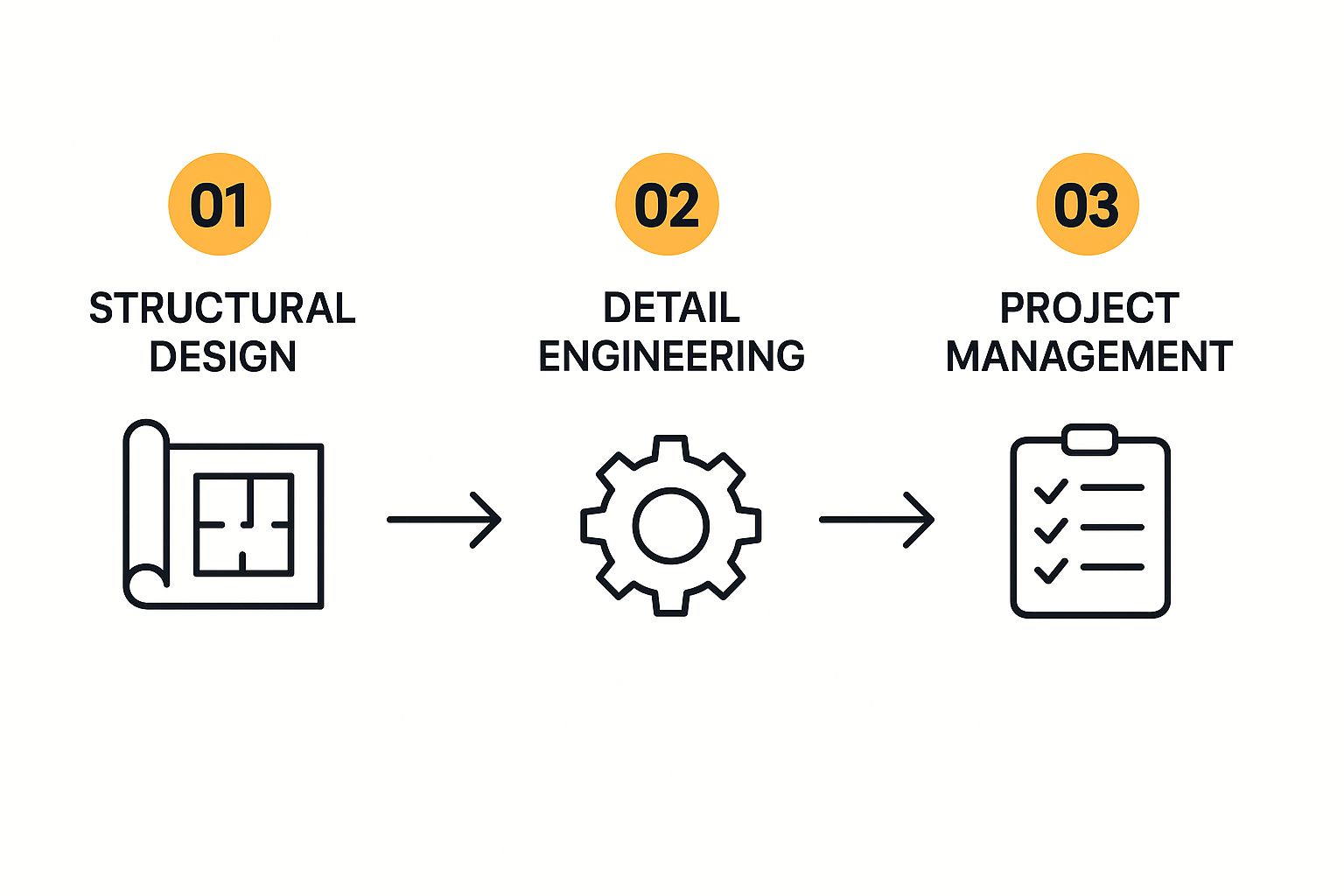
The flow shows that a solid project is built in stages, with each step building logically on the last—a process that’s always best handled by a single, unified team.
To help you stay organized during this crucial phase, we've put together a simple checklist. Use it to systematically go through each potential firm's technical capabilities and make sure they have what it takes for a demanding Dubai project.
Key Technical Expertise Vetting Checklist
| Vetting Area | What to Look For | Why It Matters for Dubai Projects |
|---|---|---|
| Structural Engineering | Experience with residential and commercial structures, soil analysis, and efficient load-bearing solutions. | Dubai's varied soil conditions and building codes demand specialized structural knowledge for any project size. |
| MEP Systems Design | In-house team with a track record of efficient HVAC systems designed for high heat and humidity. | An inefficient MEP system leads to sky-high operational costs and comfort issues, especially in villas and offices. |
| Materials Expertise | Knowledge of climate-specific materials (e.g., anti-corrosion, UV-resistant) and sustainable options. | The right materials are critical for durability and longevity in a harsh desert environment. |
| Value Engineering | Ability to optimize designs for cost-effectiveness without sacrificing quality or functionality. | Value engineering ensures your investment is maximized, delivering a high-quality building within budget. |
| Local Code Compliance | Deep understanding of Dubai Municipality (DM) and other local authority regulations. | Navigating local byelaws is non-negotiable for smooth approvals and project timelines. |
This checklist isn't exhaustive, but it provides a solid framework. It pushes the conversation beyond surface-level claims and helps you identify a team that thinks critically about the unique challenges of building in Dubai.
Scrutinising Past Projects for Technical Excellence
Don't just flip through photos of finished buildings—ask for the story behind them. A firm worth its salt will be happy to share case studies or walk you through the details of projects similar to yours. As you do, keep an eye out for the details that signal real technical skill.
Look for signs of clever problem-solving. Maybe they designed an innovative cooling system that cut energy use by 20%, or a structural layout that flooded a villa with natural light while meeting all load requirements. These are the signs of a team that doesn’t just follow plans but actively adds value with smart engineering. Our guide on structural engineering in Dubai dives deeper into what separates the good from the truly exceptional.
By being this thorough, you ensure the firm you partner with has the right skills to not just build your vision, but make it better. This careful approach is what protects your investment and sets the stage for a building that is efficient, durable, and perfectly at home in its environment.
At Freeline Engineering Consultants, our nearly three decades of experience are built on this kind of comprehensive, in-house expertise. Our teams work hand-in-hand on every project, from luxury villas to complex industrial facilities, to make sure your vision is realized with technical precision and creative intelligence.
If you're looking for a partner with the proven technical skills to deliver your Dubai project flawlessly, contact us to schedule a consultation.
Mastering Dubai's Regulatory and Permitting Process
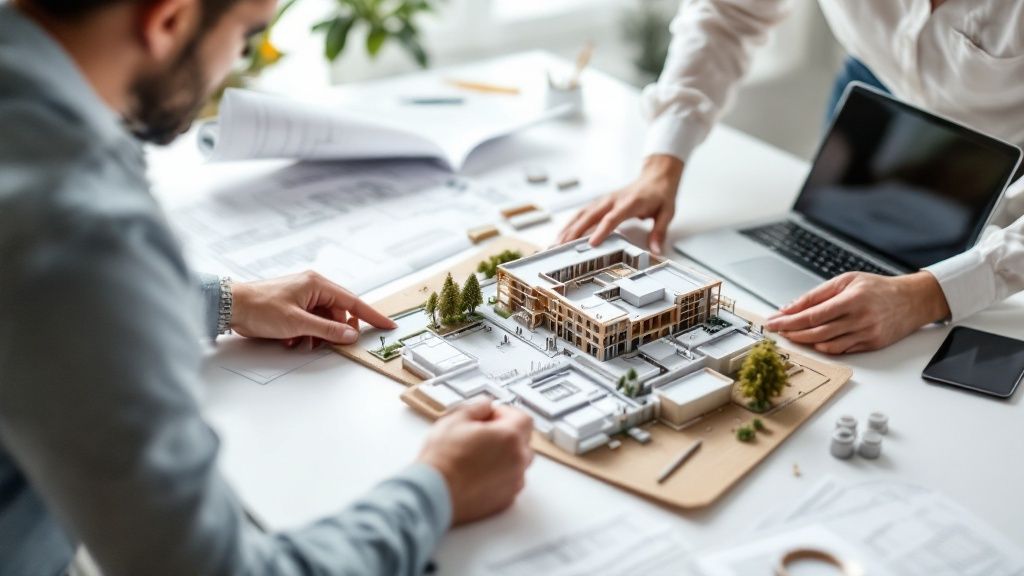
A brilliant design is just an idea on paper until it earns the stamp of approval from Dubai's authorities. This is where the theoretical meets the practical, and where a consultant's local knowledge is no longer a benefit—it’s an absolute necessity.
Navigating the regulatory maze of Dubai is a discipline in itself. It demands more than just knowing the rules; it requires a deep, working familiarity with the people and processes behind them.
Your project's timeline and budget are directly tied to how efficiently your chosen Beirut engineering consulting bureau manages this critical phase. A firm with deep roots in Dubai has spent years, even decades, building relationships and understanding the specific expectations of bodies like Dubai Municipality, DEWA (Dubai Electricity and Water Authority), and various free zone authorities. This isn't about finding shortcuts; it's about precision.
Anticipating Hurdles Before They Appear
A seasoned firm doesn’t just react to regulatory feedback—it anticipates it.
Imagine you have a design for a commercial complex or a G+8 residential building. An experienced consultant will immediately spot potential red flags that a less-versed firm might miss. They know, for instance, exactly how Dubai Municipality scrutinizes fire safety and accessibility plans, or the specific technical data DEWA requires for a No Objection Certificate (NOC) on a high-load facility.
This proactive approach means preparing documentation that’s flawless from the very first submission. It involves pre-emptively addressing common sticking points related to plot boundaries, utility connections, or environmental compliance. The result? A dramatically reduced cycle of submissions, rejections, and revisions that can otherwise stall a project for months.
The Art of Flawless Documentation and Communication
Think of the permit application process as a conversation with regulatory bodies. Your consultant is your chief negotiator, and the language of this conversation is documentation. A firm that excels here provides submissions that are not just complete but crystal clear, leaving no room for misinterpretation.
So, what does this look like in practice?
- Detailed and Organized Submissions: Every drawing, calculation, and report is meticulously prepared and organized according to the exact format each authority requires.
- Clear Justification: When a design includes a unique feature or a slight deviation from standard practice, it’s accompanied by clear engineering justification that demonstrates compliance with the intent of the code.
- Professional Follow-Up: They maintain open lines of communication with reviewers, allowing them to clarify minor points quickly and keep the application moving forward.
A consultant's true value is measured in the problems you never have to deal with. Their ability to secure approvals without drama is a direct reflection of their experience, diligence, and the professional respect they’ve earned from local authorities over years of consistent, high-quality work.
This mastery extends to understanding evolving requirements. With the growing emphasis on sustainability, for instance, a deep knowledge of the latest standards is essential. Our team's expertise in navigating the Dubai Green Building Regulations ensures your project isn't just compliant today, but also future-proofed.
Asking the Right Questions to Find the Right Partner
When vetting a potential firm, you need to dig deeper than "Do you handle approvals?" Ask specific, process-oriented questions that reveal their true competence:
- "Can you walk me through your exact process for obtaining a DEWA NOC for a project of this scale?"
- "Describe a time you encountered an unexpected regulatory hurdle with Dubai Municipality. How did you resolve it?"
- "Who on your team is the primary point of contact with the authorities, and what is their experience?"
Their answers will tell you everything you need to know. A confident, detailed response indicates a team that has been through this process countless times. They see compliance not as a bureaucratic task, but as an integral part of the design and engineering workflow.
At Freeline Engineering Consultants, we have spent nearly three decades mastering this process. Our name is known and respected within Dubai's regulatory circles because we deliver submissions that are accurate, comprehensive, and fully compliant the first time. We manage the entire approvals journey proactively, ensuring your vision moves from blueprint to reality without costly and frustrating delays.
Building a True Client-Consultant Partnership
Technical expertise and regulatory know-how are crucial for any project's success, but they're only part of the story. The very best outcomes—the ones that run smoothly and truly impress—are built on something far more human: a genuine partnership. This isn't just about a transaction; it's a collaborative alliance where your success is the consultant's top priority.
When you're choosing a Beirut engineering consulting bureau, looking for this human element is just as vital as reviewing their technical portfolio. You need a team that feels like a natural extension of your own, one that gets your vision and is invested in making it a reality. This all comes down to their communication style, how they manage projects, and their commitment to being upfront from the very start.
Any project will hit a few bumps. A transactional consultant just reports the problems. A true partner helps you find the solutions.
Evaluating Communication and Transparency
Great communication is the lifeblood of a strong partnership. I’m not just talking about regular check-ins; it’s about the quality and clarity of that information. A top-tier firm will make it a priority to keep you in the loop, breaking down complex technical details so you always know what’s going on. No surprises.
Pay close attention to how they communicate during your initial meetings.
- Do they listen more than they talk? A great partner wants to understand your goals, concerns, and priorities before they start throwing out their own ideas.
- Are their answers direct and clear? If you ask specific questions about timelines or potential hurdles and get vague responses, that could be a red flag.
- What's their reporting process like? Ask how often you’ll get updates and what format they use. You want to know if you'll have a dedicated point of contact and if they'll alert you to issues proactively.
How they handle these first conversations is a pretty solid indicator of what it will be like to work with them for the entire project.
Assessing Their Approach to Project Management
A consultant’s approach to project management tells you a lot about their dedication to collaboration. A rigid, top-down style can create friction and slow things down. What you really want is a flexible, cooperative approach that creates a sense of shared ownership. You need a team that works with you and your contractors, not just tells them what to do.
The real measure of a successful partnership is how the team navigates the unexpected. A bureau that approaches problems collaboratively, seeking input and working towards a shared solution, is an invaluable asset. Their goal is to solve the problem, not assign blame.
This collaborative spirit is what keeps projects on track. For a deeper look at how this all comes together on-site, our guide on building construction project management offers some great insights into creating a seamless workflow. Getting this synergy right ensures everyone is aligned, which helps minimize delays and maximize efficiency.
Setting the Foundation for Trust
Building a real partnership starts with setting clear expectations from day one. Before you sign anything, have an open conversation about roles, responsibilities, and how you’ll communicate. This isn't about micromanaging; it's about creating a framework of mutual respect and understanding that prevents problems later on.
A trustworthy partner will welcome this kind of talk. They'll be transparent about their processes, clear about deliverables, and honest about potential risks. This is the trust that transforms a standard client-vendor relationship into a powerful alliance focused on achieving your vision.
At Freeline Engineering Consultants, we build all our client relationships on this principle of partnership. For nearly 30 years, we have acted as dedicated allies for our clients, guiding them with transparency, collaboration, and an unwavering commitment to their goals.
If you're ready for a partner who is as invested in your project's success as you are, contact us for a consultation.
Making the Final Choice for Your Dubai Project

You’ve done the hard work of vetting and building rapport, and now the final decision is in sight. This is the moment you shift from evaluation to commitment, picking the one Beirut engineering consulting bureau that will act as the custodian of your vision. A confident choice comes from a clear comparison of proposals, sharp contract negotiations, and a final gut check that tells you you’ve found a true partner.
Making this call isn't just about finding the lowest price. It’s about spotting the proposal that delivers the greatest overall value—a blend of a fair price, a crystal-clear scope of work, and the peace of mind that your project is in the safest hands.
Decoding Proposals Beyond the Bottom Line
When the proposals arrive, the temptation is to jump straight to the final fee. Try to resist that urge. The most telling details are often buried in the scope of services, deliverables, and, crucially, the exclusions. A proposal that looks like a bargain on the surface might omit critical services, setting you up for expensive change orders down the road.
To compare apples to apples, you need to look for absolute clarity in what’s being offered.
- Scope Definition: Does the proposal map out every stage of work, from schematic design all the way through to construction supervision? Vague descriptions are a major red flag.
- Deliverables: Are the outputs—the actual things you'll receive—clearly listed? This should specify detailed drawings, structural calculations, MEP schematics, and authority submission documents.
- Risk Mitigation: How does the firm plan to handle the unexpected? A solid proposal will outline its approach to managing things like unforeseen site conditions or sudden regulatory changes.
This level of detail helps you see which firm has truly grasped your project's needs and priced its services honestly and completely.
Negotiating a Contract That Protects Your Interests
Once you've zeroed in on your preferred partner, it's time to talk contracts. This document is the bedrock of your working relationship, so it's absolutely essential to get it right. A good contract protects both parties and sets unambiguous expectations for the entire project.
You'll want to focus on a few key clauses that are critical for safeguarding your investment.
- Milestone-Based Payments: Tying payments to the completion of specific, measurable milestones is standard practice for a reason. It ensures you're paying for tangible progress, not just for time spent.
- Clear Project Timelines: The contract must include a detailed project schedule with firm dates for major deliverables and approvals. This builds accountability and a shared understanding of the project's pace.
- Defined Change Order Process: Changes are almost inevitable in construction. Having a well-defined process for handling them—including how they're costed and approved—is the best way to prevent disputes later on.
A fair contract isn't about one side gaining an advantage; it’s about creating alignment. Think of it as a tool that turns goodwill into a concrete plan everyone can rely on when challenges pop up.
By nailing down these practical details, you create a framework for a smooth and professional partnership from day one.
The Final Checklist Before You Sign
Before putting pen to paper, run through one last mental checklist. This is your final opportunity to make sure every question has been answered and that you feel completely confident in your choice.
- Reference Checks Completed: Have you actually spoken to past clients about their experience, especially on projects similar in scale and complexity to yours?
- Team Confirmation: Do you know the key people who will be assigned to your project? Are you comfortable with their experience and communication style?
- Insurance and Licensing Verified: Have you seen proof that the bureau holds all necessary professional liability insurance and is fully licensed to operate in Dubai?
This final review solidifies your decision, ensuring it’s grounded in diligent research and a clear understanding of the partner you’re about to bring on board.
At Freeline Engineering Consultants, we welcome this level of scrutiny because we're confident in the clarity and value we provide. Our proposals are transparent, and our contracts are built to foster strong, lasting partnerships. With nearly 30 years of dedicated experience in the region, we are not just another consulting engineering office; we are your partners in making your vision a reality.
Ready to partner with a firm that puts your success first? Contact Freeline Engineering Consultants today to discuss your project and see how our team can bring your vision to life.
Frequently Asked Questions
When you're choosing a Beirut engineering consulting bureau for a project in Dubai, a few key questions always come up. Here are some straightforward answers to the things people ask us most, designed to give you some clarity as you make your final call.
What Is a Realistic Timeframe for Design and Approval?
This is probably the number one question we get. For a typical residential or commercial building in Dubai (think G+4 to G+12), you should realistically budget between 6 to 10 months for the entire design and authority approval process.
Of course, that's not a hard and fast rule. The project's complexity plays a huge part, but the consultant's efficiency is the real game-changer. A bureau that has solid, long-standing relationships with entities like Dubai Municipality and DEWA can often shave significant time off that estimate. They know exactly what's needed, so their submissions are right the first time, cutting down on the endless back-and-forth that can bog a project down for months.
How Should I Compare Cost Proposals from Different Firms?
It’s easy to just look at the bottom line, but that's a mistake. A true comparison means digging into the details of what’s actually included in each proposal.
A good proposal will break everything down clearly:
- Schematic and Concept Design: The initial brainstorming and functional layout.
- Detailed Design: The nitty-gritty plans for everything—structural, MEP, architectural.
- Authority Approvals: All the paperwork and follow-up with Dubai's various authorities.
- Construction Supervision: The consultant’s eyes and ears on the ground during the build.
A low bid might look tempting, but it often leaves out critical services like on-site supervision. That can leave you exposed to extra costs and quality control headaches down the line. You have to weigh the fee against the firm’s experience. A reputable bureau with a portfolio of successful Dubai projects brings incredible value by minimizing risks—something that’s almost always worth the initial investment.
The best proposal isn't the cheapest; it's the most complete. It demonstrates a full understanding of your project and offers a transparent, all-inclusive plan to get it built right, without hidden costs or future surprises.
What Is the Consultant's Role During Construction?
A great consultant doesn't just hand over the drawings and walk away. Once construction starts, they become your technical watchdog on site. Their main job is to provide regular supervision, making sure the contractor is following the approved designs to the letter and hitting the quality standards you agreed on.
This means they’ll be reviewing the contractor’s material submittals, answering technical questions that pop up, and being present for key construction milestones to sign off on the work. A proactive consultant is there to protect the integrity of your project from start to finish. Make sure this level of involvement is spelled out in your agreement from day one. This hands-on approach is critical for ensuring quality and keeping the project on track.
Why Does Local Dubai Experience Trump International Prestige?
An impressive international portfolio is nice, but it's no substitute for deep, on-the-ground experience in Dubai. A bureau that knows the local market inside and out can anticipate problems an outsider would never see coming.
They understand the nuances of things like:
- Environmental Factors: Designing buildings that can handle the extreme heat, humidity, and the occasional sandstorm.
- Local Supply Chains: Knowing which materials are easily sourced and which local contractors are reliable.
- Regulatory Nuances: Having a real-world understanding of the processes at Trakhees, DDA, and Dubai Municipality—not just what’s written down, but how things actually get done.
This local knowledge is probably the single most important factor for a smooth project. It's what prevents costly delays, ensures you're fully compliant, and results in a building that's perfectly suited for its environment.
At Freeline Engineering Consultants, we’ve spent nearly three decades building our reputation on clear answers and proven results. Our deep roots in Dubai mean we navigate every project with confidence and skill.
If you’re looking for a partner who brings both technical skill and a total commitment to your project's success, let's start a conversation. https://www.freelineeng.ae