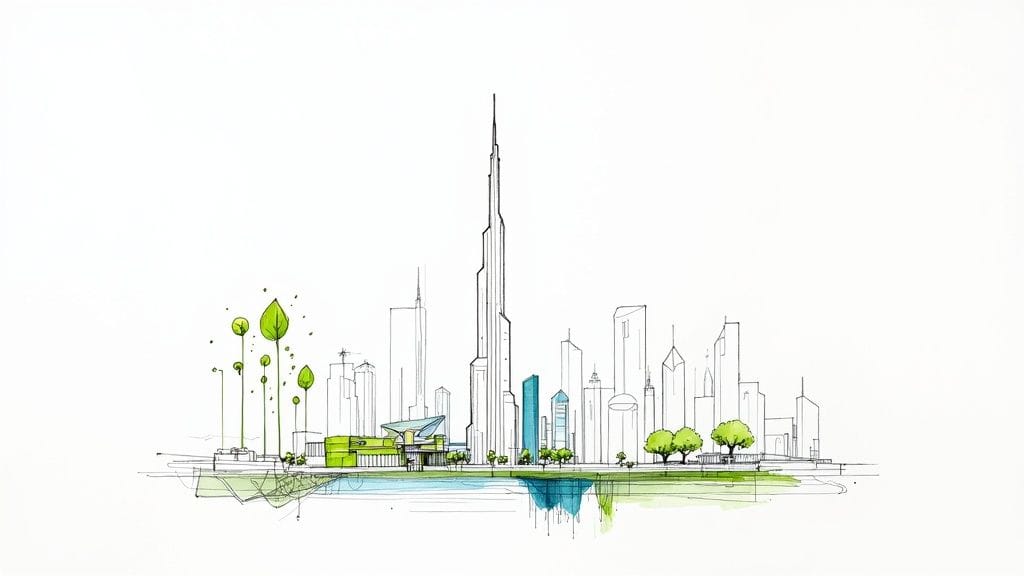
Dubai’s skyline is famous for its architectural marvels, but it's also a testament to a deep-seated commitment to a sustainable future. At the heart of this vision are the Dubai green building regulations—a mandatory framework pushing the city's construction industry toward greater environmental responsibility.
These aren't just suggestions; they are firm requirements for every new building project, setting a non-negotiable standard for sustainability across the board.
The Foundation of Sustainable Construction in Dubai
The central pillar of this entire framework is the Al Safat rating system. It's best to think of Al Safat not as a complicated hurdle, but as a clear, structured roadmap. Its goal is simple: to create buildings that are healthier for people and kinder to our planet.
Spearheaded by Dubai Municipality, these regulations are the engine driving the city's sustainable urban development. Al Safat works by categorizing buildings based on their green credentials, making sure every new structure meets specific environmental benchmarks. Before we dive into the specifics of Al Safat, it's helpful to understand the wider context of general green building certification requirements. This gives you a better appreciation for how Dubai has crafted its own unique and effective system.
Why Were These Regulations Created?
So, what was the driving force behind the Al Safat system? The goals were clear and practical:
- Slash Energy and Water Use: In a desert climate, lowering a building's operational footprint is absolutely crucial.
- Boost Public Health and Safety: Better ventilation, non-toxic materials, and improved indoor environmental quality lead to healthier spaces for everyone.
- Conserve Natural Resources: The regulations strongly encourage using sustainable and locally sourced building materials to reduce environmental impact.
To give you a clearer picture of how Al Safat works, here is a quick overview of its tiered rating system.
Al Safat Rating System at a Glance
This table breaks down the different levels of the Al Safat system, helping you quickly see how the requirements scale up.
| Rating Level | Mandatory Status | Primary Focus |
|---|---|---|
| Bronze Sa'fa | Mandatory | Basic requirements for energy and water efficiency, green materials. |
| Silver Sa'fa | Voluntary | Enhanced performance with more advanced sustainability features. |
| Gold Sa'fa | Voluntary | High-level sustainability with significant energy savings and eco-friendly practices. |
| Platinum Sa'fa | Voluntary | The highest standard, recognizing exceptional leadership in sustainable design. |
As you can see, while Bronze is the baseline for all new buildings, the Silver, Gold, and Platinum ratings offer a pathway for projects aiming to achieve even greater levels of sustainability.
Your Partner in Navigating Al Safat
Getting through these regulations requires more than a simple checklist. It demands a deep, practical understanding of how to apply them efficiently to your specific project.
At Freeline Engineering Consultants, we specialize in guiding developers, architects, and investors through the entire process. We help turn compliance from a potential challenge into a real strategic advantage, making sure your project is not only approved but also optimized for long-term performance and value. Our expertise lies in interpreting and implementing these standards, ensuring a smooth journey from design to certification.
For a deeper dive into the specifics, check out our detailed guide on the https://freelineeng.ae/al-safat-regulations/.
Meeting the Mandatory Al Safat Bronze Requirements
For any new building project in Dubai, achieving the Al Safat Bronze rating isn’t just a nice-to-have—it’s the law. This is the foundational level of the Dubai green building regulations, making sure every new structure plays its part in the city's bigger sustainability picture. It's the essential first step on the path to creating a more efficient and environmentally conscious city.

Think of your building's design like a high-performance thermos. In a climate like Dubai's, the main goal is simple: keep the heat out. The Bronze requirements are laser-focused on practical, high-impact strategies that seal the building envelope and optimize its core systems.
This isn’t about ticking boxes with abstract theories; it’s about making smart, tangible choices right from the get-go. From the materials you pick to the systems you install, every single decision contributes to hitting these crucial standards. Let's break down the key areas into an actionable checklist for your project.
Mastering Energy Efficiency
Let’s be honest, energy consumption is the biggest piece of a building’s operational footprint. That’s why it’s the primary focus of the Al Safat Bronze requirements. The goal is to slash the demand on the grid, which in turn lowers utility bills for owners and tenants and cuts the city’s overall carbon emissions.
The most critical part of this is the building envelope—the physical shield between your cool, conditioned interior and the sweltering heat outside. This includes your walls, roof, and windows.
Key areas to address include:
- High-Performance Insulation: Specifying the right thermal insulation for the roof and walls is completely non-negotiable. This is what stops solar heat from seeping into the building, meaning your AC system doesn't have to work overtime just to keep things comfortable.
- Efficient Glazing: Windows are a huge source of heat gain. The regulations mandate double-glazing with very specific performance values (U-value and Solar Heat Gain Coefficient). This setup blocks infrared radiation while still letting in plenty of natural light.
- Energy-Efficient HVAC Systems: Your heating, ventilation, and air conditioning (HVAC) system is the building’s biggest energy guzzler. The rules demand systems that meet minimum efficiency standards, ensuring they deliver top-tier cooling with the least amount of electricity.
At Freeline Engineering Consultants, we guide clients through selecting HVAC systems that not only meet but actually exceed the mandatory efficiency ratings. This kind of foresight locks in long-term operational savings and future-proofs the asset against rising energy costs.
Implementing Smart Water Conservation
In a desert region, water is liquid gold. That’s why the Al Safat Bronze rating puts a major emphasis on cutting water consumption through efficient fixtures and intelligent landscape design. The target is a serious reduction in potable water use compared to older, conventional buildings.
This dual approach tackles both indoor and outdoor water use, creating a truly comprehensive conservation strategy.
Indoor Water Use Reduction
Inside, the focus is on installing fixtures that work perfectly while using far less water. It’s a simple strategy, but incredibly effective for compliance.
- Low-Flow Fixtures: The rules mandate water-saving taps, showerheads, and dual-flush toilets. These simple devices can cut indoor water use by 30% or more without anyone noticing a difference in performance.
- Water-Efficient Appliances: Where applicable, choosing dishwashers and washing machines with high water efficiency ratings adds another layer of savings and helps meet the targets.
Outdoor Landscape Efficiency
For the building's exterior, the regulations are designed to eliminate the wasteful irrigation practices you see in a lot of traditional landscaping.
- Smart Irrigation Systems: These systems use timers and moisture sensors to water plants only when they actually need it. This prevents overwatering and stops water from simply evaporating during the hottest parts of the day.
- Drought-Tolerant Landscaping: Using native and adaptive plant species that are naturally suited to the climate is strongly encouraged. They look great and need much less water to thrive, reducing the overall demand for irrigation.
By tackling both indoor and outdoor consumption, a project can easily sail past the Bronze requirements for water conservation and generate significant savings on DEWA bills for future occupants.
Selecting Sustainable and Healthy Materials
The materials that go into a building have a massive impact on the environment and the health of the people inside. The Al Safat Bronze regulations address this by pushing for materials that are locally sourced, recycled, and low in harmful chemicals.
This approach bolsters the local economy, cuts down on transport-related emissions, and creates much healthier indoor spaces for everyone.
The key requirements are built on a few core principles:
- Local Sourcing: A certain percentage of building materials must be sourced from within the region. This shrinks the carbon footprint tied to long-haul transportation and supports local suppliers.
- Recycled Content: The regulations encourage using materials with post-consumer or post-industrial recycled content, like recycled steel or aggregates. This keeps waste out of landfills and reduces the need to mine for new raw materials.
- Low-VOC Materials: Volatile Organic Compounds (VOCs) are nasty chemicals found in many common paints, glues, and sealants that can be harmful to our health. Al Safat Bronze mandates the use of low-VOC or zero-VOC products to ensure better indoor air quality from day one.
Your Partner for Guaranteed Compliance
Meeting these mandatory requirements isn’t a DIY job. It demands meticulous planning and deep technical knowledge. One wrong move—misinterpreting a clause or choosing a non-compliant material—can lead to expensive delays and rework when you’re seeking approval from Dubai Municipality.
This is where our expertise becomes your biggest advantage. At Freeline Engineering Consultants, we specialize in weaving the Al Safat Bronze requirements into your project's DNA right from the start. We don’t treat compliance as a final hurdle to jump over; we make it a seamless part of the architectural and engineering process. Our team knows the ins and outs of the Dubai green building regulations, ensuring every detail is handled correctly the first time.
We manage the entire journey, from material specification and energy modeling to submitting all the documentation, guaranteeing a smooth ride to certification. Contact us today for a consultation and let our team handle the complexities of Al Safat compliance, so you can focus on bringing your vision to life.
The Strategic Payoffs of Building Green
Following Dubai's green building regulations isn't just about ticking a legal box—it's a savvy business move that creates serious value. When you adopt the Al Safat standards, you're not just building to code; you're developing a high-performance asset that pays dividends for developers, owners, and tenants. This shift in mindset is key to understanding where Dubai's construction scene is heading.

The market is already well on its way. By mid-2023, an incredible 57% of all buildings in Dubai were compliant with Green Building Specifications, which comes out to over 72,000 structures. This isn't a niche trend; it's a city-wide movement showing that sustainability is both achievable and beneficial.
Boosting Your Return on Investment
Let's talk numbers. The financial argument for building green is solid and works on multiple levels. While it's easy to get hung up on initial costs, the long-term economic gains make a powerful case for embracing Al Safat from the get-go. These benefits build on each other over the building's entire life, delivering value that dwarfs the upfront investment.
Here’s where you see the real financial impact:
- Serious Operational Savings: Green buildings are engineered for efficiency. That translates directly to lower electricity and water bills for the life of the property, boosting your bottom line and making it a much more attractive option for tenants.
- Higher Property Values: Buildings with green certifications are seen as premium assets in today's market. They fetch higher sale prices and command better rental rates because they're cheaper to run, healthier to live and work in, and ready for future regulations.
- Greater Tenant Demand: Today’s tenants are smarter and more selective. They're actively looking for spaces that are comfortable, healthy, and reflect their environmental values. A green-certified building is a huge marketing advantage, helping you cut down on vacancy rates and attract top-tier occupants.
These advantages are built on smart choices, especially when it comes to eco-friendly components. For a deeper dive, check out this a comprehensive guide to sustainable building materials.
By working Al Safat requirements into your project early on, you're not just complying with a rule. You are engineering long-term value and market resilience right into the foundation of your building.
Key Benefits of Al Safat Compliance
To make it even clearer, let's break down how Al Safat compliance benefits developers and owners both immediately and over the long haul. The table below illustrates the short-term wins you'll see during construction and handover, alongside the lasting advantages that continue throughout the building's operational lifetime.
| Benefit Category | Short-Term Advantages (Construction & Handover) | Long-Term Advantages (Operational Lifetime) |
|---|---|---|
| Financial Returns | Enhanced marketability and faster sales/leasing. | Lower utility bills and operational costs. |
| Access to potential green financing options. | Higher property valuation and resale value. | |
| Market Position | Stronger brand reputation as a sustainable developer. | Reduced vacancy rates due to high tenant demand. |
| Competitive advantage in a green-conscious market. | Future-proofed against stricter environmental regulations. | |
| Operational Efficiency | Smoother approval processes with Dubai Municipality. | Reduced maintenance needs on efficient systems. |
| Optimized use of resources during construction. | Improved building performance and durability. | |
| Tenant & Occupant | Attracts premium tenants seeking healthy environments. | Enhanced occupant health, comfort, and productivity. |
| Higher initial rental rates. | Increased tenant satisfaction and retention. |
As you can see, the decision to comply with Al Safat isn't just about meeting today's standards—it's about building smarter, more profitable assets for tomorrow.
Why Freeline is Your Best Partner for Strategic Compliance
Understanding the benefits is one thing, but actually achieving them is where the real work begins. That's where expert execution makes all the difference. At Freeline Engineering Consultants, we turn the mandatory Dubai green building regulations into a strategic asset for your project. Our team has deep experience focused squarely on projects where practical, cost-effective solutions are non-negotiable.
We do more than just help you check the boxes. We partner with you to make smart design choices that maximize operational savings and boost your property’s appeal. Our team is skilled at finding the most efficient path to Al Safat certification, keeping your project on track and on budget.
Let's work together to turn regulatory hurdles into your competitive advantage. Contact Freeline Engineering Consultants today for a consultation and see how we can build lasting value into your next development.
Navigating the Al Safat Certification Process
Getting certified under the Dubai green building regulations isn't a single event, but a structured journey with clear milestones. At first glance, the path to Al Safat certification can seem a bit intimidating. But when you break it down, it's really a logical flow from the drawing board to the final sign-off.
For developers and project managers, understanding these steps is the key to a smooth, predictable, and cost-effective process. The entire journey is managed through Dubai Municipality's official channels, which keeps the review process consistent for every project. It kicks off long before the first shovel hits the ground and wraps up only at the final handover.
The Initial Design and Submission Stage
This is the foundation. It’s where your project’s green credentials are first put on paper. Before you can break ground, your plans need to show, in no uncertain terms, that you've integrated all the mandatory Al Safat Bronze requirements. This isn't just a high-level concept; we're talking detailed drawings, precise calculations, and material specs.
Key documents you'll need include:
- Detailed Architectural Plans: These need to illustrate features like smart building orientation, correct window-to-wall ratios, and shading elements that boost energy efficiency.
- MEP (Mechanical, Electrical, and Plumbing) Schematics: This is where you prove you’re using energy-saving HVAC systems, low-flow water fixtures, and efficient irrigation.
- Material Specification Sheets: You’ll have to provide clear proof for your insulation, glazing, paints, and adhesives, showing they meet the required thermal performance and low-VOC standards.
One of the most common pitfalls we see is submitting incomplete or inaccurate paperwork. A single missing calculation or a non-compliant material can trigger a rejection, forcing costly redesigns and causing serious project delays.
On-Site Inspections and Verification
Once your design gets the green light and construction starts, don't think you're off the hook. Dubai Municipality will conduct regular on-site inspections. These are far from just a formality—they are rigorous checks to make sure you're building exactly what was approved.
Inspectors will be looking for tangible proof. They’ll verify that the right insulation has been installed, that the specified double-glazed windows are in place, and that the low-flow fixtures are being fitted correctly. Any deviation from the plan can result in a stop-work order until it's fixed, which is why flawless execution is just as critical as the initial design.
An expert consultant essentially becomes your on-site compliance manager. They liaise with contractors to ensure every material and method aligns perfectly with Al Safat requirements, heading off costly errors before an inspector even sets foot on site.
Final Certification and Handover
With construction complete, the final hurdle is applying for your Al Safat certificate. This involves putting together a final package of as-built drawings, receipts for installed materials, and commissioning reports for all major systems. Dubai Municipality then conducts one last, thorough inspection to confirm everything is in order.
Once they're satisfied, the building is awarded its Al Safat certification. This is a non-negotiable prerequisite for obtaining the Building Completion Certificate (BCC). Without it, the project cannot be legally handed over or occupied.
This infographic shows just a few of the core sustainable practices, like water management, that get assessed during the process.
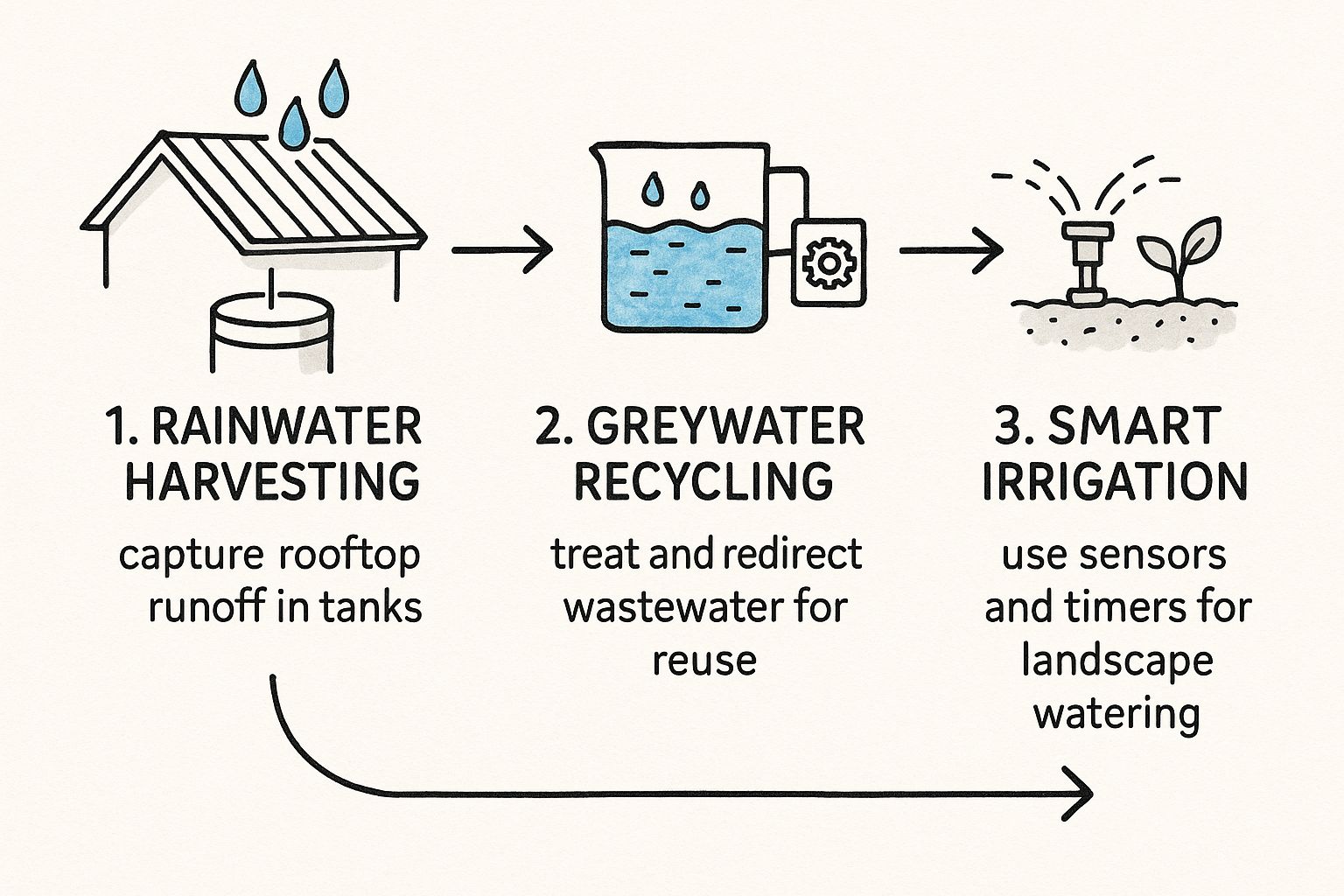
You can see how integrated water systems—from rainwater harvesting to smart irrigation—are a crucial part of hitting Al Safat's conservation targets.
Why Expert Guidance Is Your Greatest Asset
Successfully navigating the Al Safat certification process requires more than just reading the rulebook. It demands deep, hands-on knowledge of Dubai Municipality’s exact procedures and expectations. A simple misinterpretation or a missed document can lead to frustrating setbacks that blow up your timeline and budget.
This is exactly why partnering with a specialized firm is the smartest move you can make. At Freeline Engineering Consultants, we have a proven track record of guiding projects through this very process. We handle the paperwork, communicate with the officials, and oversee on-site compliance to ensure your journey is seamless.
Our expertise in the local regulatory landscape is a critical asset. You can learn more about what to look for when selecting your local partner in our guide to choosing an engineering office in the UAE.
Why We Are Your Ideal Al Safat Compliance Partner
Navigating Dubai's green building regulations isn't just about knowing the rules; it's about understanding them in a real-world context. This is especially true for the projects that form the backbone of the city's development. This specific segment is exactly where our expertise is sharpest.
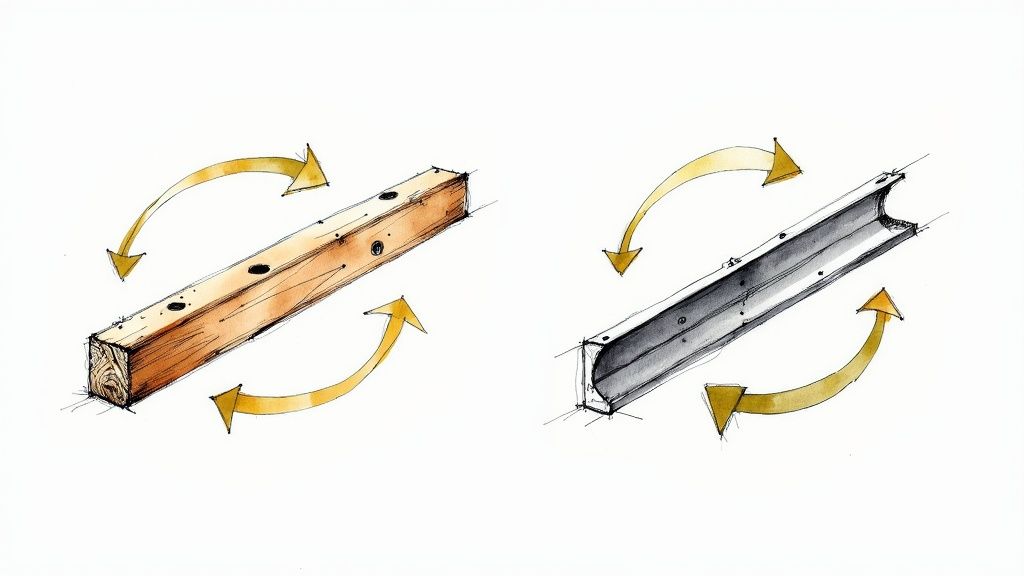
Many firms cast a wide net, offering a broad menu of services. At Freeline Engineering Consultants, we provide deep, focused experience in guiding projects just like yours. We don't just recite the Al Safat rules; we translate them into practical, cost-effective actions that fit your budget and timeline. Our whole process is designed to make compliance a seamless part of your development, not another hurdle to jump.
Focused Expertise for Your Project Scale
Getting Al Safat certification for most building projects requires a delicate balance between hitting sustainability targets and keeping a close eye on the budget. Our team thrives in this environment.
We concentrate on solutions that deliver the biggest impact without unnecessary spending. This means helping you select the right materials, designing efficient systems, and preparing flawless documentation that meets the specific expectations of Dubai Municipality. This specialized knowledge is a core reason why we are a leading engineering consultancy in the UAE.
At Freeline, our track record is built on a simple promise: we handle the complexities of compliance so you can focus on the bigger picture—your project's success. We ensure every requirement is met without the costly delays that so often come from inexperience.
A Partnership Built on Practical Solutions
Our real value comes from our practical, on-the-ground approach. From the first design sketches all the way to final certification, we act as your dedicated compliance partner.
Here’s what really sets our service apart:
- Cost-Effective Compliance: We pinpoint the most efficient ways to meet Al Safat Bronze requirements, preventing over-engineering and protecting your bottom line.
- Streamlined Processes: Our team has refined the submission and inspection process down to a science, making sure your project moves smoothly through Dubai Municipality’s checkpoints.
- Proactive Problem-Solving: We anticipate potential compliance snags before they happen, saving you critical time and money during the construction phase.
Your project deserves a consultant that specializes in its specific needs. Contact us today for a consultation and see how our dedicated expertise can guarantee a smooth, successful, and stress-free path to Al Safat certification.
The Future of Green Buildings in the UAE
The Dubai green building regulations we see today aren't just a finish line; they're the starting blocks for what's to come. Think of the Al Safat system as a key piece of the UAE's bigger picture, directly fueling massive national goals like the Net Zero by 2050 strategic initiative. This isn't just about meeting today's rules—it’s about getting your investment ready for the future.
By embracing these green principles now, your property will be perfectly positioned to meet the even stricter regulations on the horizon. More than that, you’ll tap into the booming demand for sustainable buildings, as both corporate and private buyers are making eco-friendly features a top priority.
Aligning with National Sustainability Goals
The UAE’s firm stance on sustainability is sending waves through the entire construction industry. In fact, projections show the country's green building market is on track to grow at a compound annual rate of about 10.42% from 2025 to 2032. This isn't happening by accident. It's driven by solid government policy, including the ambitious goal to have 50% of all buildings in Dubai built sustainably by 2030. You can explore more on this market growth at marketsandata.com.
This clear direction from the top tells us one thing: getting on board early isn't just a good deed, it's a smart business move. The developers who are adopting these standards now are the ones who will lead the market tomorrow.
By building green today, you are not just meeting a requirement; you are creating an asset that is more valuable, resilient, and desirable in the market of tomorrow. This foresight is what separates market leaders from those who simply follow.
Your Partner for a Sustainable Future
Making this shift to a greener built environment takes more than just good intentions; it requires real-world expertise. At Freeline Engineering Consultants, we provide the hands-on guidance needed to turn these future-focused goals into a reality for your project. We know that real sustainability is about smart design and cost-effective execution, not just ticking boxes. A big part of this puzzle is using resources wisely, a subject we cover in our guide to construction waste management.
Our team is skilled at weaving Al Safat requirements into projects, making sure your development is not only compliant but also perfectly primed for what comes next. We’ll help you navigate the regulations to create buildings that are efficient, valuable, and in step with the UAE’s inspiring vision.
Contact Freeline Engineering Consultants to future-proof your next project and transform sustainability goals into a tangible competitive advantage.
Frequently Asked Questions
When it comes to Dubai's green building rules, developers and investors always have questions. Getting the specifics right is essential for planning any project, so let's clear up a few of the most common queries.
Are Al Safat Regulations Mandatory?
Yes, they absolutely are. If your new building requires a permit from Dubai Municipality, achieving at least the Al Safat ‘Bronze’ rating isn’t optional—it’s a legal requirement.
This rule creates a solid sustainability baseline for all new construction across the city. There's no way to sidestep these foundational standards; your project's compliance is a must-have to receive your Building Completion Certificate. It’s a core part of Dubai’s strategy for a more sustainable urban future.
What Are the Main Financial Benefits?
Beyond just ticking a compliance box, the financial upsides are real and long-lasting. The most immediate benefit you'll see is in the operational costs. High-efficiency systems and water-saving fixtures mean consistently lower utility bills, which is a major plus for both owners and tenants.
On top of that, green-certified buildings often fetch higher property values and have a stronger appeal in the rental market. In a city as competitive as Dubai, an Al Safat rating is a powerful mark of quality that attracts environmentally aware tenants and buyers, often leading to faster sales and fewer vacancies.
How Can I Ensure My Design Is Compliant from The Start?
The smartest and most cost-effective way is to bring a specialized consultant on board during the very first design stages. Trying to shoehorn compliance into a nearly finished design is a recipe for expensive redesigns, frustrating delays, and blown budgets.
An experienced partner will weave all the Al Safat requirements into the architectural and engineering plans from day one. This proactive approach guarantees a much smoother journey through the Dubai Municipality approval process, saving you a great deal of time, money, and stress down the line.
Navigating the ins and outs of Al Safat certification is a job for specialists. At Freeline Engineering Consultants, we provide the focused guidance you need to integrate these regulations seamlessly into your project, ensuring a clear path to compliance.
Ready to make your project a success? Contact us for a consultation today.