
The whole idea of green building in Dubai has moved far beyond a niche interest—it's now the standard for how development gets done. It signals a major shift in construction, where the focus is on smart, sustainable design that keeps pace with the emirate's incredible growth while making long-term environmental and economic sense.
The New Standard for Dubai Construction
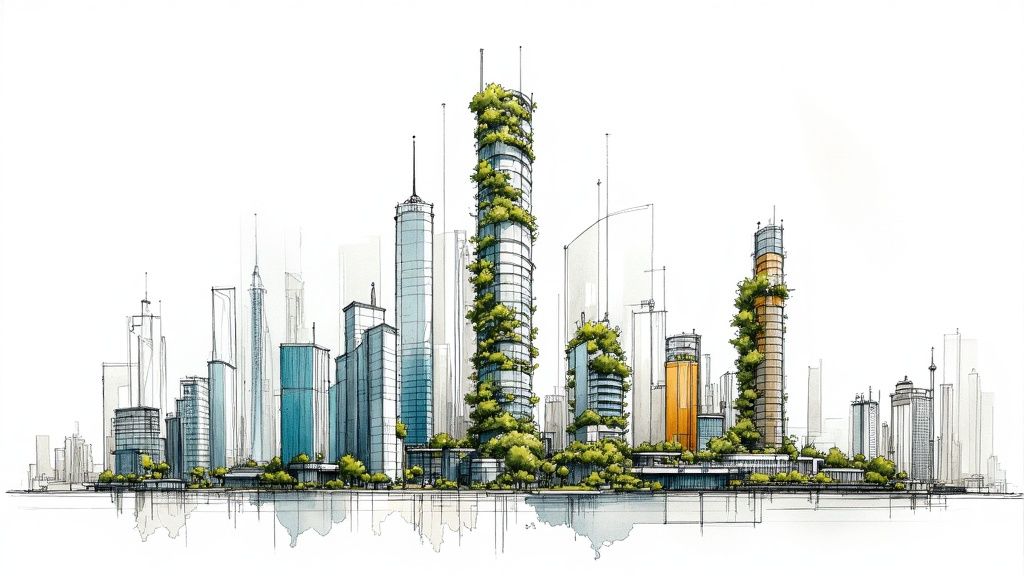
Dubai's iconic skyline is changing. While record-breaking height once dominated the conversation, the focus has broadened to a much smarter, more responsible way of building. This evolution isn't happening by accident; it's being guided by ambitious frameworks like the Dubai 2040 Urban Master Plan, which puts sustainability right at the core of the city's future. Green building is simply Dubai’s practical path to creating a resilient urban landscape.
This guide will break down what this new standard really means for your project, especially for the residential villas, low-rise apartment blocks, and commercial buildings that are the true fabric of the city. We'll explore how sustainable practices are turning these structures into efficient, healthy, and more profitable assets for the years ahead.
Why Green Building Matters Now More Than Ever
The push for sustainability isn't just a passing trend; it's a city-wide mandate with serious momentum behind it. The proof is in the numbers. By the second quarter of 2023, Dubai Municipality confirmed that 72,000 buildings already met green specifications—that’s roughly 58% of all buildings in the emirate. This incredible adoption rate is a direct outcome of powerful policies like the Dubai Clean Energy Strategy 2050, which have been shaping development since 2011.
This widespread shift delivers a few key advantages:
- Economic Viability: Green buildings are cheaper to run. Lower energy and water consumption directly translates to real, long-term savings.
- Environmental Responsibility: They shrink the carbon footprint of new construction, helping the UAE meet its broader climate objectives.
- Enhanced Well-being: Thoughtful, sustainable design leads to better indoor air quality and more natural light, creating healthier spaces for people to live and work.
Your Expert Partner in Sustainable Development
Getting this right requires deep, on-the-ground expertise. At Freeline Engineering Consultants, we've spent decades mastering the specific demands of Dubai's building codes and environmental regulations. Our philosophy is to weave sustainability into the design from the very first sketch, making it a fundamental part of the plan, not just a box to tick at the end. We specialise in turning the vision for villas, commercial hubs, and residential buildings into functional, compliant, and high-performing assets.
Our goal is to go beyond simple compliance. We aim to deliver buildings that are not just sustainable by regulation, but are fundamentally better assets—more efficient to operate, more attractive to occupy, and more valuable over time.
As Dubai continues to raise the bar, understanding and implementing eco-friendly construction strategies is essential for any successful project. Our team provides the expert guidance needed to make sure your project aligns with these modern benchmarks. We handle the complexities, from initial concept to final approval, so you can focus on the result. Learn more about our detailed approach to building and engineering services and see how we can bring your vision to life.
Ready to build a smarter, more sustainable future for your project? Contact our team today for a consultation and discover how we can elevate your development in Dubai's dynamic market.
How to Navigate Dubai Green Building Codes
Trying to meet Dubai’s green building regulations can sometimes feel like solving a complex puzzle. But it's much more helpful to think of them as a clear roadmap to a better building. These codes aren't just bureaucratic red tape; they're a recipe for creating high-performance structures that are more efficient, sustainable, and ultimately, more valuable.
Our job is to cut through the jargon and get straight to what you need to know. We translate the complex legal language into practical, actionable steps that guide your project from the very first sketch. When you build these principles in from day one, compliance isn't a last-minute scramble—it’s just a natural result of good design.
This shift in mindset is everything. Instead of seeing rules as a barrier, we see them as a framework that sparks innovation. It pushes us to find smarter ways to manage energy, water, and materials.
Understanding the Al Safat Rating System
The Al Safat rating system is the heart of Dubai's green building mandate. Rolled out by Dubai Municipality, this framework applies to all new construction projects, sorting them into one of three levels: Bronze, Silver, or Gold. The rating depends on the sustainability measures baked into the building's design.
Think of it as a quality seal. The Bronze rating is the mandatory minimum for any new building, guaranteeing a solid baseline of efficiency. This level covers the essentials in energy and water conservation, setting a decent standard for every project right out of the gate.
But the real opportunity is to aim higher. While Silver and Gold ratings are voluntary, they signal a serious commitment to top-tier performance. Hitting these levels tells the market that a building isn't just compliant—it's exceptional. Our expertise is finding the most cost-effective strategies to get your project into these upper tiers, maximising your return.
Core Ingredients of a Compliant Green Building
The Al Safat system rests on a few key pillars that tackle the biggest environmental impacts of construction. For any low to mid-rise project, getting these elements right is critical for a smooth approvals process.
Here are the main areas of focus:
- Energy Efficiency: It all comes down to reducing the building's thirst for power. We use strategies like high-performance glazing, which basically acts like sunglasses for your building, blocking out harsh solar heat while still letting in natural light. This one choice can dramatically cut the load on your AC systems.
- Water Conservation: In a desert, every single drop is precious. The regulations require low-flow fixtures and water-smart landscaping. The goal is to create a resilient, low-maintenance oasis, not something that constantly drains our resources.
- Sustainable Materials and Resources: This is about being smart with what your building is made of. The codes push for using materials with recycled content, sourcing locally to slash transport emissions, and using certified timber.
- Waste Management: You're required to have solid plans for managing waste during both construction and operation, making sure as much material as possible is diverted from landfills.
By weaving these requirements into the initial design, we ensure a seamless path to compliance. It’s about building sustainability into the very DNA of the project, rather than trying to bolt on solutions later.
Working through the fine print of these regulations takes a deep understanding of local rules and a proactive mindset. For a more detailed look, you can dive deeper into our guide to Dubai Green Building Regulations.
At Freeline Engineering Consultants, we don't just check boxes. We use these regulations to create better buildings. We see every rule as a chance to boost performance, lower long-term running costs, and deliver a project that truly shines in Dubai’s competitive market. Let us show you how to turn compliance into your competitive advantage.
Core Design Strategies for Dubai's Climate
Making a green building in Dubai is about more than just ticking boxes on a regulatory checklist. It’s about being smart and working with our unique climate, not fighting against it. For any building, the goal is a thoughtful blend of clever passive design and high-efficiency active systems. The result? A building that’s not only sustainable but also comfortable and far cheaper to run.
Think of it like building a self-sustaining ecosystem. Every decision, from how the building sits on the plot to the materials chosen, has a ripple effect. The best strategies are woven into the design from day one, making sustainability a fundamental feature, not an expensive afterthought.
Passive Design: The First Line of Defence
Before you even think about turning on the AC, a building's inherent design should be doing most of the heavy lifting. Passive design is the art of using natural elements like sunlight and airflow to your advantage. It’s the simplest, most cost-effective way to slash a building's energy needs from the get-go.
Some of the most crucial passive strategies for Dubai include:
- Strategic Orientation: This is the most basic yet powerful step. Simply positioning a building to minimize its exposure to the intense afternoon sun can make a world of difference. We make sure major glass surfaces face north and south, using clever shading to block the high summer sun while letting in gentler winter light.
- High-Performance Glazing: Windows are like a building’s sunglasses. We specify double-glazed units with special low-emissivity coatings that reflect the sun's heat away from the building. This simple choice prevents the interior from baking and dramatically reduces the load on the air conditioning.
- Natural Ventilation: Designing for good cross-ventilation allows cooler night-time air to move through the building, flushing out the heat that built up during the day. This can significantly boost comfort and cut down on AC use, especially in the milder months.
Active Systems That Supercharge Efficiency
Once passive measures have done their job to lower the building's energy demands, we bring in highly efficient active systems to handle the rest. These technologies are the engine of a green building, delivering comfort and performance with the lowest possible energy use.
For example, a building with great passive design doesn't need a massive, power-hungry AC unit. We can install a hyper-efficient HVAC system that is perfectly sized for the actual cooling load. This is then paired with smart controls like occupancy sensors and programmable thermostats, ensuring energy is only ever used when and where it's truly needed.
It's the same story with lighting. Modern LED lights combined with daylight sensors can automatically dim when there’s enough natural sunlight, trimming electricity bills without anyone noticing. Adding rooftop solar panels takes this a step further, turning the building into its own mini power station.
Mastering Water and Material Selection
In a desert climate like Dubai's, saving water is every bit as critical as saving energy. We tackle this with a multi-layered approach that includes low-flow taps and toilets, along with innovative greywater recycling systems.
Greywater from showers and sinks can be treated and reused for landscape irrigation, turning a waste product into a valuable resource and preserving precious potable water.
The final piece of the puzzle is choosing the right materials. The selection of resources is a core part of sustainable design; you can explore a wide range of eco-friendly building materials to see what’s possible. Our focus is on materials with low embodied carbon—meaning less energy was used to produce and transport them.
This usually means we prioritise:
- Locally Sourced Materials: This cuts down on transportation emissions.
- Recycled Content: Using recycled materials reduces landfill waste and the demand for new resources.
- Low-VOC Products: Choosing paints, sealants, and adhesives with low volatile organic compounds (VOCs) ensures much healthier indoor air quality for the people inside.
For a deeper dive into this topic, see our guide on the sustainable construction materials that perform best in this region.
To truly see how these strategies work in practice, let's break them down.
Core Green Building Strategies and Their Dubai Impact
The table below summarises how these key sustainable design approaches deliver specific, tangible benefits right here in Dubai.
| Strategy | Primary Goal | Key Benefit in Dubai |
|---|---|---|
| Passive Solar Design | Minimise heat gain and maximise natural light | Drastically reduces air conditioning load, which accounts for up to 70% of energy use. |
| Efficient Active Systems | Reduce energy consumption for cooling/lighting | Lowers DEWA bills and improves overall building performance and comfort. |
| Water Conservation | Reduce demand for desalinated potable water | Preserves a critical resource in an arid climate and reduces operational costs. |
| Sustainable Materials | Lower embodied carbon and improve air quality | Reduces construction's environmental footprint and creates healthier indoor spaces. |
By integrating these strategies from the very start, a building's performance and value are enhanced for its entire lifecycle.
The Real-World Value of Building Green
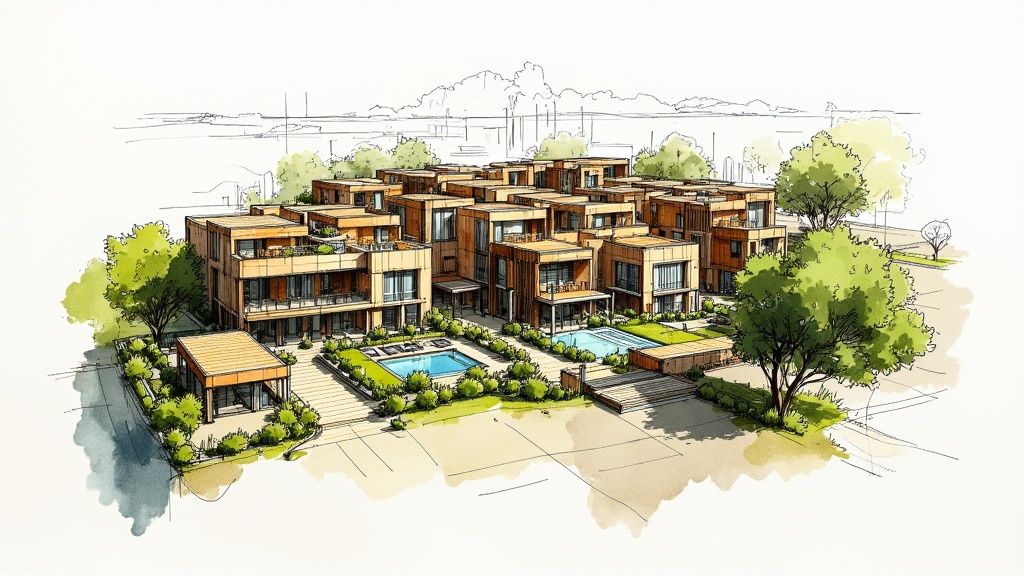
So, why should you really invest in sustainable construction? The answer goes way beyond just "doing the right thing" for the environment. A green building in Dubai is a sharp financial move that delivers real, measurable returns and effectively future-proofs your investment in a crowded market.
The most immediate win is a major cut in your running costs. It’s that simple. Buildings designed for sustainability are just more efficient machines. They sip electricity for cooling and lighting instead of guzzling it, and they use far less water. These aren't just pocket-change savings; they add up to substantial amounts, year after year, for the entire life of the building.
Think about a building needing 25% less energy to keep cool and lit. Over a decade, that’s a huge operational saving that goes straight to your net operating income, making the asset fundamentally more profitable. This is where green building really shines—it turns efficiency into a reliable stream of cash flow.
Gaining a Competitive Market Advantage
But the financial perks don't stop at lower utility bills. In Dubai’s highly sophisticated real estate market, a green certification acts as a badge of quality and modern design. This gives your property a powerful edge over the competition, translating into tangible market advantages that directly boost your bottom line.
Since 2014, Dubai has made green building regulations mandatory for most new projects, which has completely reset market expectations. A recent Knight Frank report even shows that buildings with recognized green certifications now fetch a sales premium of 6% to 11% in Dubai. Lenders are paying attention, too, sometimes offering better financing terms for projects with strong environmental credentials. It's clear that investors prefer sustainable assets.
This isn't just a trend; it's driven by solid logic:
- Higher Property Valuations: Certified green buildings are consistently valued higher than conventional ones because of their lower running costs and appeal to premium tenants.
- Stronger Rental Demand: Companies and individuals are actively looking for healthier, more efficient spaces, which means green properties get snapped up.
- Quicker Lease-Up Periods: Because they're more desirable, green buildings often get leased or sold faster. That means less time sitting empty and better cash flow for you.
Building green is no longer a niche hobby. It’s a proven strategy for creating premium assets that outperform the market, attract high-quality tenants, and deliver superior long-term returns.
Beyond the Numbers: The Focus on People
While the numbers are definitely compelling, the true value of a green building also comes from the positive impact it has on the people inside. Superior indoor environmental quality is a defining feature of sustainable design, and its benefits are just as crucial as the operational savings.
Thoughtful green design puts a premium on features like abundant natural light and cleaner indoor air, often achieved by using low-VOC (volatile organic compound) paints and materials. These small details create spaces that aren't just more pleasant to be in, but are also healthier and more productive for the people using them.
This focus on well-being is a massive differentiator. For a commercial property, it can lead to better employee productivity and fewer sick days. For a residential building, it means a healthier home—a huge selling point for modern families. This human-centric approach is a cornerstone of our philosophy at Freeline Engineering Consultants. We believe a green building in Dubai must deliver value for the owner, the occupant, and the environment all at once.
Our expertise lies in finding that perfect balance, ensuring every project is an investment in both financial performance and human well-being. This approach often ties into smart spending and efficiency, a concept you can explore further in our article on what value engineering is.
Contact us today to discuss how we can bring these real-world benefits to your next project, creating a high-performing asset that truly stands out in Dubai's dynamic market.
Inspiring Green Building Projects in Dubai
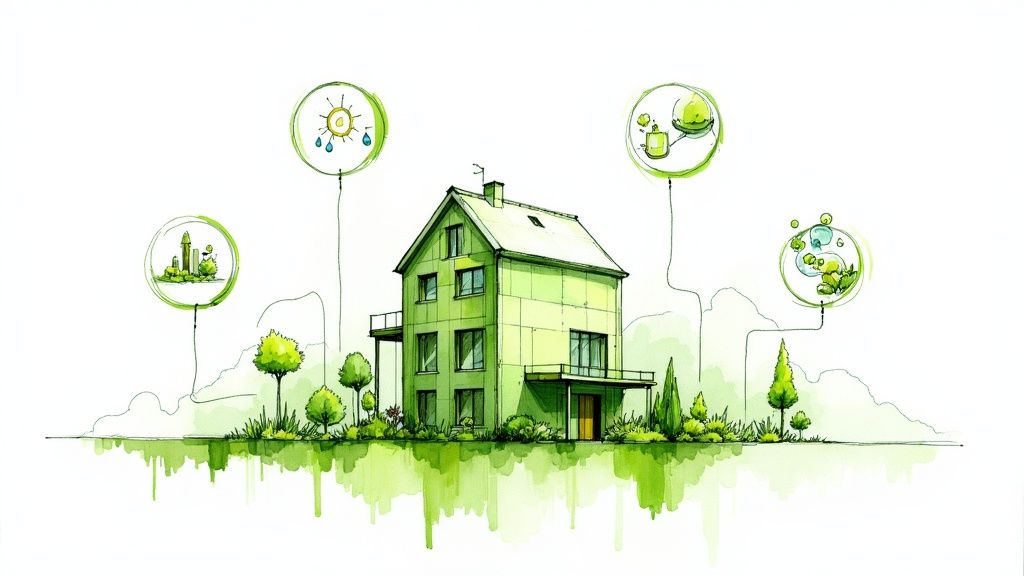
Rules and regulations are one thing, but seeing green building principles come to life is what really shows you what’s possible. Dubai is home to a growing list of amazing projects that prove sustainable design isn't just an idea—it's a massive success, even in our unique climate.
These buildings are more than just pretty pictures; they're powerful case studies of smart, eco-conscious construction. Let's take a closer look at a few successful green building projects in Dubai that are setting a new standard.
Case Study A Vision of Sustainable Living
One of the most talked-about projects right now is a residential community that completely flipped the script on suburban living. The whole development was built on a simple philosophy: minimise environmental impact and maximise resident well-being. This wasn't just about sticking a few solar panels on the roof; it was a deep, thoughtful integration of sustainable strategies right from the start.
Key features that made all the difference include:
- Passive Cooling Design: Villas were carefully positioned to dodge the intense afternoon sun. Deep overhangs and shaded walkways were used to dramatically cut the need for air conditioning.
- Water Recycling Systems: A cutting-edge greywater treatment facility recycles nearly 100% of wastewater for irrigating the lush landscapes, slashing the community's reliance on desalinated water.
- On-Site Renewable Energy: You'll find extensive solar panel installations on rooftops and carports, generating a huge chunk of the community's electricity needs.
The result? It's a community that uses far less energy and water than a typical development, leading to lower utility bills for residents and a much smaller carbon footprint. The project earned a high Al Safat rating, proving that large-scale sustainable living is not just a dream in Dubai, but a reality.
Case Study A High-Performance Commercial Hub
Another fantastic example is a low-rise commercial building designed to be a benchmark for workplace efficiency and comfort. The developers knew a green building would attract top-tier tenants and have much lower running costs over its lifetime.
This project demonstrates a key principle we champion: that sustainability is a direct driver of commercial value. An efficient building is a more profitable asset, plain and simple.
The design team incorporated several standout features:
- High-Performance Façade: The building uses a smart combination of high-tech glazing and external shading to block heat gain without sacrificing beautiful, natural daylight.
- Smart Building Management: A fully integrated system optimises lighting, cooling, and ventilation based on who is actually in the building at any given time. No energy is wasted on empty rooms.
- Enhanced Indoor Air Quality: The ventilation system uses top-of-the-line filters, and the builders used materials with low volatile organic compounds (VOCs) to create a healthier environment for everyone inside.
The numbers speak for themselves. The building's utility costs are over 30% lower than comparable office buildings in the area. This project shows the level of excellence we constantly strive for—blending innovative design with practical, performance-driven results.
These examples aren't just feel-good stories; they are the blueprint for the future of construction in Dubai. At Freeline Engineering Consultants, we take the lessons learned from these trailblazing projects to inform our own work, making sure your development isn't just compliant, but a true leader in sustainability.
Your Guide to Sustainable Project Success in Dubai
Turning green building theory into a successful project on the ground in Dubai is what it's all about. You need more than just good ideas; you need a partner who has been in the trenches, understands Dubai Municipality’s rules inside and out, and knows how to make things happen here.
That’s our specialty. We've built our expertise by guiding projects through the Al Safat rating system, focusing on the villas, commercial hubs, and low-rise residential buildings that are the heartbeat of the city. For us, sustainability isn’t just a box to tick at the end—it's woven into the very first design conversation.
From Compliance to High-Performing Buildings
Our approach is straightforward: we don't just create buildings that meet the minimum rules. We use those rules as a starting point to build truly high-performing assets that deliver value for years to come.
We partner with you every step of the way, ensuring your project doesn’t just pass inspections but also delivers:
- Maximum Operational Efficiency: Think lower utility bills and maintenance costs for the long haul.
- Enhanced Occupant Comfort: Creating healthier, more enjoyable spaces for people to live and work.
- Superior Market Value: Making your property a desirable, future-ready investment.
Riding Dubai's Green Building Wave
The push for sustainable construction here isn't just a trend; it's a massive government-backed movement. The UAE has a bold goal: to have 50% of all buildings in Dubai built sustainably by 2030. This isn't just talk.
Dubai’s Green Building Rules have already helped cut carbon emissions by around 1.4 million tonnes and saved an incredible AED 4.5 billion in energy costs. The market is growing fast, and it's the right place to be investing. You can discover more about the integration of sustainable technologies in Dubai's real estate market to get a sense of just how big this opportunity is.
We help translate Dubai's ambitious green vision into a concrete reality for your project. Our job is to make sure your development isn't just keeping up with the movement but leading it.
Ready to bring your vision to life? Our team can show you how to unlock your project's full potential in Dubai’s exciting market.
Contact us today for a consultation and let's build a better, more sustainable future together.
Common Questions on Green Building in Dubai
When you're diving into sustainable development, a lot of questions pop up. As experts who live and breathe green building in Dubai, we've heard just about all of them. Here are some clear, simple answers to the queries we hear most often, so you can move forward with your project feeling confident.
What Is the Main Goal of Green Building Regulations in Dubai?
At its core, the goal is to make sustainable performance the new normal for all construction. The regulations from Dubai Municipality, especially the Al Safat rating system, are there to shrink the city’s environmental footprint. They do this by setting solid targets for energy efficiency, water savings, and using materials responsibly, making sure every new building pulls its weight in helping Dubai hit its big-picture sustainability targets.
Do Green Buildings Actually Cost More to Construct?
This is probably the biggest myth out there. While it's true some high-tech systems or special certified materials can have a higher price, a truly smart green building always starts with passive strategies. Think about simple but powerful choices like orienting the building to catch the best light or using high-performance glass. These are design decisions, not expensive gadgets.
The smartest green building strategies are woven into the design from the very first sketch. It's often more about reallocating the budget than inflating it, shifting the focus to long-term value instead of just the initial construction bill.
Plus, you can't ignore the massive long-term savings. With utility bills often slashed by 25% or more, any extra initial spend pays for itself surprisingly quickly.
How Does Green Building Benefit My Project Beyond Compliance?
Just meeting the rules is the bare minimum. The real win is in creating a much better, more valuable asset. A certified green building in Dubai gives you real-world advantages that directly boost your market standing and your wallet.
- Higher Property Value: In Dubai's crowded market, green-certified buildings consistently fetch better sales and rental prices.
- Reduced Operational Costs: Lower energy and water bills mean higher net operating income, making the property fundamentally more profitable.
- Enhanced Occupant Well-being: Clean indoor air and lots of natural light make for healthier and more productive spaces, which is a huge draw for top-tier tenants and buyers.
Building green isn't just an environmental feel-good—it’s a sharp business move that protects your investment from rising utility prices and what the market will demand tomorrow.
Getting these benefits isn't automatic; it comes down to having the right partner. At Freeline Engineering Consultants, our specialty is making sustainable design a seamless part of your project, ensuring it’s not only compliant but a truly efficient and valuable asset. Our deep, practical experience with Dubai’s regulations means we know how to steer your project to success.
Ready to build a smarter, more profitable, and sustainable project? Contact us today to begin the conversation.