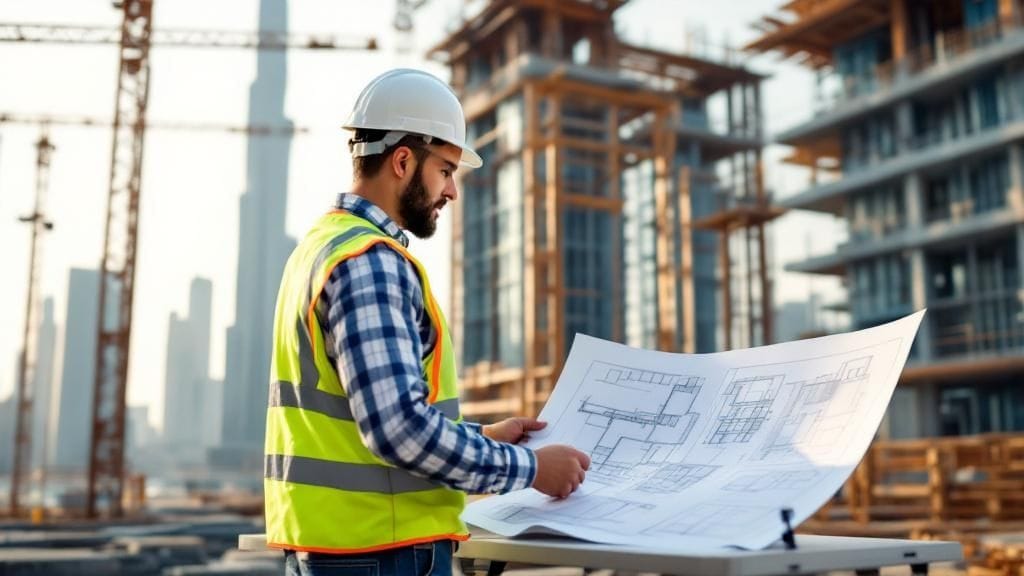
Finding the right structural engineer in Dubai is where a successful building project truly begins, whether you're planning a bespoke villa or a G+12 commercial hub. This isn't just about ticking a box; it's about finding a partner who has a deep, practical understanding of Dubai’s unique construction landscape. This one decision will ripple through your project’s safety, budget, and timeline.
Starting Your Search for the Right Engineer
Your project's success—be it a villa, warehouse, or mid-rise building—really does hinge on getting the right structural engineer on board from day one. You’re not just hiring someone with a qualification. You need a partner who gets the unique challenges and opportunities that come with building in Dubai.
This is a market that’s constantly growing. The UAE's construction sector is expected to hit around USD 52.66 billion by 2030, which shows just how much demand there is for skilled engineering. It’s this expertise that safely brings everything from family homes to massive infrastructure projects to life.
Defining Your Project's Technical Needs
Before you even think about creating a shortlist of firms, get crystal clear on what you need. A vague brief will only get you vague proposals from engineers who might not be the right fit. The technical specs for a luxury waterfront villa are worlds apart from a G+4 commercial building or a sprawling industrial warehouse.
First things first, get your essential documents in order. This is non-negotiable.
- Architectural Plans: Even if they're just preliminary drawings, they give an engineer a solid idea of your vision and how complex the structure will be.
- Soil Investigation Report: This is absolutely critical in Dubai. The soil conditions dictate the entire foundation design—the most important structural element—and can have huge implications for your budget.
- Project Goals: What’s most important to you? Is it speed? Sticking to a tight budget? Or is it all about achieving a specific architectural look?
Walking into a meeting with these documents completely changes the conversation. You go from making a general enquiry to having a productive, technical discussion. It signals that you’re a serious client and lets the firm give you a much more accurate fee proposal right from the start.
Once you have a clear scope, you can start looking for firms that have done this kind of work before. A team that specialises in industrial steel structures probably isn't your best bet for a high-end residential villa. This targeted approach is something we always advise clients on when they are looking for specialised architecture and engineering consultants.
Matching your project's needs to a firm's portfolio is the surest way to avoid costly delays and build your vision on a foundation you can trust.
To make this easier, think about how different projects require different types of expertise.
Matching Your Project to the Right Engineering Focus
Here’s a quick guide to connect your building type with the necessary structural expertise in Dubai.
| Project Type (Up to G+12) | Essential Engineering Expertise | Why This Specialization Matters |
|---|---|---|
| Custom Villas & Townhouses | Reinforced Concrete Design, Foundation Engineering for Local Soil | Maximises living space and ensures long-term stability on sandy or reclaimed land, which is common in Dubai's residential areas. |
| Low-Rise Residential (G+4) | Post-Tensioned (PT) Slab Design, Seismic Analysis | PT slabs allow for thinner floors and longer spans (think open-plan layouts), while seismic design is a standard requirement. |
| Industrial Warehouses | Steel Structure Design, Large-Span Roof Systems | Steel is ideal for creating vast, column-free spaces needed for storage and operations. Expertise here is crucial for cost-efficiency. |
| Mid-Rise Commercial (G+12) | High-Strength Concrete, Wind Load Analysis, Value Engineering | Buildings of this height face significant wind forces. An expert can optimise the structure for strength without over-engineering, saving on material costs. |
Ultimately, choosing an engineer with a portfolio that mirrors your project type isn’t just a good idea—it’s the best way to ensure your vision is built on solid, expertly engineered ground.
Vetting Your Shortlist of Dubai Engineering Firms

You've got a few names on your list. Now for the real work. This is where you dig deeper than the glossy brochures and fancy websites to figure out who truly has the chops to handle your project. The goal isn’t just to find someone with technical skills; you need a partner who gets the unique challenges and opportunities of building right here in Dubai.
First things first: credentials. This is non-negotiable. Any structural engineer in Dubai you're seriously considering must be registered and in good standing with the key authorities, especially Dubai Municipality (DM). This registration is your fundamental assurance that they meet the Emirate's strict professional standards.
Analysing Portfolios and Past Performance
A portfolio is more than a photo gallery—it’s concrete proof of what a firm can do. Look for projects that feel familiar to yours in size, complexity, and purpose. If you're planning a G+5 residential block, their experience with single-family villas or massive industrial warehouses isn't nearly as relevant.
As you look through their past work, keep these points in mind:
- Project Relevance: Have they successfully completed projects of a similar scope, whether it's a G+4 commercial building, a boutique hotel, or a custom warehouse?
- Material Know-How: Can you see evidence of designs using materials that make sense for Dubai's climate? Think reinforced concrete specifically optimised for high temperatures.
- Local Understanding: Does their work fit into the local landscape? It should reflect an awareness of both regional aesthetics and environmental pressures.
The best firms don’t just show you what they built; they tell you why they built it that way. They should be able to walk you through a project's specific challenges and explain how their structural solutions solved them. That’s where you see real problem-solving skills in action.
This deeper dive into their history reveals their true expertise. It’s the only way to know if they’re the right fit for your vision. A well-presented portfolio from a leading engineering office in Dubai will always showcase this depth of experience.
Asking the Right Questions During Consultation
The first meeting is your chance to see past the portfolio and gauge a firm's real-world expertise. It's an opportunity to see how they think. This is where you need to come prepared with specific, insightful questions that get to the heart of their process.
A great starting point is asking about their procedure for securing approvals from Dubai Municipality. An experienced team won't give you a vague answer; they'll have a clear, step-by-step strategy. They should be able to explain the submission stages and point out common roadblocks they’ve learned to navigate.
Also, be sure to ask about their approach to value engineering. This isn’t just a buzzword for cutting costs. It's about smart design—optimising for efficiency without ever compromising on safety or quality. A skilled structural engineer in Dubai might suggest alternative materials or slight design modifications that save money upfront and improve the building's performance for years to come.
Navigating Dubai's Building Codes and Approvals
Dubai's regulatory landscape is famously rigorous, and for a very good reason—it’s what guarantees the safety and longevity of every structure in this incredible city. For anyone developing a project, getting approvals from authorities like Dubai Municipality (DM) can feel like a maze of technical checks and paperwork.
This is where an experienced structural engineer in Dubai becomes your most valuable partner.
They do more than just design the structure; they act as your technical guide, translating complex building codes into a design that is both compliant and practical to build. A seasoned engineer knows the ins and outs of the Dubai Universal Design Code, seismic regulations, and the specific local standards that govern everything from villas to mid-rise towers. It's this deep familiarity with the system that keeps your project moving forward, avoiding costly cycles of revisions and resubmissions.
The Journey to a Structural Permit
Getting a structural permit isn’t a one-off task; it's a process with multiple stages. A good engineering firm sees what’s coming at each step, making the journey from design to groundbreaking much smoother. The whole process hinges on preparing meticulous calculations, drawings, and reports that prove your project ticks every single box.
Let’s take a G+5 residential building as an example. The submission process will have a few key milestones:
- Preliminary Design Submission: First, the initial concepts are checked to make sure they align with general zoning and master plan rules.
- Detailed Structural Drawings: This is the big one. Every beam, column, and foundation detail is closely examined by DM engineers.
- No Objection Certificates (NOCs): Depending on your project’s location and scope, you’ll likely need approvals from other bodies like DEWA or the RTA.
A firm with a solid track record knows exactly what the reviewers are looking for. They can anticipate questions—maybe about foundation design for certain soil types or how wind loads were calculated—and address them upfront in the initial submission. This kind of foresight is the difference between a quick approval and months of delays.
To get a better handle on this, you can look at our detailed guide on the Dubai Municipality approval process and see how we manage these critical steps.
Beyond the Basics: Sustainable Design and Future Trends
Dubai's dedication to sustainability is changing the game in construction. The push for green building certifications, which align with global standards like LEED, means structural engineers have to innovate. We're now designing with energy-efficient materials and more environmentally friendly methods.
This shift has created a huge demand for ongoing professional development. Events like the International Conference on Civil, Structural and Earthquake Engineering bring experts to Dubai to discuss new materials and seismic safety—both critical for our region.
Choosing an engineering partner isn’t just about meeting today's codes; it's about anticipating tomorrow's standards. Our team is committed to this forward-thinking approach, ensuring your project is not only compliant but also sustainable and future-proof.
At the end of the day, navigating Dubai's approvals is less about the paperwork itself and more about the expertise behind it. When you partner with a firm that has a deep, proven understanding of the local regulatory environment, you turn a potential headache into a streamlined part of your project’s success. It’s how you make sure your vision is built safely, efficiently, and to the world-class standards the Emirate is known for.
Building a Collaborative Project Workflow
So, the contract is signed. That's a huge milestone, but let's be honest—the real work starts now. The success of your project in Dubai hinges entirely on the partnership you build from this point forward. I’ve seen incredible designs fall apart on-site simply because communication broke down and expectations weren't managed.
A smooth workflow isn't magic; it's a process built on purpose. This is where we shift from paper plans to practical, on-the-ground execution. Everyone involved—you, the architect, and your structural engineer in Dubai—needs to know exactly what their role is. From giving feedback on time to signing off on changes, clarity prevents those frustrating and expensive delays.
Nailing Down Clear Communication and Reviews
Good communication is the absolute lifeblood of any construction project. The first thing we do is establish a single, dedicated point of contact. This one simple step cuts out so much confusion and prevents mixed signals from derailing progress. Then, we lock in regular meetings, whether that's weekly or every two weeks, to keep everyone aligned.
This same organised approach must apply to the design review process. Forget chaotic, sporadic emails with conflicting notes. We need a structured feedback loop. Your team's comments should be consolidated and presented in a way that’s clear and actionable. This lets your structural engineer get on with making changes efficiently, not trying to decipher mixed messages.
A well-managed review cycle respects everyone’s time. It ensures that necessary adjustments don't create a domino effect of delays, keeping your budget and timeline intact. This is the difference between a project that flows and one that constantly stalls.
Understanding the typical compliance journey is also a huge advantage. The infographic below maps out the key stages in Dubai's structural approval process.
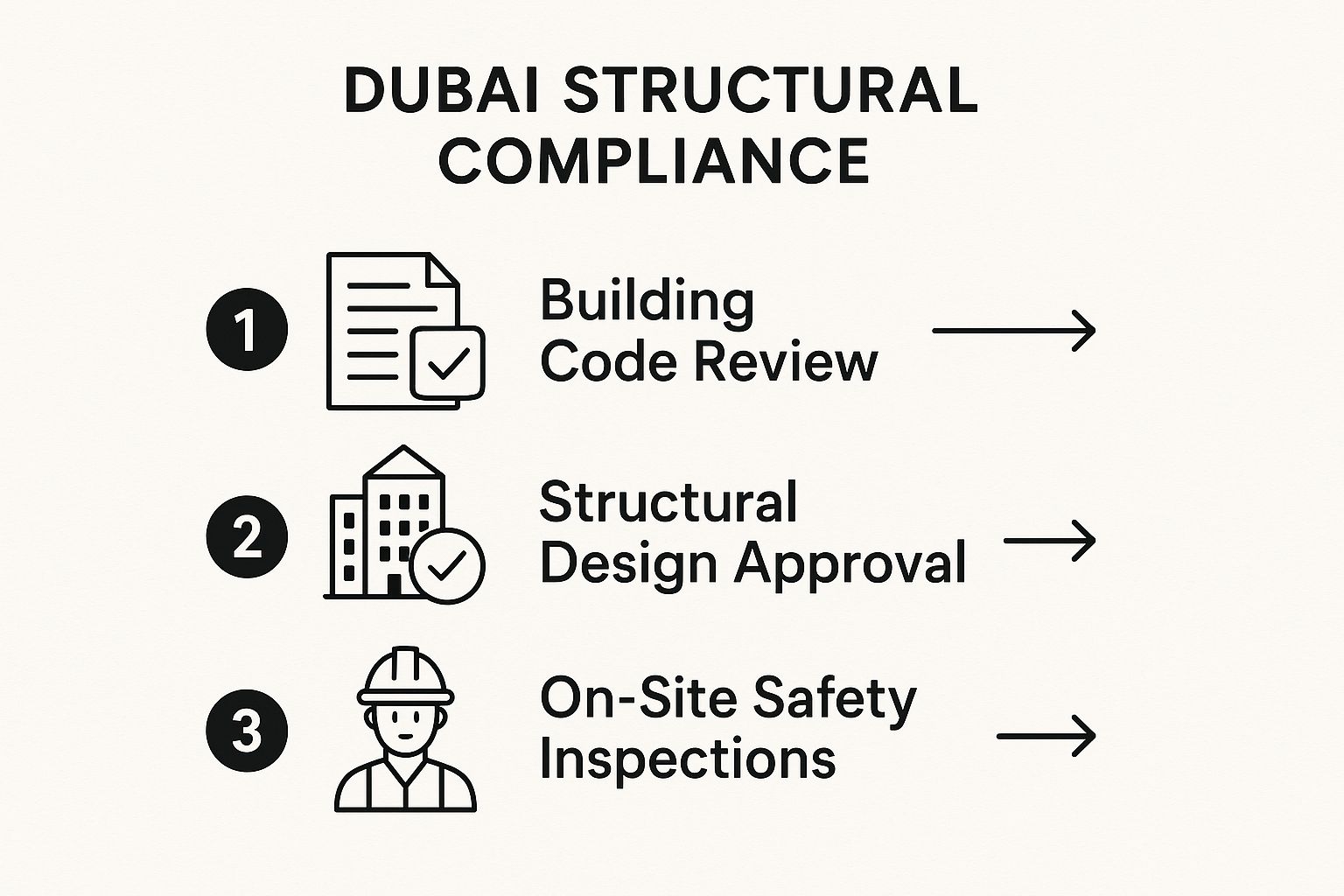
As you can see, it's not about a single sign-off. It’s a sequence of reviews and inspections that all demand constant, tight collaboration.
Managing Site Inspections and Making Progress
Your structural engineer’s job doesn't end at their desk. Far from it. Regular site inspections are non-negotiable—they're essential for quality control. This is how we verify that what’s being built on the ground perfectly matches the approved structural plans, from the rebar in the foundation to the placement of the final beam.
We agree on a clear schedule for these inspections right at the start of the project. This kind of proactive planning helps coordinate with the contractor and means work doesn't grind to a halt while everyone waits for an engineer to show up. It's a true test of a firm's commitment to your project.
Good project management is also about finding smart ways to be more efficient. This is a great time to explore the benefits of value engineering in construction to see where costs can be optimised without ever compromising the building's integrity.
A sample timeline for a G+5 project below illustrates how these critical touchpoints are integrated.
Critical Milestones in a G+5 Project
This table gives you a snapshot of key stages where client and engineer communication is absolutely vital for success.
| Project Stage | Key Engineer Action | Client Input Needed | Risk of Delays if Missed |
|---|---|---|---|
| Concept Design | Initial structural feasibility study. | Approval of the structural system concept. | Major redesigns needed later, impacting budget. |
| Detailed Design | Submission of drawings to Dubai Municipality. | Timely feedback on final design drafts. | Re-submission cycles, delaying permit issuance. |
| Foundation Stage | Site inspection and approval of rebar. | Confirmation of any underground service changes. | Work stoppage, contractor standby costs. |
| Superstructure | Regular checks on slab & column construction. | Quick decisions on minor on-site modifications. | Delays in concrete pouring, knock-on schedule impact. |
| Handover | Final structural compliance certificate issuance. | Final walkthrough and snag list review. | Delays in obtaining the Building Completion Certificate. |
Missing any of these steps can create a ripple effect, pushing back timelines and adding unnecessary costs.
At Freeline Engineering Consultants, this collaborative workflow isn’t an add-on; it’s central to how we operate. We build our process on transparency and proactive communication because we're fully committed to your project's goals. We don’t just hand over a set of drawings. We deliver a partnership that guides your project from the first sketch to the final handover, ensuring your vision is built to stand the test of time.
Our Edge: Why Freeline Excels as Your Structural Partner

In a market crowded with firms, our focused expertise in villas, warehouses, and commercial buildings up to G+12 is your strategic advantage. We aren't just another firm designing structures; we are engineering real value. As a dedicated structural engineer in Dubai, our specialisation means we deliver solutions that are not only safe and compliant but also incredibly efficient for these specific project types.
This concentrated focus gives us a deep understanding of the nuances that define low-to-mid-rise construction in the Emirate. We have spent years mastering the challenges of Dubai’s unique soil conditions, from sandy coastal strips to trickier inland areas. That knowledge directly impacts foundation design—often one of the biggest items in your budget. Our experience means we specify the right foundation from day one, avoiding the common and costly pitfalls of over-engineering. It’s a precise balance that only comes from years of hands-on work in this market.
Delivering Value Beyond the Blueprint
Our approach is built on proactive problem-solving. We see ourselves as genuine partners in your project, invested in turning your vision into a successful, tangible asset. This philosophy shines through in everything we do, whether it's a luxury villa, a boutique commercial centre, or a purpose-built industrial facility.
We use our deep familiarity with local material supply chains to make smarter, more practical design choices. This insight lets us:
- Optimise Material Selection: We choose materials that offer the best performance against Dubai's harsh climate while also being readily available, preventing frustrating supply chain delays.
- Enhance Buildability: Our designs are created with the construction process in mind. This makes them easier and faster for contractors to execute, ultimately reducing labour costs.
- Integrate Key Systems: We collaborate closely with other disciplines right from the start. That means seamless coordination with teams handling MEP engineering in Dubai, ensuring all systems work in harmony without clashes or expensive last-minute changes.
This integrated method translates to fewer surprises on-site and a much smoother journey from groundbreaking to handover.
A Portfolio of Proven Success
Our portfolio is a testament to our commitment. We have a consistent track record of delivering villas, commercial hubs, and industrial warehouses on time and within budget, all while meeting the highest standards of quality. Each successful project reinforces our reputation as a trusted structural engineer in Dubai.
We believe a successful structure is one that stands strong for decades while delivering maximum value to its owner. Our specialised focus is the key to achieving both, providing a level of detail and efficiency that larger, more generalised firms often overlook.
Don't leave your project's structural integrity to chance. Our team is ready to provide the specialised expertise your vision deserves.
Ready to Build with Confidence?
Let's discuss how we can bring unparalleled structural integrity and value to your project. Contact us today for a consultation and discover how our specialised engineering expertise can bring your vision to life safely and efficiently.
Your Questions, Answered
Starting a construction project in Dubai, even a villa or G+4 building, naturally comes with a lot of questions. We get it. Over the years, we've helped countless clients navigate this process, and a few key queries pop up time and time again.
Let's clear the air on some of the most common ones we hear.
How Much Does a Structural Engineer Cost for a Villa in Dubai?
There’s no simple price tag for structural engineering services on a villa project. The fees are usually worked out as a percentage of the total construction cost, or sometimes as a fixed fee. The final number really boils down to the complexity of your design, the villa's size, and exactly what services you need from us.
A proper, professional proposal should break everything down for you – from the first design sketches and calculations right through to supervising the work on-site. Be very cautious of quotes that seem too good to be true. They often leave out critical services that inevitably reappear later as surprise costs. We believe in being completely upfront, giving you a detailed proposal that fits your project precisely, so you know exactly where you stand from day one.
How Long Does Dubai Municipality Approval Take?
The timeline for getting your structural plans approved by the Dubai Municipality (DM) can vary. If your submission is complete, accurate, and put together by an experienced structural engineer in Dubai, you could get an initial review back within a few weeks.
Of course, a more complex project might take longer, and if the DM has questions or needs revisions, that can extend the timeframe. Our team knows the DM's submission portal and regulations inside and out. This means we can often spot potential red flags before we even submit, addressing them proactively to cut down the risk of delays and keep your project moving forward.
Do I Need a Soil Report Before Hiring an Engineer?
Yes, absolutely. A soil investigation report isn't just a good idea; it's a mandatory first step for any construction in Dubai. Think of it as the project's foundation before the actual foundation is even designed.
This report gives your structural engineer the essential data needed to design a foundation that's safe, stable, and cost-effective for your specific plot of land. It tells us things like the soil's bearing capacity and what it's made of. Without it, any foundation design is just a guess, and that’s a risk no one should ever take.
We always insist our clients get a geotechnical report done right at the start. It’s the bedrock of all successful structural design. If you're unsure where to turn, we can also point you toward reputable, approved geotechnical firms in Dubai to get this crucial step handled correctly.
Getting a handle on these key points helps take the mystery out of the process. It ensures that when you're ready to build, you have a clear understanding of the costs, timelines, and groundwork needed to set your project up for success.
Your project deserves more than just calculations; it deserves an engineering partner who understands Dubai's unique landscape and is committed to bringing your vision to life. At Freeline Engineering Consultants, we provide that specialised expertise to help you build with confidence.
Ready to build something exceptional? Contact our team today for a detailed consultation by visiting us at https://www.freelineeng.ae.