In Dubai, talking about sustainable construction materials isn't just following a trend—it's about making smart, forward-thinking decisions. These materials are the bedrock of modern buildings that are cost-effective to run and fully compliant with local regulations. It’s a strategic choice that considers a building's entire life, from where the materials come from and how they're made, to how they help reduce massive energy bills once the building is complete. Ultimately, this approach is a business decision that aligns perfectly with the UAE's vision for a greener future.
Why Sustainable Materials Are Essential in Dubai
In Dubai's fast-paced construction world, the materials you choose can make or break a project. They impact everything from the initial budget right through to the building's long-term value. Sustainable materials aren't complicated or exotic alternatives; they are simply high-performance solutions engineered for the real world—delivering durability, efficiency, and environmental responsibility.
This approach means looking at the entire journey of a material. It starts with the source: was it harvested or manufactured responsibly? Then, we look at its life inside the building. How does it perform? Does it help slash the huge cooling loads demanded by the UAE climate? Finally, we consider what happens at the end of its life. Can it be recycled or repurposed, or is it just destined for a landfill?
The Strategic Advantage for Dubai Projects
For developers and builders in Dubai, embracing sustainability isn't just good practice—it's a powerful competitive edge. The benefits are clear and measurable:
- Reduced Operational Costs: High-performance insulation, reflective roofing, and advanced glazing directly lead to lower DEWA bills. This is a massive selling point for any future tenant or owner.
- Enhanced Property Value: Buildings with green certifications are in high demand. They often command higher prices and attract premium, long-term tenants who value quality and efficiency.
- Regulatory Compliance: Using approved sustainable materials helps you align with Dubai's green building codes, like the Al Sa'fat rating system. This means smoother project approvals and fewer costly delays.
- Future-Proofing Assets: A sustainably built structure is far more resilient. It's better prepared for future spikes in energy prices and the inevitable tightening of environmental regulations.
This shift is a huge part of the region's development goals. The entire GCC is seeing incredible growth in green building, all backed by increasingly strict standards. As of August 2023, over 5,300 projects in the MENA region had earned LEED certification. You only have to look at local examples like Masdar City or Dubai's own LEED Platinum-certified mosque to see this commitment in action.
Here's a quick overview of what makes a construction material truly sustainable in Dubai's unique environment.
Core Traits of Sustainable Building Materials
| Characteristic | Why It Matters for Dubai Projects |
|---|---|
| Energy Efficiency | Materials with high thermal resistance (like advanced insulation) directly combat the intense heat, significantly cutting cooling costs. |
| Durability & Low Maintenance | Products that withstand harsh sun, humidity, and sand require fewer replacements and repairs, lowering long-term operational expenses. |
| Recycled Content | Using materials made from post-consumer or post-industrial waste reduces the demand for virgin resources and diverts waste from landfills. |
| Local Sourcing | Choosing materials manufactured within the region cuts down on transportation emissions and supports the local economy. |
| Water Conservation | Fixtures and systems that use less water are critical in an arid climate, helping to lower utility bills and preserve a precious resource. |
| Non-Toxic | Materials with low or no volatile organic compounds (VOCs) improve indoor air quality, creating healthier spaces for occupants. |
Choosing materials with these characteristics isn't just about ticking a box; it's about building smarter, more valuable assets that are fit for the future of Dubai.
At Freeline Engineering Consultants, we don’t see sustainable materials as an obligation, but as a genuine opportunity. For nearly three decades here in Dubai, our expertise has been in pinpointing the exact materials that meet the unique demands of this climate while delivering tangible financial returns for our clients.
We specialise in navigating the complexities of material selection. Our goal is to ensure every single choice contributes to a building that is efficient, compliant, and ultimately, more valuable. By understanding https://freelineeng.ae/how-we-incorporate-green-architecture-and-sustainability-in-our-projects/, you can see our hands-on commitment to turning visionary designs into practical, future-ready realities.
Essential Sustainable Materials For The UAE Climate
Choosing the right sustainable construction materials in Dubai isn't just about ticking a green box; it's a strategic move to tackle the harsh climate head-on and slash long-term running costs. The best materials are always the ones that directly solve the region's biggest challenges—scorching heat and scarce resources. That means we have to prioritise performance, durability, and a low lifecycle impact.
For most projects, the smart money is on practical, proven solutions that deliver real, measurable returns. We can break these essential materials down into three core categories that are perfectly suited for Dubai's demanding environment.
Recycled and Reclaimed Materials
The first and most powerful category is all about giving existing materials a second lease on life. This approach hits two birds with one stone: it diverts huge amounts of waste from landfills while cutting down on the energy and resources needed to make brand-new components. It's the ultimate win-win for both the environment and the project's bottom line.
A couple of key examples for Dubai projects include:
- Reclaimed Steel: Steel can be recycled over and over again without ever losing its strength. Using reclaimed steel from demolition sites for structural frames or reinforcements drastically lowers a project's embodied carbon.
- Crushed Concrete Aggregates: Old demolition debris can be processed into aggregates, perfect for new concrete mixes or as a base layer for roads and foundations. This is a foundational practice for circular construction in the region.
This infographic lays out a clear hierarchy of sustainable material types, from natural sources to recycled content and innovative new products.
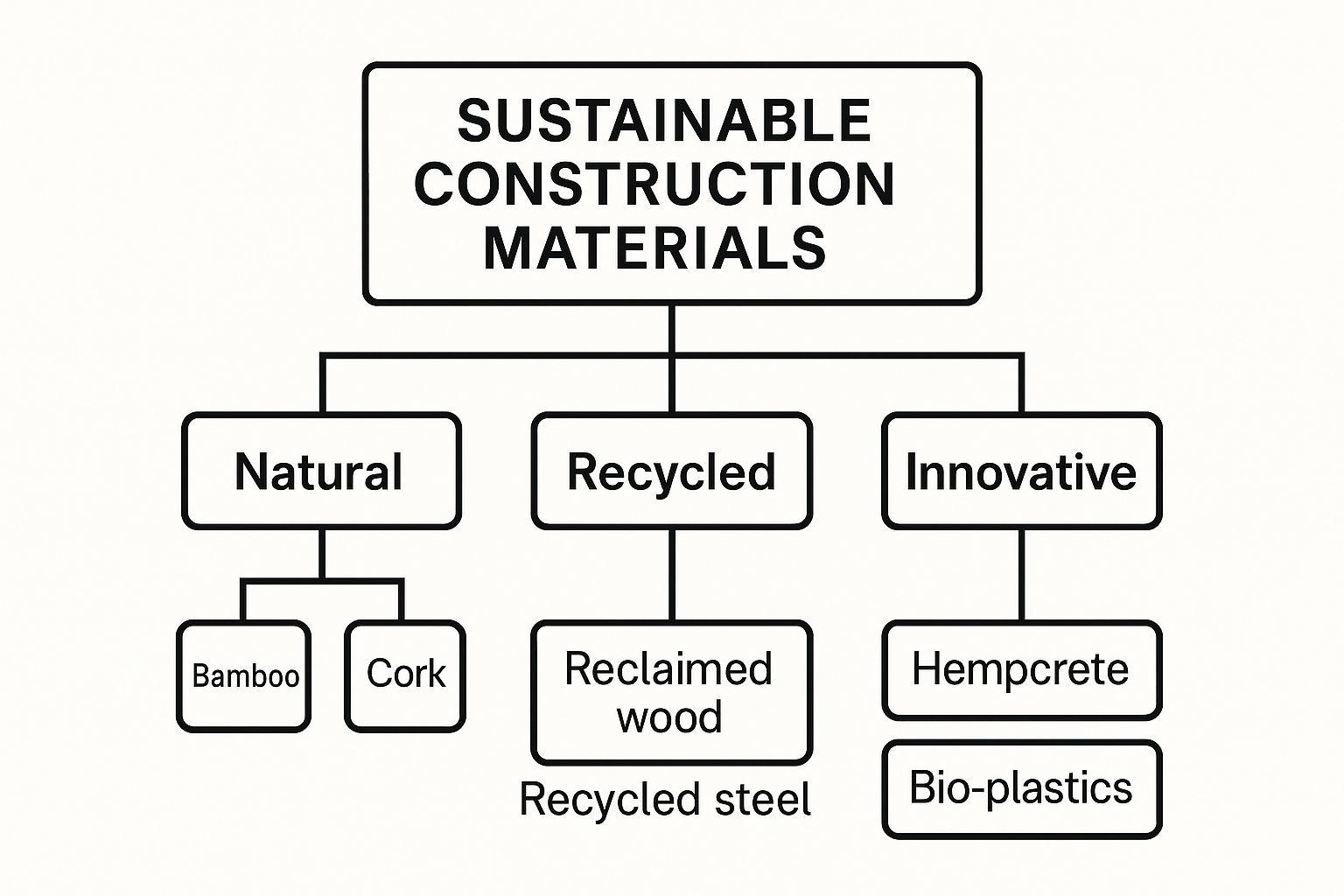
What this shows is that sustainability isn't a single path. We can get there by tapping into nature's own efficiency or by innovating with recycled and bio-based compounds.
Natural and Renewable Options
Next up are materials that are harvested from nature with minimal processing and can be replenished quickly. Their main advantage is a low carbon footprint and a healthier indoor environment, as they're often free from harmful chemicals.
While some natural materials need careful thought for Dubai's climate, a few are definitely gaining ground:
- Bamboo: Although not native, engineered bamboo products offer incredible strength and grow unbelievably fast, capturing carbon as they do. It’s a solid alternative to traditional timber for things like flooring and non-structural elements.
- Cork: Harvested from the bark of cork oak trees, this material is a fantastic insulator for both heat and sound. It's also moisture-resistant, making it a good fit for flooring and wall panels.
- Sheep's Wool Insulation: As a highly effective and breathable insulator, sheep's wool helps regulate indoor temperature and humidity. The result is a much healthier and more comfortable living space.
High-Performance and Innovative Materials
This last category is arguably the most crucial for cutting a building's energy use in Dubai. These are materials engineered specifically to manage heat gain and boost the efficiency of building systems—a massive deal when cooling can account for the vast majority of a building's energy bill.
At Freeline Engineering Consultants, we’ve seen first-hand how the right high-performance materials can drastically cut a building’s operational costs. Integrating these solutions isn’t a luxury; it’s a fundamental requirement for creating a viable, long-term asset in this market.
Key players in this group include:
- Low-Emissivity (Low-E) Glass: This advanced glazing has a microscopic metallic coating that reflects infrared heat while still letting visible light through. It keeps the heat out during summer, dramatically easing the load on air conditioning systems.
- Advanced Insulation Systems: Materials like spray foam or rigid foam boards create a much better thermal barrier than traditional options. Properly insulating the entire building envelope—the walls and roof—is the single most effective way to stop heat from getting inside in the first place.
- Reflective Roofing Materials: Often called "cool roofs," these materials have high solar reflectance, meaning they bounce sunlight and heat away from the building instead of absorbing it. This simple switch can lower roof surface temperatures by over 25°C.
Bringing these high-performance materials into a project is vital. It’s where smart architectural design meets practical engineering to create a truly efficient building. This synergy is a core part of what MEP is all about, as the mechanical and electrical systems perform far better when the building itself is designed to fight the heat. You can explore this discipline further in our guide on what is MEP engineering.
The Real-World Benefits of Building Green in Dubai
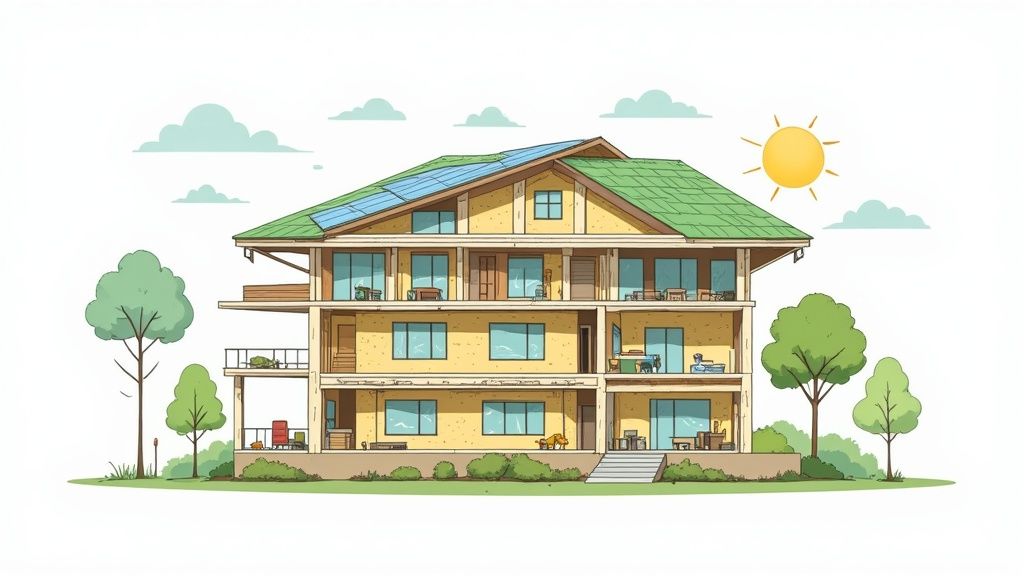
Choosing sustainable construction materials in Dubai is much more than just ticking a regulatory box. It's a sharp business decision that builds real, long-term value into your project. This isn't about making compromises; it's about investing in an asset that pays you back in three crucial ways: financially, environmentally, and through the well-being of its occupants.
When developers look past the initial price tags of materials and consider the entire life of a building, a powerful advantage comes into focus. It’s a shift from just building for today to creating a high-performing asset ready for the future of the UAE.
Driving Economic Returns and Asset Value
The most direct and compelling reason to build green is the economic upside. In a climate like Dubai’s, where air conditioning can eat up to 70% of a building's electricity bill, every choice that minimises heat gain is a direct investment in future savings.
Think about it: your building's cooling system working less hard, day in and day out, for decades. That’s the tangible result of using high-performance sustainable construction materials like low-emissivity (low-E) glass and top-tier thermal insulation. These materials act as a strong shield against the relentless sun, leading to significant, measurable drops in monthly utility costs. This operational efficiency doesn't just lower running costs—it also boosts the property's market value, making it a far more attractive prospect for both tenants and buyers.
Championing Environmental Stewardship
Beyond the bottom line, there’s a clear environmental argument for sustainable building. The construction industry is a huge consumer of raw resources and a major producer of waste. A greener approach tackles these issues head-on.
Using materials with high recycled content, like reclaimed steel or crushed concrete, reduces the demand for mining and processing virgin resources. That single decision lightens the load on landfills and slashes the carbon emissions from manufacturing new products. What’s more, prioritising locally sourced materials cuts the carbon footprint associated with long-haul transportation, supporting the local economy while lessening your project's environmental impact. This is how your project can play a real part in creating a more resilient and responsible city.
"At Freeline Engineering Consultants, we guide our clients to see that sustainability is not an added cost, but a source of value. By intelligently selecting materials, we transform regulatory requirements into opportunities for greater efficiency, higher asset value, and enhanced occupant comfort. It's about making smart choices that pay dividends for years to come."
Creating Healthier Human-Centric Spaces
Finally, the benefits reach the very people who will live and work inside the building. The quality of an indoor environment has a massive impact on health, comfort, and even productivity. Sustainable materials are fundamental to creating spaces that actively promote human wellness.
Materials with low volatile organic compounds (low-VOCs) in paints, sealants, and flooring dramatically improve indoor air quality by cutting down on harmful chemical off-gassing. In the same way, natural fibres used in insulation and finishes help regulate humidity, creating a more comfortable and breathable atmosphere. In Dubai's competitive property market, these human-centric benefits are quickly becoming a major selling point.
The integration of these high-performance materials is tied directly to the building's core systems. A well-insulated structure allows for more efficient and effective mechanical, electrical, and plumbing solutions. You can learn more about how these systems are designed to work together in our detailed guide to MEP engineering in Dubai. This synergy is what turns a simple structure into a high-performing, healthy, and cost-effective environment.
Navigating Dubai's Green Building Regulations
Successfully delivering a project in Dubai means you absolutely have to know the local regulatory landscape inside and out. This isn’t just about ticking boxes on a checklist; it's about weaving these rules into your design from the very first sketch to ensure a smooth, cost-effective journey from concept to completion.
The absolute cornerstone of these regulations is the Al Sa'fat Green Building Rating System. Think of it as a framework designed to make sustainability a core, non-negotiable part of every new building in the city.
For developers and builders, Al Sa'fat is the official roadmap. It goes far beyond gentle suggestions, setting hard-and-fast minimums that all new construction projects have to meet. Getting this right is crucial for securing permits and dodging the kind of expensive delays that can completely derail a project's schedule and budget.
Decoding the Al Sa'fat Rating System
The Al Sa'fat system is built on tiers, with each level demanding a bigger commitment to sustainable performance. While the top tiers are voluntary—reserved for projects aiming to be true showcases of green design—the first level isn’t optional at all.
Here’s a practical breakdown of how it works:
- Bronze Sa'fa (Mandatory): This is the baseline for every single new building in Dubai. It covers the fundamentals of green practice, like energy and water efficiency, waste management, and the use of specific sustainable construction materials.
- Silver Sa'fa (Recommended): This level pushes developers to go beyond the basics. It encourages more advanced strategies for saving resources and creating a healthier indoor environment.
- Gold & Platinum Sa'fa (Voluntary): These are for the trailblazers. Reserved for projects that show exceptional leadership in sustainability, these ratings signify a deep commitment to cutting-edge green design and peak performance.
When it comes down to it, achieving the Bronze Sa'fa rating is non-negotiable for any project in Dubai. Our role at Freeline Engineering Consultants is to make this process seamless. We ensure your project not only meets but strategically exceeds these requirements, turning what could be a headache into a real competitive advantage.
How Al Sa'fat Shapes Your Material Choices
The Al Sa'fat regulations have a direct say in the materials you can—and should—be using. The system has specific clauses that guide material selection, all with the goal of shrinking your building's environmental footprint. Understanding these requirements right from the start is critical.
Key mandates that will influence your material list include:
- Regional Sourcing: The code pushes for the use of materials extracted and manufactured locally or within the region. This simple step slashes carbon emissions from transportation and pumps money back into the local economy.
- Recycled Content Quotas: Certain materials, like steel reinforcement and concrete aggregates, are required to have a minimum percentage of recycled content. This directly fuels a more circular economy in construction.
- Energy Performance Targets: The materials you choose for insulation, glazing (like low-E glass), and roofing must work together to meet strict energy efficiency standards, mainly to cut down on cooling needs.
- Water Efficiency: The regulations insist on water-efficient fixtures and fittings, which naturally guides your specifications for plumbing materials.
Integrating these standards isn't something you do at the end; it's a fundamental part of the initial design and engineering. A proactive approach is everything. By partnering with experienced building consultants in Dubai, you get the expertise needed to align your material specs with Al Sa'fat regulations from day one. That kind of foresight ensures smooth approvals and sets your project up for undeniable success in Dubai’s dynamic construction world.
Why We Are Your Partner in Sustainable Construction
Choosing the right sustainable construction materials in Dubai isn't just about flipping through a supplier's catalogue. It's about knowing what truly performs in this climate.
It's one thing to understand green materials in theory, but it’s another to know which ones will deliver real value on a residential project in JVC versus an industrial warehouse in Jebel Ali. This is where experience on the ground makes all the difference.
For nearly 30 years, we've been focused on sourcing and implementing materials that are perfectly matched to Dubai’s unique environmental pressures and regulatory demands. We don't just recommend solutions; we deliver proven strategies tested across hundreds of successful projects right here in the UAE.
Local Expertise That Delivers Tangible Results
Navigating Dubai's construction landscape is a complex affair. It’s a mix of specific regulations, a trusted network of suppliers, and a climate that is unforgiving to the wrong material choices. Our long history in this market gives our clients a clear advantage.
We’ve built strong, lasting relationships with the region’s most reputable suppliers of certified green materials. This network is vital. It ensures that every product we specify—from high-performance insulation to low-VOC finishes—is not only compliant with Al Sa'fat standards but also cost-effective and available, preventing frustrating project delays.
At Freeline Engineering Consultants, we turn regulatory hurdles into opportunities. We work right alongside you, aligning your project's sustainability goals with your budget and design vision to ensure the result is both innovative and financially sound.
This deep local knowledge is crucial in a market growing as quickly as ours. Driven by urbanisation and major infrastructure projects, the Middle East construction materials market is expanding fast. Valued at about USD 28.43 billion in 2024, it's projected to hit USD 75.72 billion by 2025. This growth highlights the UAE's commitment to modernising its construction sector while hitting ambitious environmental targets. You can discover more insights about Middle East construction material trends on Cognitive Market Research.
A Consultative Approach Focused on Your Success
We believe in partnership. That's why our process starts with listening—taking the time to understand your vision, financial targets, and operational needs. From there, we offer clear, actionable guidance that demystifies the entire material selection process.
We help you see the bigger picture, looking beyond upfront costs to analyse the total lifecycle value of each material. This includes:
- Performance Modelling: We assess how different materials will impact your building's long-term energy use and maintenance needs.
- Compliance Assurance: Our team makes sure every specification meets or exceeds the mandatory Al Sa'fat requirements, guaranteeing a smooth approvals process.
- Budget Alignment: We identify cost-effective alternatives that deliver the performance you need without compromising your financial plan.
This thorough, client-focused method is what sets us apart. We don't just hand you a list of materials; we deliver a fully integrated strategy that ensures your project is a success—economically, environmentally, and functionally. For a closer look at our methods, explore our complete guide to engineering consultancy in the UAE.
Ready to Build Smarter?
If you're ready to create a project that is not just compliant but truly exceptional, don't try to navigate the complexities of sustainable construction alone. Our team has the proven experience and local insight to guide you every step of the way, ensuring your vision becomes a high-performing, valuable asset.
Contact Freeline Engineering Consultants today for a complimentary consultation. Let's discuss how the right sustainable material strategy can set your next project up for success.
Taking the Next Step on Your Sustainable Project
Embracing sustainable construction isn't just a trend in Dubai; it's the smartest move a developer can make. It's a strategic decision that pays off in the long run with better economic returns, guaranteed regulatory compliance, and healthier, more desirable spaces for people to live and work in.
You've seen the clear benefits of using the right materials and understand the local standards that shape every successful project in the city. Now, it's time to turn that knowledge into action.
Partner with Dubai's Sustainable Building Experts
Navigating the world of green building isn't something you should have to do alone. Getting to that sweet spot of a truly efficient and valuable asset demands specialised local knowledge. You need a team that gets what works—and what doesn't—under the unique pressures of the UAE climate.
At Freeline Engineering Consultants, we don't just give recommendations. We offer a true partnership, built on nearly three decades of hands-on experience right here in Dubai. We're here to guide your project from a sustainable vision to a successful reality.
Our team has a laser focus on projects that align with Dubai's dynamic growth, which means our expertise is perfectly tuned for the needs of low to mid-rise residential and commercial buildings. We have a proven track record of turning regulatory hurdles into opportunities for excellence.
Let our experts guide you through the material selection process, making sure your next project isn't just built for today, but built for the future. We use our strong relationships with trusted local suppliers to source certified green materials that fit your budget and design goals, without compromise.
Choosing us means choosing a partner who is as dedicated to your success as you are.
Schedule Your Complimentary Consultation
Your project deserves an approach that maximises its value from day one, guarantees a smooth path through approvals, and delivers a building you can be proud of. Let's work together to explore the best sustainable material options for your upcoming development.
Schedule a complimentary consultation with our team today. Let’s build a better, more sustainable future for Dubai, together.
Frequently Asked Questions
Diving into sustainable construction naturally brings up a few key questions. We get these all the time from developers and project owners here in Dubai, so let’s tackle them head-on with some clear, straightforward answers.
Our insights come from years of hands-on experience with projects right here in the emirate. The goal is to demystify things a bit and show you the real-world value of building green in this unique market.
Are Sustainable Materials More Expensive Upfront?
This is probably the most common question we hear, and the honest answer is: it depends. While some high-performance sustainable construction materials might have a higher price tag at the supplier, many others—like locally produced recycled aggregates—are cost-competitive from day one.
But the real story isn't about the initial purchase order; it's about the total cost of ownership over the building's life. A building designed with superior insulation and low-E glass might cost a little more to erect, but it will save its owners a small fortune in DEWA bills down the line. This often translates to a surprisingly quick return on investment and drastically lower running costs for decades.
The true value of sustainable materials is realised over the long term. A focus on upfront cost alone misses the immense economic benefits of lower utility bills, reduced maintenance, and higher asset value.
How Can I Verify a Material Meets Al Sa'fat Standards?
Making sure every component complies with Dubai's Al Sa'fat green building regulations is non-negotiable. The direct approach is to ask your supplier for all the official certifications and technical documents that prove the material is up to local standards.
Frankly, this can be a tedious and complex job. A much smoother, risk-free path is to work with an experienced local firm like ours. We already have the relationships with trusted suppliers and a robust vetting process in place. We make sure every material specified not only meets but often exceeds Al Sa'fat regulations, saving you a massive amount of time and eliminating compliance headaches.
What Materials Provide the Best ROI in Dubai's Climate?
In a region defined by its intense heat, the materials that give you the fastest and biggest bang for your buck are the ones that directly fight solar heat gain. When you invest in these specific areas, the savings are immediate and substantial.
The top performers for ROI in Dubai are clear winners:
- High-Performance Insulation: A solid thermal barrier in your walls and roof is the single most effective way to ease the load on your cooling systems.
- Low-Emissivity (Low-E) Glass: This smart glazing technology reflects heat out while letting light in, dramatically cutting the energy needed to keep the inside cool and comfortable.
- Reflective Roofing Materials: Often called "cool roofs," these surfaces simply bounce sunlight away from the building, stopping heat from soaking in and lowering indoor temperatures.
These materials go straight to the heart of a Dubai building's biggest operational cost—air conditioning. That’s why they deliver the most compelling and immediate financial payback for any project in this climate.
Ready to ensure your next project is not only compliant but also cost-effective and built for the future? Freeline Engineering Consultants has the local expertise to guide you through every step of selecting the right sustainable materials.
Contact us today to schedule your complimentary consultation.