
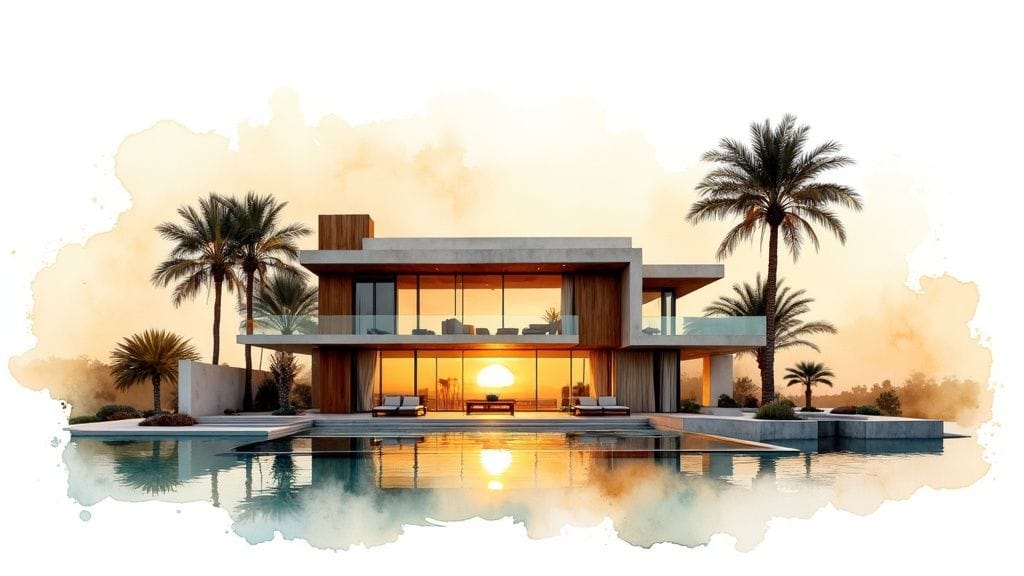
Your villa’s exterior is more than just a facade; it’s the first statement your home makes. In Dubai’s dynamic architectural landscape, a modern villa exterior design must achieve a delicate balance: it needs to be visually stunning, culturally resonant, and masterfully engineered to withstand the unique climate. From the sun-drenched shores of Palm Jumeirah to the exclusive enclaves of Emirates Hills, the right exterior defines luxury, comfort, and sustainability.
This guide explores nine pivotal design trends that are currently shaping the region’s most sought-after properties. We will move beyond simple aesthetics to provide actionable insights into the materials, structural considerations, and climate-responsive strategies behind each concept. Understanding these elements is crucial for creating a home that is both beautiful and built to last.
At Freeline Engineering Consultants, we understand that translating these ambitious concepts into reality requires a deep-rooted understanding of local regulations, materials science, and innovative design. With nearly three decades of experience in Dubai since 1998, our integrated team of architects and engineers specialises in transforming visionary ideas into tangible, breathtaking villas that are as functional as they are beautiful. Let’s delve into the designs that are setting the standard for luxury living in the UAE.
1. Minimalist Glass Box Design
The Minimalist Glass Box is a cornerstone of modern villa exterior design, defined by its stark geometric simplicity and extensive use of glass. This architectural style strips away ornamentation to celebrate structure, light, and space. Pioneered by masters like Mies van der Rohe, this approach uses vast, floor-to-ceiling glass panels and steel frames to create a sense of transparency, effectively blurring the lines between the interior and the surrounding landscape.
This design is particularly effective in Dubai’s prime locations with scenic views, such as beachfront properties on the Palm Jumeirah or plots overlooking lush golf courses. The architecture serves as a frame for the environment, and the open-plan interiors that typically accompany this style enhance the feeling of spaciousness and fluidity, making it a powerful choice for a truly contemporary living experience.
Key Considerations for Implementation
Successfully executing a glass box design in Dubai requires careful planning and a deep understanding of materials and structural engineering to combat the climate. Here are the key factors to consider:
- High-Performance Glazing: Use double or triple-glazed, low-emissivity (Low-E) glass with a low Solar Heat Gain Coefficient (SHGC). This is a non-negotiable requirement in the UAE to minimise heat gain, reduce air-conditioning costs, and comply with Dubai Municipality green building regulations.
- Privacy Management: While transparency is the goal, privacy is a necessity. Integrate automated blinds, smart glass that can turn opaque on command, or strategic landscaping to provide seclusion when needed, respecting local cultural norms.
- Structural Integrity: A robust structural frame, typically made of steel or reinforced concrete, is essential to support the extensive glass panels and ensure the building’s stability against wind and other environmental factors specific to the region.
The following summary box highlights the main trade-offs associated with this architectural style.
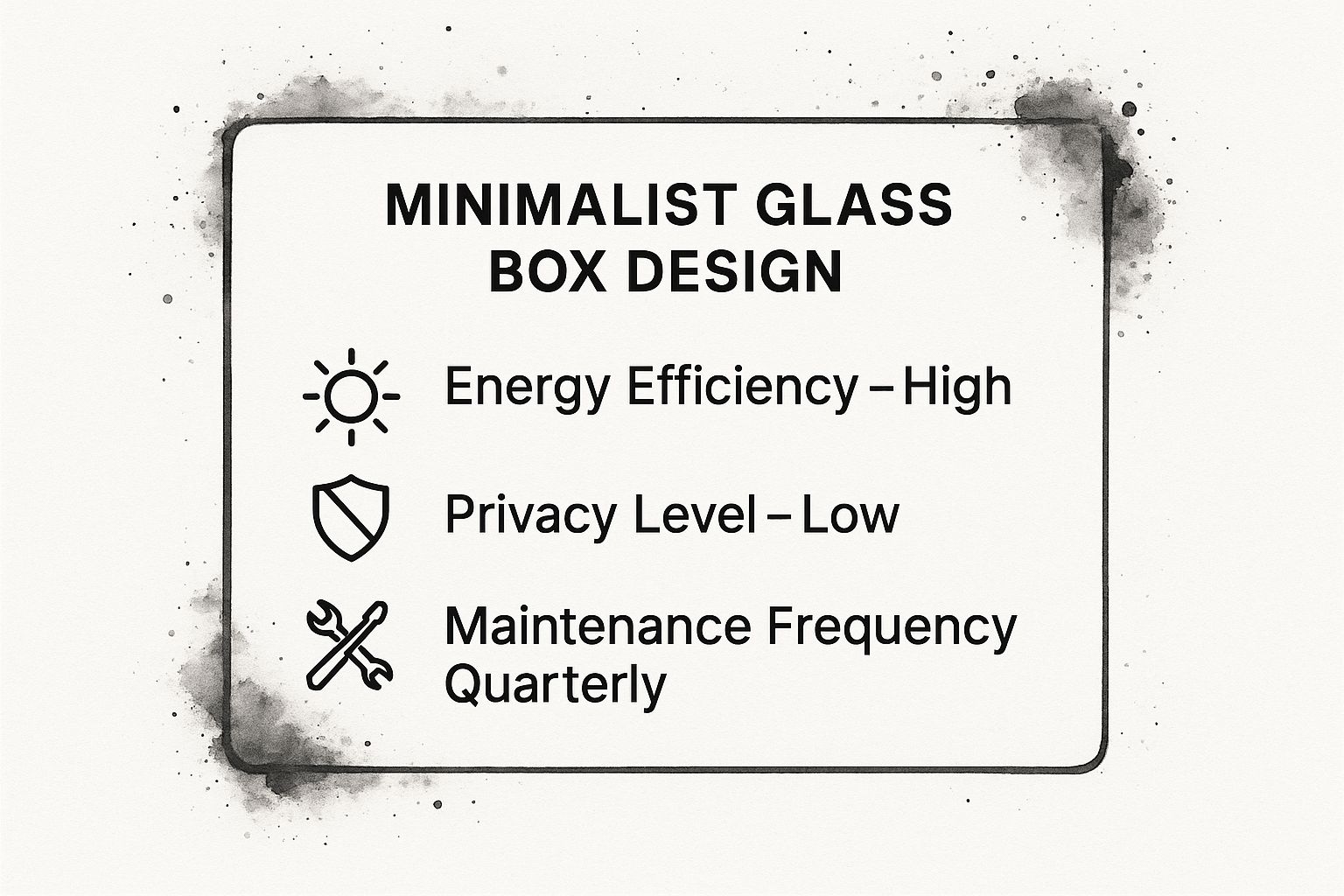
This data shows a clear balance: while you gain exceptional energy efficiency with the right glazing, you must actively manage privacy and commit to regular maintenance. For clients in Dubai, achieving this balance is paramount. As experienced architecture and engineering consultants in the UAE, Freeline Engineering can navigate these complexities, ensuring your villa is both a stunning design statement and a comfortable, practical home. Find out how our integrated design approach delivers exceptional modern villas tailored to the region.
2. Concrete and Steel Industrial Style
The Concrete and Steel Industrial Style is a bold and powerful approach to modern villa exterior design that celebrates raw materials and structural honesty. Championed by visionaries like Le Corbusier and Tadao Ando, this style features exposed concrete (béton brut), prominent steel elements, and a focus on unadorned geometric forms. It moves away from decorative finishes to let the inherent texture and strength of the materials define the villa’s character, creating a statement of sophisticated rawness.
This aesthetic is particularly fitting for clients in Dubai who appreciate minimalist yet impactful architecture. The design’s robust nature makes it an excellent choice for the UAE, offering exceptional durability against the harsh climate while delivering a striking, contemporary look. The interplay between the solid, monolithic presence of concrete and the sleek, linear nature of steel results in a visually dynamic and enduring structure.
Key Considerations for Implementation
Executing an industrial-style villa requires precision in both material selection and construction technique to achieve a refined finish. Here are the critical factors to consider:
- High-Quality Concrete Mix: Use a high-grade concrete mix, often with specific admixtures suited for the local climate, and ensure expert pouring and finishing. Techniques like board-formed concrete can be used to add subtle, organic texture to the surfaces, elevating the raw material into a key design feature.
- Thermal Bridging and Insulation: Exposed structural elements like steel and concrete can create thermal bridges, leading to heat transfer. It is crucial to incorporate thermal breaks and high-performance insulation within the building envelope to maintain energy efficiency and interior comfort, a key requirement for Dubai’s building codes.
- Balancing Interior Aesthetics: The exterior’s cool, industrial feel should be thoughtfully balanced inside. Incorporating warmer materials like natural wood, soft textiles, and strategic lighting can prevent the interiors from feeling cold or stark, creating a welcoming living space.
The following summary box highlights the main trade-offs associated with this architectural style.
This data shows that while the industrial style offers exceptional durability and a unique aesthetic, it requires expert engineering to manage thermal performance and a thoughtful interior design strategy to ensure comfort. At Freeline Engineering, our integrated team of architects and engineers excels at mastering these complexities. We ensure that your industrial-style villa is not only a structurally sound and visually stunning masterpiece but also an energy-efficient and comfortable home perfectly suited to the Dubai climate. Discover how our expertise in modern villa design can bring your vision to life.
3. Natural Stone and Wood Fusion
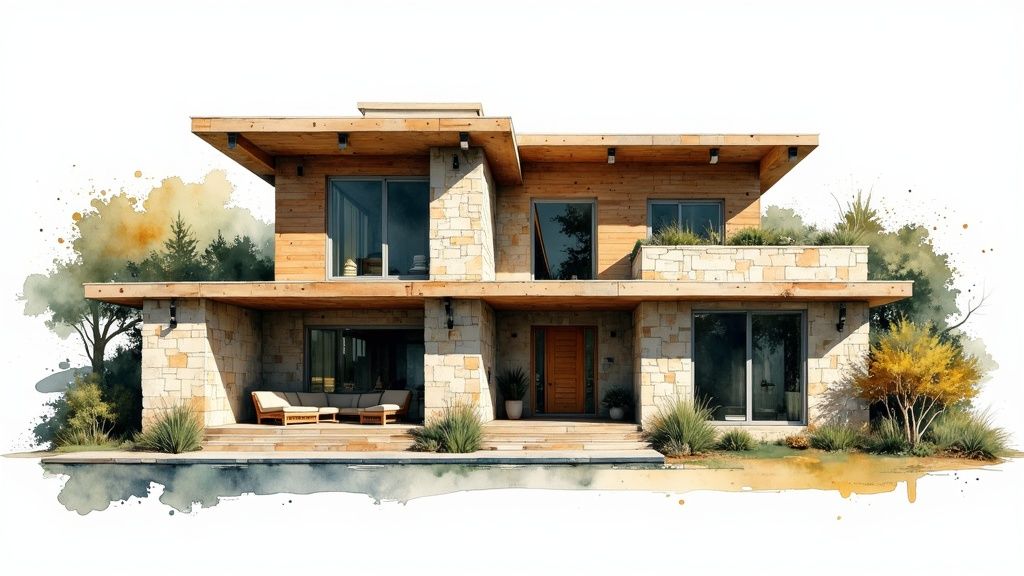
The fusion of natural stone and wood is a defining characteristic of a powerful modern villa exterior design trend that seeks harmony between human-made structures and the natural world. This style pairs the rugged, timeless appeal of stone masonry with the organic warmth and texture of timber. It creates a sophisticated yet grounded aesthetic, connecting the home to its surroundings through materiality, as championed by architects like Peter Zumthor.
This approach is exceptionally versatile, fitting seamlessly into Dubai’s luxury communities. By utilising materials drawn from the earth, the design fosters a sense of authenticity and permanence. It moves beyond sterile modernism to create a tactile, inviting facade that balances clean lines with rich, natural textures, offering a sanctuary that feels both contemporary and deeply rooted in its environment.
Key Considerations for Implementation
Executing a seamless fusion of stone and wood requires expert material selection and detailing to ensure longevity and visual coherence, especially in the demanding climate of the UAE.
- Material Selection and Sourcing: Prioritise locally sourced stone like Omani limestone or UAE-native sandstone to enhance regional character and sustainability. For wood, select durable, treated hardwoods such as teak or Iroko, or engineered wood products that can withstand Dubai’s intense heat, humidity, and UV exposure.
- Moisture and Thermal Management: It is critical to design proper moisture barriers and expansion joints between stone and wood elements to prevent water ingress and material degradation due to thermal expansion. This detailing is essential for the building’s long-term structural health.
- Maintenance Planning: While durable, both materials require care. Plan for periodic sealing of the stone to prevent staining and regular treatment of the wood to protect it from UV exposure and maintain its rich colour.
This architectural style offers a compelling blend of rustic charm and modern elegance. While it requires a commitment to material selection and ongoing maintenance, the result is a villa with unparalleled character and a profound connection to its environment.
At Freeline Engineering, our expertise in material science and structural engineering ensures these elements are integrated flawlessly. We guide clients in selecting the right materials for the UAE climate and implement construction details that guarantee both aesthetic beauty and lasting durability. Discover how we can bring your vision for a natural modern villa to life.
4. Parametric and Biomimetic Forms
Parametric and Biomimetic Forms represent the avant-garde of modern villa exterior design, where architecture draws inspiration from nature’s complexity and is realised through advanced computational tools. This approach moves beyond traditional rectilinear shapes, embracing organic, flowing lines and dynamic structures popularised by architects like Zaha Hadid. The resulting villas are not just buildings but sculptural masterpieces, with exteriors that can mimic natural patterns or even respond dynamically to environmental conditions.
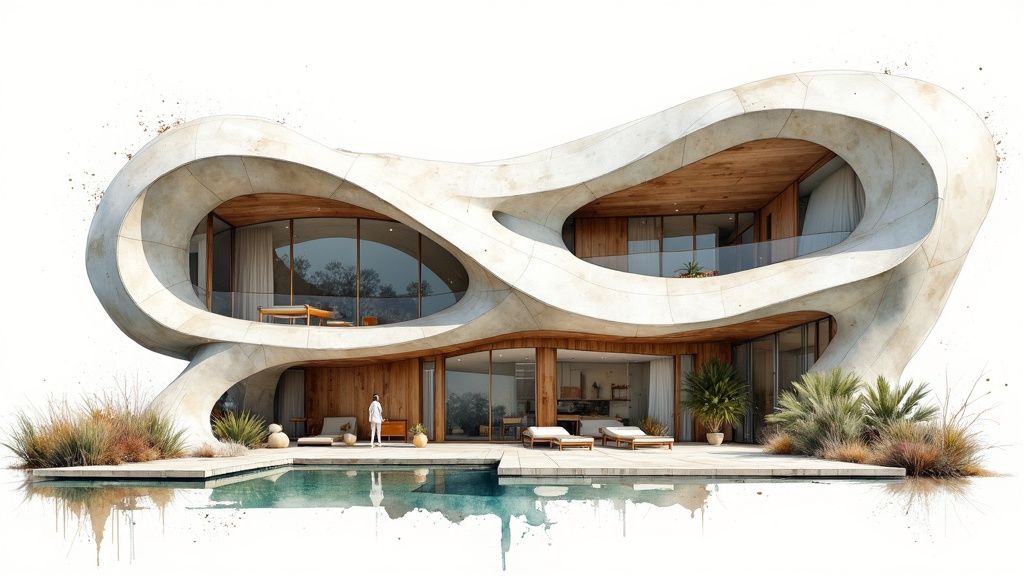
This design philosophy is for visionary clients in Dubai who desire a truly unique and futuristic residence. It uses algorithms to generate complex geometries that would be impossible to design by hand, resulting in fluid walls, wave-like roofs, and intricate facades. These forms are not merely aesthetic; they can be optimised for performance, such as improving natural ventilation or maximising light exposure, making the design both intelligent and beautiful.
Key Considerations for Implementation
Executing a parametric or biomimetic design demands a fusion of artistic vision and high-level technical expertise. The complexity requires meticulous planning and specialised skills. Here are the key factors to consider:
- Computational Design Expertise: This style requires architects and engineers proficient in parametric software like Grasshopper and Revit. The design process is iterative and data-driven, demanding a team that understands how to translate complex algorithms into buildable structures.
- Custom Fabrication: Standard construction materials and methods are often insufficient. The project budget must account for specialised fabrication of custom moulds, curved panels (like GRC or GRP), and non-standard structural components, which can significantly impact project costs and timelines.
- Structural Engineering Mastery: The unconventional, non-linear forms necessitate advanced structural analysis to ensure stability and safety. A highly experienced engineering team is crucial to solve the unique challenges posed by cantilevered structures and sweeping curves, ensuring full compliance with Dubai’s rigorous building codes.
The video below offers a glimpse into the incredible potential of parametric architecture.
Successfully bringing such complex designs to life requires precise coordination, which is where advanced digital methodologies become essential. At Freeline Engineering, our mastery of these cutting-edge digital tools allows us to de-risk and streamline the construction of even the most ambitious parametric villas in Dubai. We ensure that your visionary design is engineered with precision from concept to completion.
5. Green Roof and Living Wall Integration
Green Roof and Living Wall Integration is a defining feature of sustainable modern villa exterior design, transforming buildings into living ecosystems. This approach involves covering roofs with vegetation (green roofs) and cladding facades with plants (living walls), merging architecture directly with nature. Popularised by visionaries like Patrick Blanc and architectural firms such as WOHA, this style emphasises biodiversity, improved air quality, and natural insulation.
This design philosophy is particularly impactful in urban settings like Dubai, where it reintroduces greenery into dense environments, creating a striking visual contrast against the modern cityscape. It turns the villa into a statement of ecological responsibility, offering both aesthetic beauty and significant environmental benefits. This approach fosters a direct connection with the natural world, enhancing resident well-being and promoting a healthier lifestyle.
Key Considerations for Implementation
A successful green facade or roof is a complex system that demands expert engineering and horticultural knowledge, especially in Dubai’s climate. Key factors for a thriving and durable installation include:
- Structural Load Capacity: Green roofs and walls add significant weight from saturated soil, water, and plants. The villa’s structure must be engineered from the initial design phase to safely support this additional load, a critical check for obtaining building permits.
- Waterproofing and Irrigation: A high-performance, multi-layered waterproofing membrane is non-negotiable to prevent leaks and structural damage. An automated, water-efficient drip irrigation and drainage system is also essential to conserve water in the UAE’s arid climate.
- Climate-Appropriate Plant Selection: Choosing native or drought-tolerant plant species like Ghaf trees, bougainvillea, or desert grasses is crucial for long-term survival and minimal maintenance. The selection must withstand intense sun exposure and high temperatures while contributing to local biodiversity.
As specialists in integrated design, Freeline Engineering ensures that these critical systems are flawlessly planned and executed. We design villas where nature is not just an afterthought but a core component of the architectural identity. Discover how we incorporate green architecture and sustainability in our projects to create stunning, eco-conscious homes. Learn more about our approach to sustainable design.
6. Mediterranean Contemporary Fusion
The Mediterranean Contemporary Fusion is a sophisticated take on modern villa exterior design that blends the timeless appeal of traditional Mediterranean architecture with clean, contemporary aesthetics. This style honours regional character through elements like white-washed walls, natural stone, and shaded courtyards while stripping away ornate details in favour of minimalist forms, large windows, and seamless indoor-outdoor connections. It’s a design that feels both rooted in history and perfectly suited for modern living in Dubai.
This architectural approach is ideal for the UAE’s climate, as it inherently incorporates principles of passive cooling and a focus on outdoor living. Think of contemporary villas in communities like Jumeirah Islands that prioritise natural light, airflow, and a relaxed, elegant atmosphere. The result is a villa that is bright, airy, and deeply connected to its surroundings.
Key Considerations for Implementation
Executing a successful Mediterranean Contemporary Fusion requires a delicate balance between old-world charm and modern precision. Here are the crucial factors to consider:
- Material Authenticity: Use materials traditional to the Mediterranean, such as stucco, limestone, terracotta, and natural wood, but apply them in clean, modern ways. For example, a smooth, unadorned white stucco facade can be paired with minimalist dark metal window frames.
- Emphasis on Outdoor Living: The transition between inside and outside should be fluid. Incorporate features like pergolas, shaded patios, and private courtyards that act as extensions of the interior living space. This is a core tenet of the style and essential for comfort in Dubai’s climate.
- Strategic Shading and Cooling: Plan for deep overhangs, modern mashrabiya-style screens, and strategically placed openings to manage sun exposure and encourage natural ventilation. This respects traditional climate-responsive design while maintaining a sleek, modern look.
The following summary box highlights the main trade-offs associated with this architectural style.
This data illustrates that while this style excels in creating a strong indoor-outdoor connection and offers excellent climate adaptability, it requires thoughtful material selection to achieve a truly authentic yet modern feel. At Freeline Engineering, our expertise in regional building practices allows us to perfectly balance these elements. We design stunning outdoor living spaces that are both beautiful and functional, ensuring your villa is a sanctuary from the Dubai heat. Learn more about how to design an outdoor living space that complements your contemporary Mediterranean villa.
7. Scandinavian Timber Modernism
Scandinavian Timber Modernism blends the rich tradition of Nordic timber construction with the clean, functional principles of contemporary architecture. This style is a standout in modern villa exterior design, celebrated for its extensive use of natural wood, minimalist lines, and an intrinsic connection to its surroundings. Architects like Snøhetta and Tham & Videgård have popularised this approach, creating structures that are both warm and rigorously modern, often featuring large windows to maximise natural light.
While originating in colder climates, its principles of light and material honesty can be adapted to create unique and inviting villas in Dubai. The focus on natural materials and simple forms creates a serene atmosphere, offering a tranquil escape from urban life. The challenge and opportunity lie in adapting this style to the local climate through smart engineering and material choices.
Key Considerations for Implementation
Adapting Scandinavian timber design to a climate like the UAE’s requires careful material selection and technical expertise. The success of this style hinges on durability and performance.
- Treated and Seasoned Timber: Use high-quality, thermally modified or engineered timber that is properly treated to resist humidity, heat, and pests like termites. This ensures the wood’s longevity and stability in Dubai’s demanding environment.
- Climate-Appropriate Design: While celebrating light, the design must incorporate deep eaves, brise-soleils, or other shading elements to protect the interior from excessive solar gain and shield the timber from direct, prolonged sun exposure.
- Maintenance and Protection: Plan for regular maintenance cycles. Applying protective, UV-resistant finishes is crucial to prevent the timber from weathering unevenly or deteriorating. Fire-resistant treatments are also a vital safety consideration that aligns with local civil defence regulations.
The following summary box highlights the main trade-offs associated with this architectural style.
This data illustrates that while Scandinavian design offers unparalleled aesthetic warmth, it demands a commitment to specialised materials and ongoing maintenance. Successfully adapting this style for Dubai requires a deep understanding of local conditions. As a leading architecture consultant company in Dubai, Freeline Engineering has the expertise to specify the right materials and construction techniques, ensuring your timber villa is both beautiful and built to last. Discover how our architectural consulting can bring this vision to life with precision and regional insight.
8. Desert Modernism and Climate Responsive Design
Desert Modernism is an architectural philosophy born from and perfected for arid environments. This approach to modern villa exterior design is not merely an aesthetic choice; it is a strategic response to challenging climates, prioritising thermal comfort, sustainability, and a deep connection to the surrounding landscape. Pioneered by architects like Richard Neutra in places like Palm Springs, its principles are exceptionally relevant to the UAE. The style is characterised by strong horizontal lines, deep overhangs, and materials that harmonise with the desert.
This design philosophy creates buildings that work with nature, not against it. By carefully considering sun angles, wind patterns, and temperature fluctuations, these villas offer shaded, cool sanctuaries that reduce reliance on artificial cooling. The exterior becomes a functional element, with features like brise-soleils (sun-breakers), courtyards, and strategically placed solid walls that manage heat gain while framing stunning desert vistas, making it an intelligent and beautiful solution for a contemporary home in Dubai.
Key Considerations for Implementation
Successfully creating a Desert Modernist villa requires a nuanced understanding of climate-responsive principles and material science. Here are the crucial factors to consider:
- Solar Orientation and Shading: The villa’s placement and orientation are paramount. Design deep roof overhangs, cantilevered structures, and vertical fins to cast shadows on glass surfaces and outdoor living areas, particularly during the hottest parts of the day. This is a core principle for passive design in Dubai.
- Thermally Appropriate Materials: Utilise materials with high thermal mass, such as insulated concrete blocks, stone, or even modern rammed earth techniques, which absorb heat during the day and release it slowly at night. Combine these with light, reflective colours to minimise solar absorption.
- Water Conservation Integration: Integrate systems like greywater recycling for irrigation. Landscape design should feature native, drought-tolerant plants such as Ghaf trees and desert succulents to reduce water consumption and connect the villa to its natural context.
This modern villa exterior design approach offers a powerful blend of timeless aesthetics and practical, climate-specific functionality. For clients in Dubai, harnessing these principles is key to creating a home that is both sustainable and luxurious. As a leading architecture and engineering consultancy in the UAE, Freeline Engineering specialises in designing villas that respond intelligently to the local environment, ensuring comfort and efficiency. Discover how our architectural expertise can bring your climate-responsive villa to life.
9. Floating and Cantilevered Volumes
A truly dramatic approach to modern villa exterior design, floating and cantilevered volumes use advanced structural engineering to create elements that appear to defy gravity. This style features sections of the villa, such as upper floors or rooflines, that project outwards without any visible support from below. Drawing inspiration from architectural pioneers like Frank Lloyd Wright and Zaha Hadid, this technique produces a striking visual tension between solid mass and open space.
This architectural statement is ideal for properties on unique plots or for clients who desire a residence that is both a home and a piece of structural art. In Dubai’s luxury market, cantilevers are used to create sheltered outdoor living areas, frame spectacular views of the skyline or sea, or simply add an unparalleled sense of dynamism and sophistication to the villa’s form. The result is a bold, sculptural aesthetic that immediately captures attention.
Key Considerations for Implementation
Executing a design with significant cantilevers is a feat of engineering that demands precision and expertise from the very beginning of the project.
- Expert Structural Engineering: The success of this design hinges entirely on the structural engineer. A deep understanding of load distribution, tensile strength, and material behaviour is non-negotiable. It is vital to engage an experienced, locally licensed engineering consultant early in the design process to ensure the concept is viable under Dubai Municipality regulations.
- Robust Foundation and Counterbalance: The unseen portion of the structure is as important as the visible cantilever. The design requires a substantial foundation and a carefully calculated counterbalance within the main structure to ensure absolute stability and safety over the long term.
- Material Selection: High-strength materials such as reinforced concrete and steel are typically used to achieve the necessary structural integrity for long spans. The choice of materials directly impacts the possible length and weight of the cantilevered volume.
This style makes a powerful statement but requires a significant investment in specialised engineering and construction. For those looking to build a landmark villa in the UAE, the visual rewards are immense. Freeline Engineering’s integrated team of architects and structural engineers possesses the specialised expertise required to master these complex designs. We ensure your villa is not only visually stunning but also structurally sound and built to last. Consult with our experts to explore how we can bring your ambitious architectural vision to life.
Modern Villa Exterior Design Styles Comparison
| Design Style | Implementation Complexity 🔄 | Resource Requirements ⚡ | Expected Outcomes 📊 | Ideal Use Cases 💡 | Key Advantages ⭐ |
|---|---|---|---|---|---|
| Minimalist Glass Box Design | Medium 🔄🔄 | High-performance glass, engineering ⚡ | High natural light, spaciousness, modern look 📊 | Modern villas emphasizing transparency | Timeless aesthetic, energy efficient ⭐ |
| Concrete and Steel Industrial | Medium to High 🔄🔄🔄 | Durable concrete and steel, waterproofing ⚡ | Strong visual impact, durability 📊 | Industrial or urban settings | Low maintenance, cost-effective ⭐ |
| Natural Stone and Wood Fusion | Medium to High 🔄🔄 | Skilled craftsmanship, natural materials ⚡ | Warm, insulated, blends with nature 📊 | Rustic-modern, environmentally conscious designs | Timeless natural beauty, excellent insulation ⭐ |
| Parametric and Biomimetic Forms | Very High 🔄🔄🔄🔄 | Specialized expertise, advanced tech ⚡ | Unique organic forms, optimized performance 📊 | Cutting-edge, highly customizable projects | Distinctive aesthetics, tech integration ⭐ |
| Green Roof and Living Wall | High 🔄🔄🔄 | Complex waterproofing, planting systems ⚡ | Sustainable, temperature regulation 📊 | Eco-friendly, biodiversity-supporting builds | Environmental benefits, unique aesthetics ⭐ |
| Mediterranean Contemporary Fusion | Medium 🔄🔄 | Regional materials, climate-appropriate ⚡ | Outdoor living focus, culturally rich 📊 | Warm climates, coastal regions | Strong cultural connection, market appeal ⭐ |
| Scandinavian Timber Modernism | Medium 🔄🔄 | Local timber, sustainable methods ⚡ | Insulated, cozy, nature-integrated 📊 | Northern climates, forested areas | Renewable materials, cultural authenticity ⭐ |
| Desert Modernism and Climate Responsive | Medium 🔄🔄 | Climate-adapted materials and shading ⚡ | Energy-efficient, heat management 📊 | Arid climates, desert environments | Proven climate adaptation, energy efficient ⭐ |
| Floating and Cantilevered Volumes | Very High 🔄🔄🔄🔄 | Specialized structural engineering ⚡ | Dramatic spatial effects, site-efficient 📊 | Challenging topographies, bold designs | Visual drama, innovative spatial use ⭐ |
Your Vision, Our Expertise: Building Dubai’s Future Villas Together
The journey through modern villa exterior design has showcased an incredible spectrum of architectural innovation. We have explored the sleek sophistication of minimalist glass boxes, the raw power of industrial concrete and steel, and the organic warmth of natural stone and wood. From the technologically advanced parametric forms to the climate-conscious principles of desert modernism, it’s clear that the future of luxury living is both aesthetically daring and environmentally intelligent.
These trends are not merely stylistic choices; they represent a fundamental shift in how we perceive and interact with our living spaces. The integration of green roofs, the dramatic flair of cantilevered volumes, and the harmonious blend of Mediterranean and contemporary styles all point towards a central theme: a desire for homes that are as functional and sustainable as they are beautiful. Mastering these concepts is the key to creating a property that is not just a residence, but a landmark piece of architecture that holds its value and relevance for decades.
From Blueprint to Reality in Dubai
Turning these ambitious designs into tangible realities, especially within Dubai’s dynamic and regulated construction landscape, requires a partner with deep-seated local expertise. The true challenge lies in navigating the intricate web of authority approvals (Dubai Municipality, Trakhees, DDA), adhering to stringent building codes, and managing the complexities of construction without compromising the original design intent. This is where a holistic, integrated approach becomes invaluable.
At Freeline Engineering Consultants, we bridge the gap between visionary design and flawless execution. As a family-owned, Dubai-based firm with over 25 years of experience, our strength lies in our comprehensive, in-house capabilities. We don’t just design; we engineer, we manage, and we deliver.
Our integrated model ensures every facet of your project, from the initial architectural sketches to the final structural sign-off, is handled with precision and a unified vision. We are your single point of contact for securing all necessary government approvals, managing construction tenders, and providing meticulous site supervision.
This seamless process eliminates the friction often found between separate design, engineering, and approval teams. It ensures your modern villa exterior design is not only visually stunning but also structurally sound, fully compliant with all local regulations, and delivered efficiently on time and within your budget. Our extensive portfolio of luxury villas across Dubai stands as a testament to our ability to transform complex architectural dreams into beautifully realised homes. We don’t just build villas; we engineer enduring legacies.
Ready to translate your vision for a modern villa into an architectural masterpiece? Partner with Freeline Engineering Consultants, your expert guide to design, engineering, and project management in Dubai. Contact us today at Freeline Engineering Consultants to schedule a consultation and begin the journey of building your dream home.