

Dubai is home to several world-class football stadiums, but its ambition to become a global sports hub means the demand for new, state-of-the-art venues is constantly growing. These structures are more than just playing fields; they're powerful symbols of the city's vision, designed to host international tournaments and offer unforgettable fan experiences.
Realizing Dubai's Vision for Global Sports
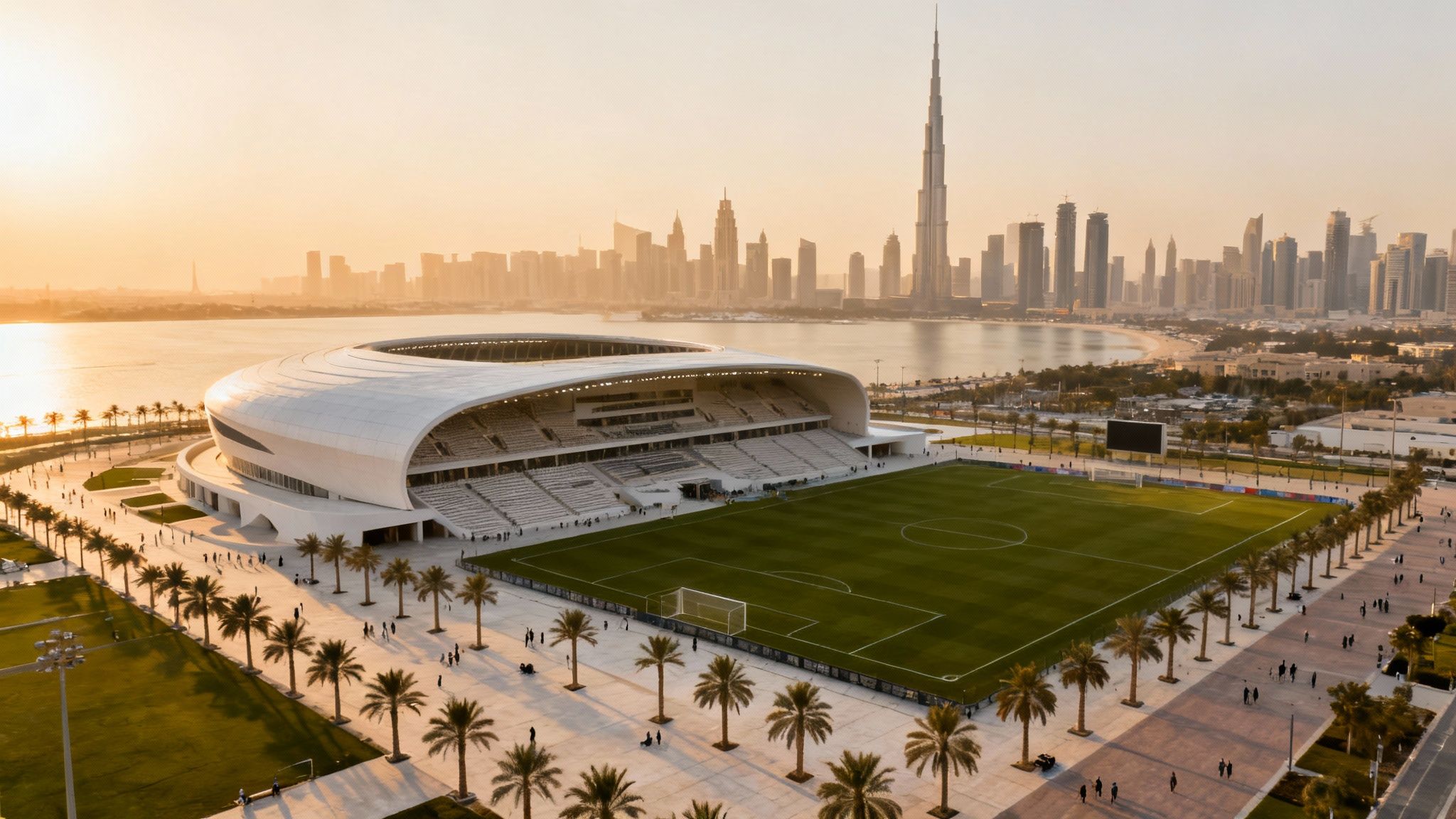
Dubai's iconic skyline is a testament to its ambition, a drive that extends far beyond architecture and into the competitive world of global sports. While the city is a leader in tourism and business, establishing itself as a premier destination for major sporting events is a crucial part of its future strategy. To get there, a world-class Dubai football stadium isn't just an asset—it's a necessity.
These venues are powerful economic engines. They attract international tourists, anchor global tournaments, and create vibrant community hubs that operate all year round. Modern arenas have become complex ecosystems, blending hospitality, retail, and entertainment to deliver an experience that starts long before kickoff and continues well after the final whistle. For a great example of this in action, look at this case study of a major Premier League Football Club and its operational successes.
The Current Sports Landscape
Dubai's existing sports infrastructure has a rich history. Take the Al Rashid Stadium, for instance. With a capacity of around 18,000, it's been a football hub since 1948 and has hosted major events like the 2019 AFC Asian Cup. While these stadiums have served the city well, the global standard for sporting venues has evolved dramatically. Today's spectators and broadcasters simply demand more.
This creates a clear need for a new generation of stadiums that incorporate:
- Advanced spectator technologies for immersive, interactive viewing experiences.
- Superior hospitality offerings, from premium corporate boxes to dynamic fan zones.
- Sustainable operational models that align with the UAE’s ambitious green initiatives.
- Multi-purpose functionality to host concerts, conferences, and other large-scale events.
Why Expert Engineering Is Non-Negotiable
Building a landmark Dubai football stadium requires more than just a grand design; it demands specialised engineering and a deep understanding of the local context. At Freeline Engineering Consultants, that’s exactly what we bring to the table. Our expertise in large-scale assembly projects ensures that an architect's vision is translated into a practical, compliant, and enduring structure.
We believe a truly great stadium harmonises expressive design with effective intelligence. It must be an icon on the skyline and an efficient, safe, and commercially viable venue for its owners and operators.
Our firm is the ideal partner because we intimately understand the intricate details of Dubai's regulatory environment and the unique engineering challenges this region presents. We focus on delivering projects that are not only visually impressive but are also built to the highest possible standards of safety and functionality. We transform complex challenges into functional, compelling spaces, as we did with the Al Wasl Centre. Let us help you build the future of sport in Dubai.
Designing an Unforgettable Spectator Experience
A truly great Dubai football stadium is so much more than a pitch and some seats. It’s an immersive environment, carefully crafted from the ground up to create lasting memories for every single fan. The entire venue is a journey, and every detail, from the moment a fan arrives in the car park to the final whistle, must be meticulously planned.
Think of it like designing a small city. You have tens of thousands of people who all need to move, engage, and feel comfortable at the same time. It’s a massive undertaking, but it all starts with one core principle.
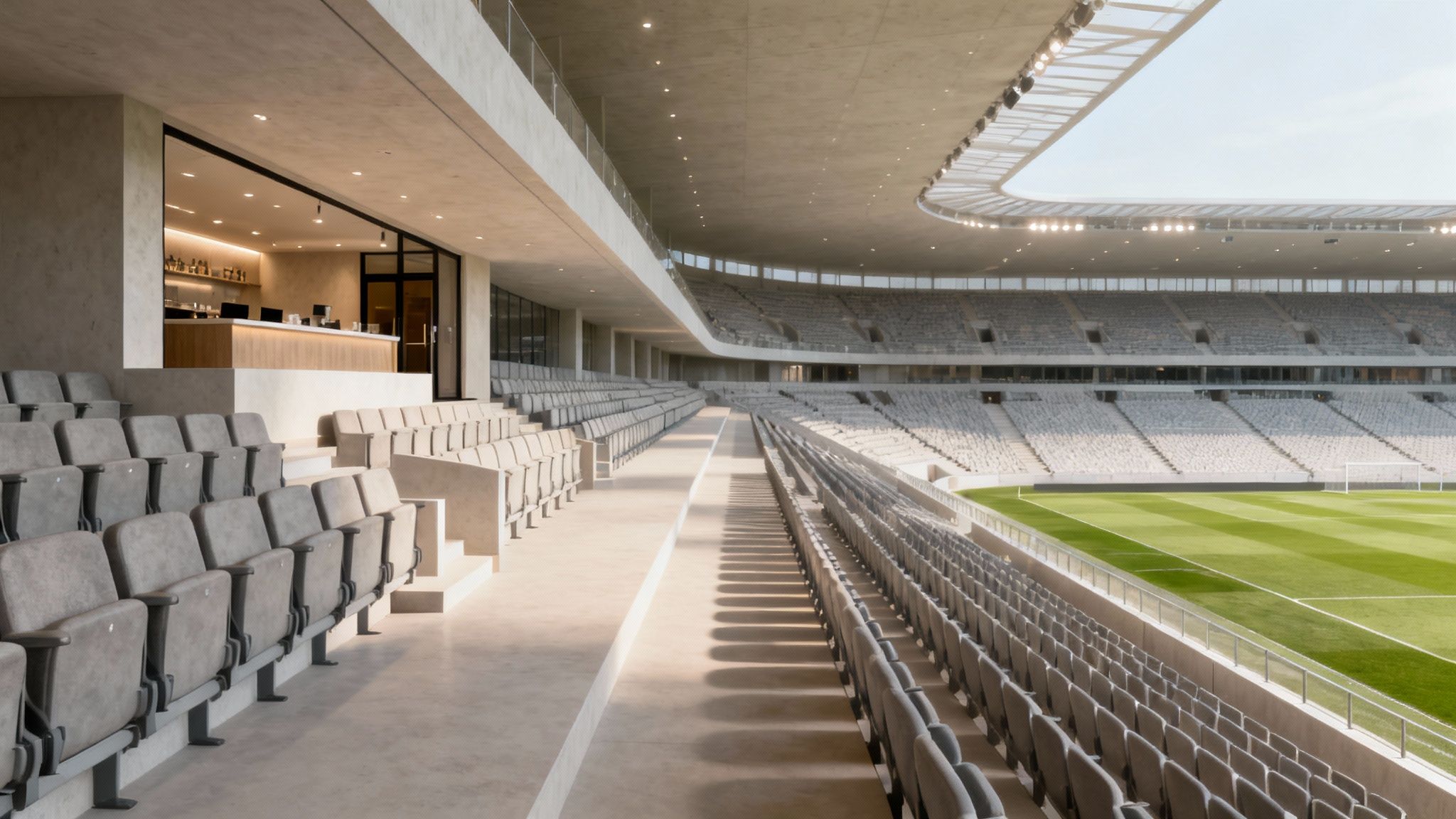
This process begins with a deep dive into sightline analysis. The goal sounds simple, but the execution is complex: make sure every single seat in the house offers an unobstructed and excellent view of the action. We use advanced modelling software to map out each vantage point, hunt down any potential blind spots, and guarantee that fans feel connected to the game, no matter where they’re sitting. This is the absolute bedrock of a positive spectator experience.
Engineering Seamless Crowd Movement
Just as important is mastering the crowd flow design. An exhilarating match can quickly turn into a frustrating ordeal if getting in, out, or even just around the stadium is a nightmare. Our job is to design concourses, entry gates, and exit routes that prevent bottlenecks and ensure smooth, intuitive movement, even when the stadium is packed to capacity. It's like choreographing a massive ballet of people, where every pathway is designed for efficiency and, above all, safety.
This thoughtful approach extends to every corner of the venue. Ensuring the stadium is accessible for all visitors is paramount. This is where you see how specialised services like ADA-compliant signage solutions contribute to a truly inclusive design. Without proper signage and clear, accessible pathways, you can’t create a welcoming environment for every fan.
Integrating Premium Facilities
Modern stadiums are multi-faceted destinations that have to cater to a wide range of visitors. Integrating diverse facilities isn't just a bonus; it’s key to maximising revenue and enhancing the overall experience for everyone. This typically includes:
- Hospitality Suites: We design exclusive corporate boxes and premium lounges that offer luxury, comfort, and prime views. These become incredibly valuable assets for the club and its partners.
- Retail and Concessions: It's all about strategic placement. By putting food, beverage, and merchandise outlets in the right spots, we can slash queue times and drive sales, turning them into convenient touchpoints rather than frustrating obstacles.
- Fan Zones: These dedicated areas for pre-game and post-game entertainment are crucial. They foster a powerful sense of community and extend the matchday experience well beyond the game itself.
A world-class stadium thinks beyond the 90 minutes of play. It must function as a vibrant, commercially successful hub that serves players, media, and fans with equal excellence. This is achieved by balancing iconic aesthetics with practical, operational intelligence.
Designing for Players and Media
The "backstage" areas are just as critical as the main bowl. A modern Dubai football stadium has to provide world-class facilities for the athletes and the press who cover them. This means designing spacious, state-of-the-art changing rooms that meet tough international standards, along with dedicated warm-up areas and top-tier medical facilities.
For the media, we create fully equipped press conference rooms, broadcast studios, and commentary boxes with rock-solid connectivity and optimal positioning. These elements are what ensure seamless global coverage, which in turn elevates the stadium's profile on the international stage.
At Freeline Engineering Consultants, we understand that every one of these elements contributes to the whole. Our expertise lies in weaving together these complex requirements into a cohesive and compelling design. As a leading architecture firm in Dubai, we have a proven track record of delivering large-scale assembly projects that are both visionary and practical. We’re in the business of translating ambitious concepts into tangible, unforgettable experiences, ensuring your stadium project becomes a landmark venue. Let's discuss how we can bring your vision to life.
Solving Dubai's Unique Engineering Puzzles
Putting up any large-scale building is a complex job, but a Dubai football stadium? That’s a whole different ball game. The engineering puzzles we have to solve here are found almost nowhere else on Earth, thanks to the region's intense climate and tricky ground conditions. It’s not about following a standard blueprint; it's about a specialised approach, a delicate dance between fighting the elements and guaranteeing rock-solid structural integrity.
The biggest opponent, without a doubt, is the scorching desert heat. A stadium isn't just a structure; it's a self-contained microclimate that has to keep tens of thousands of people comfortable and safe. The number one engineering goal becomes a battle against solar gain and high ambient temperatures. We have to create a pleasant environment for fans and players alike, even in the dead of summer.
This is where climate-responsive design moves from a nice-to-have to an absolute necessity. Just pumping in more air conditioning is a brute-force approach that’s neither sustainable nor smart. Instead, we focus on intelligent, passive strategies that work with the environment. It all starts with the careful orientation and shape of the stadium to keep the sun’s harshest rays off the seating bowl and the pitch.
Mastering Climate Control and Shading
Innovative shading is the bedrock of any successful Dubai stadium project. The roof isn't just a lid; it’s the primary shield against the sun. We design massive yet lightweight roof structures, often using advanced materials like PTFE (polytetrafluoroethylene) fabric. This material is fantastic because it provides ample shade while still letting diffused natural light filter through, which is crucial for keeping the grass on the pitch green and healthy.
But the roof is only part of the story. We also integrate sophisticated cooling technologies. Think of systems that pipe cool air directly to the spectators through vents placed right under their seats. It’s a highly targeted method—we cool the people, not the vast, empty air volume of the stadium, which makes it dramatically more energy-efficient.
The real engineering achievement in a Dubai stadium is not just making it stand, but making it comfortable. It requires a deep understanding of thermodynamics, airflow, and material science to create an oasis of comfort in the middle of the desert.
Building on Solid Foundations
Beneath the gleaming superstructure lies another critical challenge: Dubai's unique geotechnical landscape. The ground beneath our feet can vary from soft marine silts to dense sand, and each type demands a different strategy for stability. Before a single drop of concrete is poured, a comprehensive geotechnical investigation is non-negotiable. We have to know exactly what we're building on and how it will behave under immense pressure.
When it comes to the complex structural challenges of stadiums in the region, several key factors come into play. We've summarized the main hurdles and our engineering responses below.
Key Engineering Considerations for Dubai Stadiums
| Challenge | Primary Consideration | Engineering Solution |
|---|---|---|
| Extreme Heat | Managing solar gain and ambient temperature for spectator and player comfort. | Climate-responsive design, advanced shading with materials like PTFE, and targeted under-seat cooling systems. |
| Variable Soil Conditions | Ensuring foundational stability on ground ranging from soft marine deposits to dense sand. | Extensive geotechnical investigations followed by deep piling or advanced soil improvement techniques. |
| Wind Loads | Designing large, lightweight roof structures to withstand dynamic wind forces, including uplift. | Advanced computational fluid dynamics (CFD) modeling and wind tunnel testing to engineer aerodynamic forms. |
| Material Durability | Selecting materials that resist degradation from high UV exposure, heat, and humidity. | Use of specialized, durable materials like coated fabrics, corrosion-resistant metals, and high-performance concrete. |
These considerations are not just theoretical; they are the practical realities we engineer for on every project to ensure long-term safety and performance.
For a massive, low-slung structure like a stadium, which distributes enormous and varied loads, a powerful foundation is everything. Our team specializes in designing foundation systems that are tailor-made for these conditions. This often means driving deep piles into the ground or using soil improvement techniques to create an unshakeable base. A deep understanding of structural engineering in Dubai is absolutely essential to manage these underground risks and ensure the venue's long-term safety.
The city’s ability to tackle these challenges with incredible speed is also a testament to its engineering prowess. In a stunning feat of logistics and construction, Dubai built a dedicated 3,900-seat stadium for the FIFA Beach Soccer World Cup in a record-breaking 25 days. The venue was engineered with a world-class pitch sand that absorbed heavy rains just before the event, ensuring perfect playing conditions. You can read more about this rapid stadium construction project on KhaleejTimes.com.
Our Expertise in Action
At Freeline Engineering Consultants, solving these complex puzzles is what we do best. Our specific expertise in large assembly projects and low-rise structures makes us a natural fit for stadium development. We don't believe in one-size-fits-all solutions. We engineer custom strategies that directly answer the specific climate, soil, and operational demands of your project.
We believe a great Dubai football stadium is a monument to smart, localized engineering. It must be more than just a striking landmark; it must be fundamentally sound, safe, and built for the future. By blending our deep local knowledge with advanced engineering principles, we deliver structures that are truly built to last in this unique environment. Let’s start a conversation about how our specialised expertise can provide the robust engineering foundation your stadium vision deserves.
Navigating Dubai's Regulatory Approval Process
An exceptional design for a Dubai football stadium is just the beginning. Turning that vision into a physical structure depends entirely on getting through the city's tough regulatory landscape. After all, what good is an innovative plan if it can't get the green light to actually be built? This is where deep, local knowledge isn't just helpful—it's everything.
Don't mistake this for a simple box-ticking exercise. It's a detailed, multi-stage journey overseen by key authorities with some of the highest standards in the world. A small misunderstanding of their specific rules or submission requirements can lead to massive—and expensive—delays, putting the entire project timeline at risk.
The Key Gatekeepers: Dubai Municipality and Dubai Civil Defence
Two main bodies are the primary gatekeepers for any major construction project in the emirate. To manage a stadium development successfully, you have to understand their distinct roles and be proactive about meeting their requirements right from the earliest design stages.
- Dubai Municipality (DM): The DM is the main authority looking after all things related to urban planning and construction. They'll review your designs for structural integrity, check that you're following zoning laws, assess environmental impact, and make sure everything lines up with the Dubai Building Code. Their approval is the key to getting a building permit.
- Dubai Civil Defence (DCD): The DCD’s focus is laser-sharp: fire and life safety. For a huge venue like a stadium where thousands gather, their review is incredibly detailed. They will scrutinize everything from emergency exit routes and fire suppression systems to the types of materials used in construction, all to ensure the venue can be evacuated safely and quickly if needed.
The infographic below gives you a snapshot of the core engineering considerations that must be handled perfectly to satisfy these authorities, from climate adaptation to the very foundations of the structure.
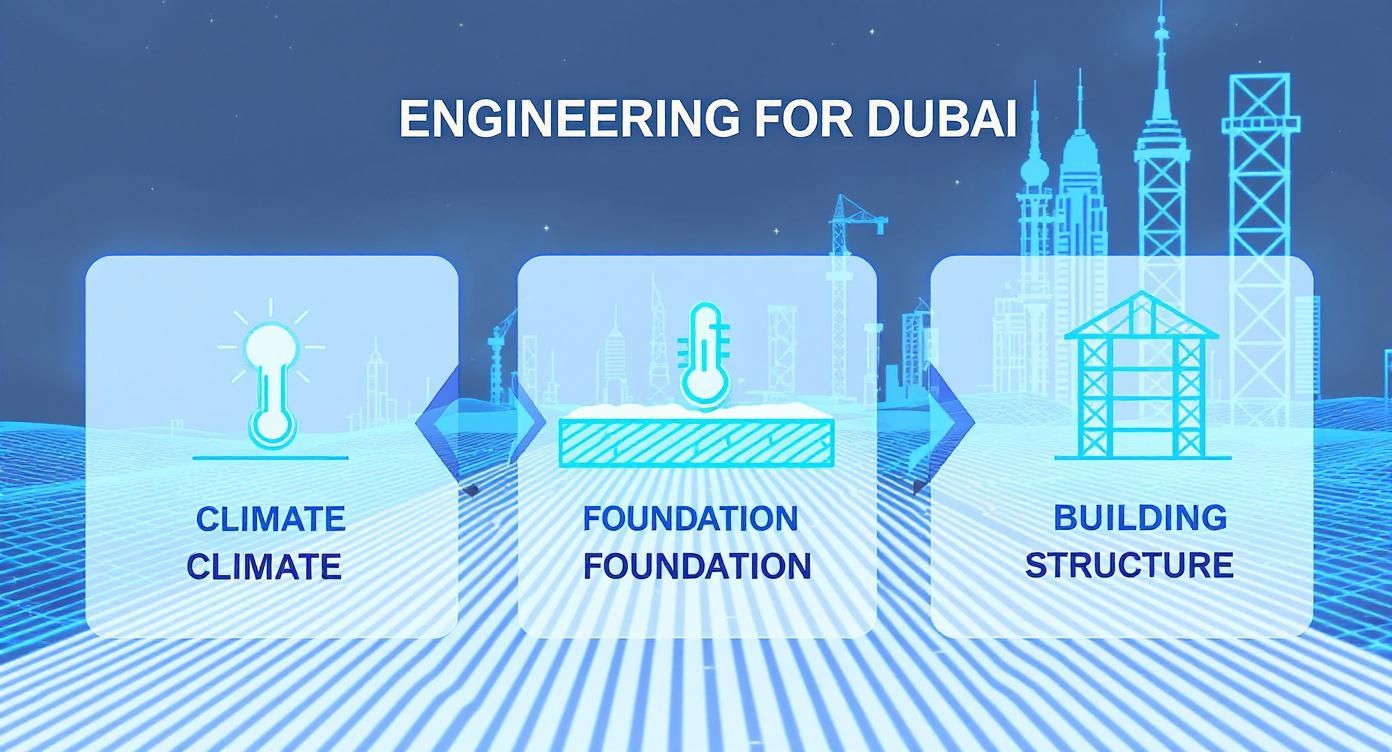
As you can see, the process flows logically from climate analysis to the foundational and structural design. Each stage builds on the one before it, forming the solid basis required for a successful regulatory submission.
Milestones on the Path to Approval
The road from an idea on paper to a fully functioning stadium is marked by several critical regulatory milestones. Each one demands precise documentation and technical skill to pass inspection. An experienced partner can guide a project through this complex maze without a hitch.
- Concept Design NOC: It usually starts with getting a No Objection Certificate (NOC) for your initial concept. This ensures your high-level plan fits with Dubai's overall strategic vision.
- Building Permit Application: This is the most demanding part. It involves submitting detailed architectural, structural, and MEP (Mechanical, Electrical, and Plumbing) drawings to both the DM and DCD.
- Construction Phase Inspections: As the stadium is being built, officials from both authorities will show up for regular site inspections to make sure the work on the ground matches the approved plans exactly.
- Building Completion Certificate (BCC): This is the final, most important step. The BCC is only given out after a last, thorough inspection confirms that the finished stadium follows every single regulation, making it officially ready for the public.
Navigating Dubai's approval process is not just about following rules; it's about understanding the intent behind them. Our firm’s institutional knowledge allows us to anticipate requirements, prepare meticulous submissions, and engage with authorities proactively, transforming a potential bottleneck into a streamlined process.
This is exactly where our team shines. With nearly three decades of experience right here in Dubai, we have built a deep understanding of the local byelaws and created strong working relationships with the authorities. We don’t just submit plans and hope for the best; we make sure they are right the first time. Our expertise in local regulations and our methodical approach to building and engineering are why we are the best firm to guide your project through this complex journey.
Contact Freeline Engineering Consultants today. Let us be your essential partner in navigating the regulatory landscape, ensuring your Dubai football stadium project moves from blueprint to reality without costly delays. We provide the certainty and expertise needed to get your landmark venue built and approved.
Choosing the Right Partner for Your Stadium Project
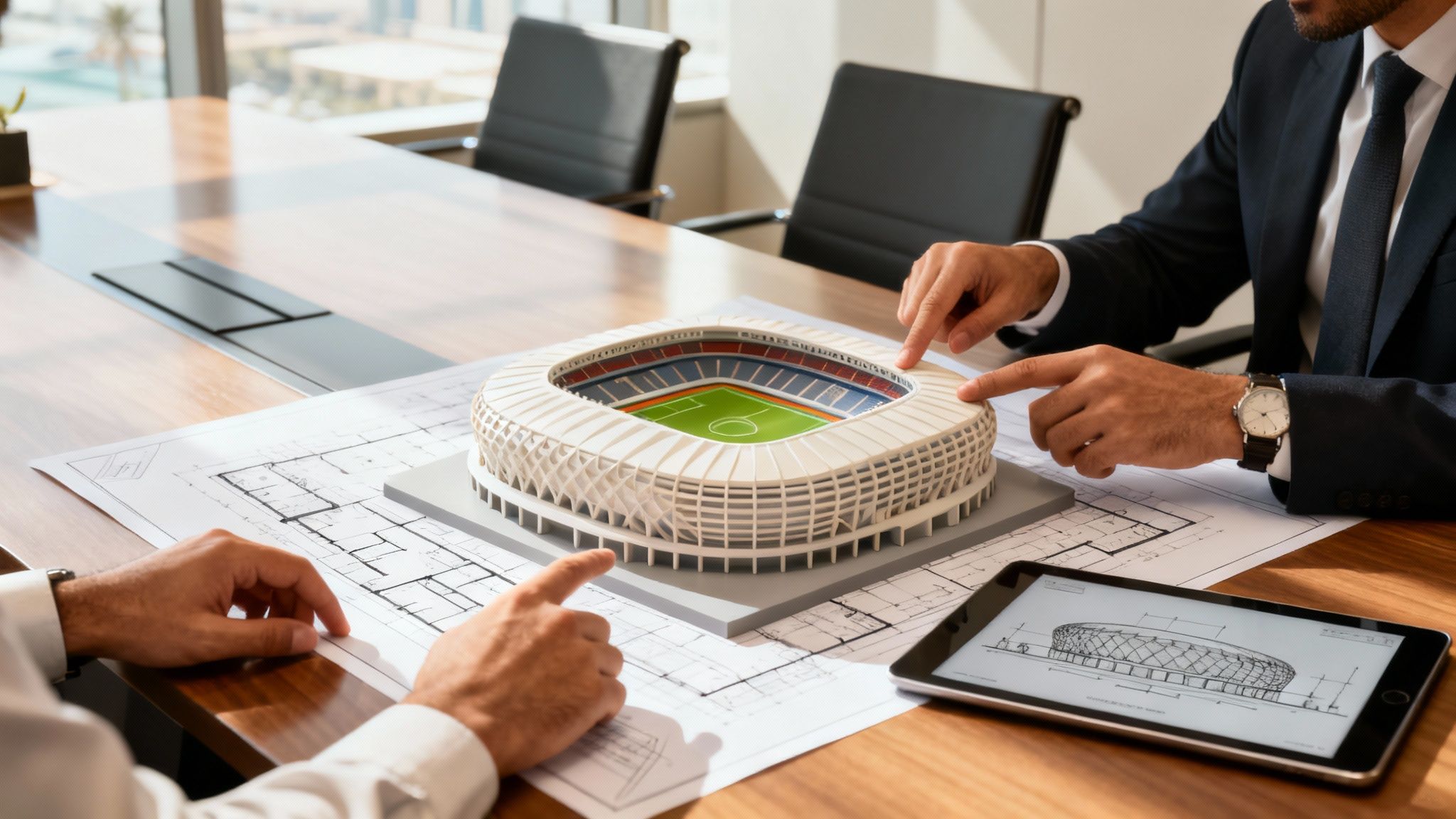
Picking the right engineering partner is probably the most critical decision you'll make for your Dubai football stadium project. This choice doesn't just shape how the stadium looks; it determines its long-term safety, viability, and how well it operates day-to-day. A brilliant architectural vision needs a sharp, experienced engineering team to bring it down to earth—making sure it can be built on schedule, on budget, and fully compliant with local regulations.
This is exactly where a specialist firm makes all the difference. General consultants might apply broad-stroke principles to a highly specific challenge, but a dedicated team brings focused, hard-won expertise. We know a stadium isn't just another building. It's a massive public venue that has to handle huge dynamic loads from crowds while standing strong against Dubai’s demanding climate.
Our firm was founded on this very knowledge. We don't just draft structures; we deliver legacy venues that are practical, compliant, and built to last for generations of fans. This is what we do, and our work across Dubai speaks for itself.
Why Local Specialisation Matters More Than Ever
Going with a firm that doesn't have deep roots in Dubai is a serious gamble. You can't learn about the region's unique climate, tricky soil conditions, or complex building codes from a textbook—you have to have lived it. A generalist might underestimate the intense effect of solar gain or misjudge the foundation needed for sabkha soil, leading to expensive redesigns and frustrating delays.
We have an intimate grasp of these local details because we've been engineering solutions here for nearly three decades. We know exactly what Dubai Municipality and Dubai Civil Defence are looking for in submissions because we’ve successfully navigated their approval processes time and time again. This insider knowledge is a huge advantage, turning a potentially difficult process into a smooth one.
On top of that, we specialise in the very types of structures that make up a stadium: large-scale, low-rise assembly projects. This focus means we excel at creating efficient, solid designs for the grandstands, concourses, and sweeping roof structures that are the soul of any Dubai football stadium.
Our Expertise vs Generalist Firms
When you're building a landmark, the difference between a specialist and a generalist is stark. Here’s a quick look at what sets our focused approach apart.
| Service Aspect | Our Specialised Approach | Generalist Firm Approach |
|---|---|---|
| Local Regulations | Deep, working knowledge of Dubai Municipality & DCD codes from decades of successful submissions. | General understanding of codes; may face learning curves and approval delays. |
| Climate Adaptation | Designs proactively address Dubai's extreme heat, humidity, and solar gain for longevity. | May apply standard solutions that are not optimised for the local climate, leading to issues. |
| Structural Focus | Expertise in G+12 large-span structures, ideal for grandstands and stadium roofs. | Broader focus on various building types; may lack specific large-venue experience. |
| Project Efficiency | Integrated architect-engineer collaboration from day one to prevent costly late-stage changes. | Sequential process where design flaws are often caught later, causing budget overruns. |
| Problem Solving | Foresee and mitigate common local challenges (e.g., sabkha soil) before they impact the project. | Reacts to problems as they arise, which can disrupt timelines and increase costs. |
Our specialised experience isn't just a talking point—it's a tangible asset that protects your timeline, budget, and the ultimate success of your vision.
Our Integrated Approach From Vision to Reality
Our entire process is built on a tight partnership between design and engineering. We get involved with architects right from the start to make sure their creative vision is backed by solid, practical, and buildable engineering. This helps avoid the common trap where a beautiful design turns out to be structurally impossible or far too expensive to build.
The most successful stadiums are born from a seamless fusion of expressive creativity and effective intelligence. Our role is to provide that intelligence, ensuring every bold design choice is backed by rigorous engineering, guaranteeing the final structure is as safe and efficient as it is inspiring.
This collaborative way of working is why we’re known as one of the top architects and engineering consultants in Dubai. We don’t just follow a blueprint; we improve upon it, finding solutions that boost functionality, lower long-term running costs, and make construction smoother.
Proven Success in Large-Scale Projects
Our portfolio is a clear demonstration of our ability to handle complex projects. Take the Al Maktoum Stadium, home to Al Nasr SC, a true monument to the city's football history. Opened in 1995 with a capacity of nearly 15,000, it has hosted major international events, including Asian Cup matches, proving the high standards these venues must meet. You can read more about this historic Dubai stadium's role on insideworldfootball.com. While we didn’t build this specific venue, our work on other large-scale assembly projects follows the same strict principles of durability and compliance that are essential for such key community hubs.
We bring this wealth of experience to every new project, using lessons learned to make sure your stadium benefits from our decades of local expertise. We solve real-world problems before they can affect your project's schedule and budget.
Ready to Build a Landmark Venue?
Your vision for a world-class Dubai football stadium deserves a partner with the specialist expertise, local knowledge, and proven history to make it a reality. We offer more than just engineering services; we provide the confidence and strategic guidance you need to deliver a successful project from the first sketch to the final whistle.
Contact Freeline Engineering Consultants today. Let's start a conversation about your vision and discuss how our integrated, expert-led approach can turn your ambitious project into Dubai's next iconic sporting destination.
Answering Your Questions on Dubai Stadium Development
Taking on a project as massive as a football stadium in Dubai is bound to come with a lot of questions. From that first flash of inspiration to the final ribbon-cutting ceremony, the journey is anything but simple. Here, we tackle some of the most common queries we get, drawing on our deep experience to give you clear, straightforward answers.
This isn't just about mixing concrete and raising steel frames. It's about creating a landmark venue that works on every level—financially, functionally, and for the fans. Our decades of experience in Dubai's unique construction landscape mean we can offer insights that go well beyond the textbook, making sure your project is built on solid ground.
What Are the First Steps in Planning a New Stadium?
The real work starts long before anyone sketches a single design. It all begins with a comprehensive feasibility study. This is the critical first step where we nail down the fundamentals: careful site selection, a detailed market analysis to figure out the right capacity, and setting a realistic initial budget. This is also the exact moment you need to bring a specialised engineering consultant into the conversation.
Engaging a firm like ours from day one is a game-changer. We help you square your grand vision with Dubai's strict building codes and the city's wider strategic ambitions right from the get-go. This early teamwork lays a rock-solid foundation for everything that follows, saving you from expensive and time-consuming changes later on.
The most successful stadium projects are born when a big vision and real-world practicality are perfectly aligned from the very start. Getting an experienced engineering partner involved early is the single best way to de-risk the entire process and set a clear path to success.
How Important Is Sustainability in UAE Stadium Design?
In Dubai, sustainability isn't just a nice-to-have; it's completely non-negotiable. It's built into local regulations like the Al Sa'fat green building rating system and is simply what the world expects from a modern public venue. For something as large and power-hungry as a stadium, a smart, integrated green strategy is absolutely essential.
And this means a lot more than just bolting some solar panels onto the roof. True sustainability is woven into the very fabric of the design:
- Passive Cooling Strategies: We orient the stadium to work with the sun, not against it, using advanced shading to dramatically reduce the need for air conditioning.
- Efficient Water Management: This involves smart systems for keeping the pitch green, recycling greywater, and installing low-flow fixtures everywhere else.
- Sustainable Material Selection: We prioritize sourcing local and recycled materials to shrink the project's overall carbon footprint.
- Renewable Energy Integration: Planning for on-site power generation is key to offsetting the stadium's daily energy consumption.
A green stadium doesn't just cut down on long-term running costs. It creates a positive, lasting legacy that aligns perfectly with the UAE's forward-thinking environmental goals.
How Long Does the Approval Process Take?
The timeline for getting all the necessary regulatory approvals in Dubai really depends on how complex the project is. The good news? It can be made a whole lot smoother with the right partner by your side. An engineering firm that has firsthand, in-depth knowledge of Dubai Municipality (DM) and Dubai Civil Defence (DCD) requirements is your best asset.
Our established relationships and meticulous approach to paperwork mean we can often spot potential roadblocks before they become actual problems. This leads to a much more predictable approval timeline, which is vital for keeping your project on track and on budget. Understanding the financial side is a big piece of the puzzle; you can learn more about how costs are broken down by understanding what a BOQ is in construction and why it's so critical for financial planning.
What Makes Your Firm the Best Choice for This Project?
We bring a unique mix of three things that are absolutely crucial for a successful football stadium project in Dubai.
First is our specialised expertise in large-scale public venues. Second is our proven experience navigating Dubai's specific engineering hurdles, from the harsh climate to the tricky ground conditions. And finally, we have an intimate understanding of the local regulatory maze, built over nearly three decades of delivering successful projects here.
Unlike firms that try to do a bit of everything, we live and breathe this specific kind of work in this specific region. We know how to strike the perfect balance between iconic design, operational efficiency, and commercial viability. We aren't just your consultants; we're your dedicated strategic partners, committed to bringing your vision for a world-class Dubai football stadium to life.
Your vision for a landmark venue requires a partner with the focused expertise to navigate every challenge. At Freeline Engineering Consultants, we provide the certainty and strategic guidance needed to transform your ambitious concept into Dubai's next iconic sporting destination.
Start a conversation with our expert team today and let's build the future of sport in Dubai.