
When you picture Abu Dhabi's skyline, certain landmarks immediately come to mind. The Hydra Tower, a major residential development in the City of Lights district on Al Reem Island, is one of them. For anyone involved in Dubai's real estate and construction sectors, this project offers powerful insights into what modern urban development looks like, with lessons that apply directly to projects across the UAE.
A Modern Marvel on Al Reem Island
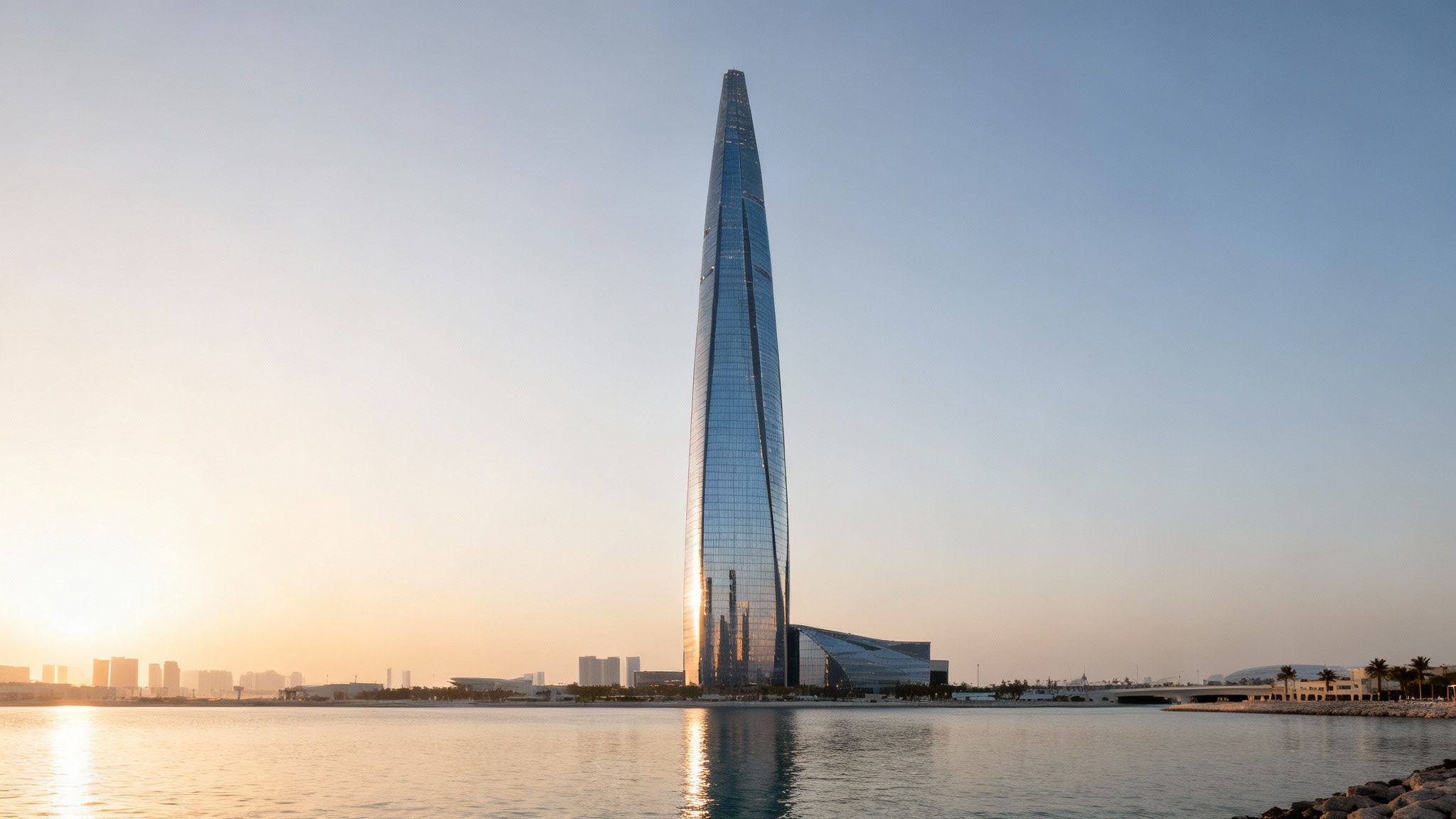
Hydra Tower Abu Dhabi isn't just another building; it's a core piece of Al Reem Island's ambitious master plan. It represents a careful blend of eye-catching design and incredibly complex engineering. Think of it less as a set of towers and more as a blueprint for creating a thriving urban community in a highly competitive market.
Following its journey from concept to reality provides real-world lessons for developers, investors, and engineers working on projects across Dubai and the region. At its heart, the project was driven by a commitment to build a high-value, self-contained community. This meant tackling huge challenges head-on—from building on reclaimed land to integrating perfectly into an iconic urban landscape. Every decision demonstrates how smart engineering choices directly shape a development's long-term strength and commercial success.
To give you a clearer picture, let's break down the key details of this impressive development.
Hydra Tower Abu Dhabi Key Project Highlights
The table below summarises the essential statistics and features of the Hydra Avenue Towers project.
| Feature | Specification |
|---|---|
| Project Name | Hydra Avenue Towers |
| Location | City of Lights, Al Reem Island, Abu Dhabi |
| Project Type | Mixed-Use Residential and Retail |
| Phase 1 Towers | 3 |
| Apartments | 906 |
| Real Estate Area | 945,000 square feet |
| Retail Space | 20,000 square feet |
| Initial Target | 2011 |
These figures highlight the project's significant scale and its contribution to Abu Dhabi's housing and retail landscape.
Project Scope and Impact
The Hydra Avenue Towers project was a massive undertaking. Although its original completion target was 2011, the development navigated some significant delays along the way. Despite these hurdles, the first phase brought three multi-use towers to life, injecting 906 apartments into the market. This added a huge 945,000 square feet of real estate and 20,000 square feet of prime retail space, boosting the area's growth in a big way.
At Freeline Engineering Consultants, we see projects like this and recognise the principles we apply every day in Dubai. The success of a large-scale development reinforces our core belief: a strong foundation, both literal and figurative, is everything. We channel this thinking into delivering resilient, functional, and visually compelling buildings, focusing our expertise on the G+12 market to deliver exceptional value.
Guiding Principles for Development
Pulling off a project of this scale isn't just about big ideas; it requires deep local knowledge and serious technical skill. The lessons learned from Hydra Tower are directly relevant to mid-rise projects all over Dubai.
Here are a few key takeaways:
- Navigating Regulatory Frameworks: You have to know the local building codes and approval processes inside and out. It’s the only way to avoid delays that can sink a project.
- Site-Specific Engineering: Every plot of land is different. Coastal or reclaimed land, in particular, demands specialised foundation solutions that can handle unique environmental pressures.
- Integrated Design: The architectural vision, structural integrity, and MEP systems can't live in silos. They need to work in complete harmony from day one to create an efficient and valuable final product.
Our team of architectural consultants in Abu Dhabi and Dubai specialises in turning ambitious concepts into buildable, practical realities. We focus on creating spaces that don't just look impressive, but are also operationally sound and built to stand the test of time. By prioritising intelligent design and engineering from the start, we help our clients de-risk their investments and confidently reach their development goals in Dubai.
The Architectural Vision Shaping Al Reem Island
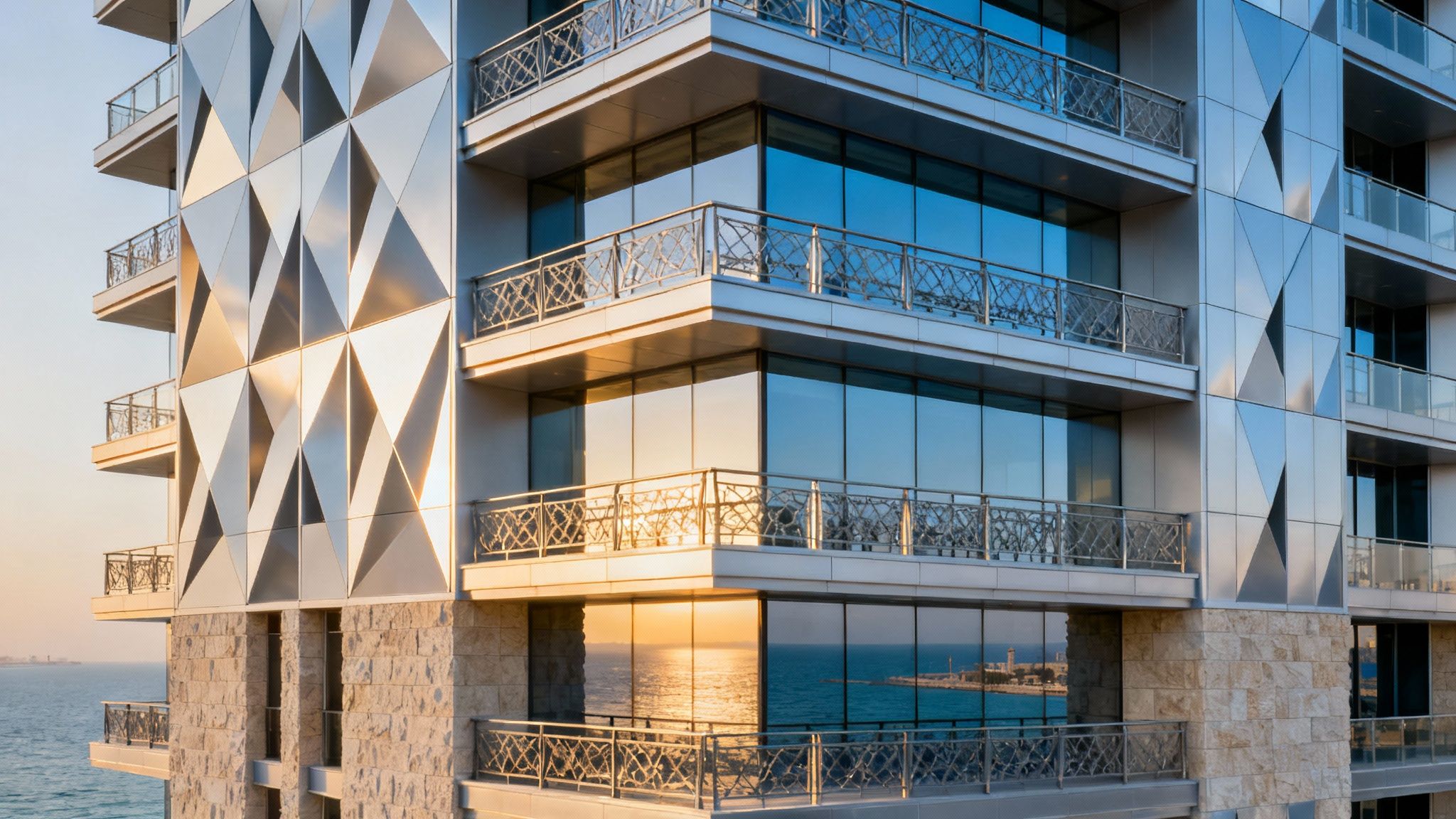
In a city as dynamic as Abu Dhabi, architecture is so much more than a building's outer shell. It tells a story about the structure’s role and its place in the world. For Hydra Tower Abu Dhabi, that story is all about modern luxury, carefully crafted to thrive in its demanding coastal environment. The design choices here weren't just for looks; they were a deliberate strategy to create highly desirable living spaces that people would clamour for.
The vision went far beyond simply creating another striking silhouette on the Al Reem Island skyline. It was about performance. The very shape of the towers was meticulously sculpted to maximise the two most valuable assets in any residential property: natural light and incredible views.
By orienting the buildings to capture sweeping waterfront and city vistas, the architects instantly boosted the appeal of every single apartment. This is a core principle we live by in our work: great design is a direct line to commercial success.
Designing a High-Performance Facade
In the UAE, a building's facade isn't just a decorative element; it's a high-performance shield. The team behind Hydra Tower knew the facade had to be the first line of defence against the intense solar radiation and heat that define our climate.
Think of the building's exterior as a sophisticated filter. It’s engineered to let plenty of natural light pour into the interiors, which cuts down on the need for artificial lighting and creates a bright, welcoming atmosphere. At the same time, it has to block harsh glare and minimise solar heat gain—a critical job for keeping indoor temperatures comfortable and energy bills in check.
This double-duty function is the hallmark of smart, climate-responsive design. It’s a technical puzzle that, when solved well, has a massive impact on everything inside, from a resident's comfort to the building's long-term running costs. It’s a standard of excellence that the very best top architecture firms in Dubai aim for, perfectly blending aesthetics with real-world function.
Balancing Privacy and Community
A truly successful residential tower does more than just stack homes on top of each other; it nurtures a sense of community. The architectural layout of Hydra Tower Abu Dhabi skillfully walks the line between the need for private, quiet living spaces and the human desire for social connection. This is where clever internal planning really shines.
The internal layouts were organised to create a natural flow between the private apartments and the shared communal areas. This isn’t a happy accident. It’s a calculated design choice meant to encourage interaction and make amenities like swimming pools, gyms, and retail spots feel like a genuine extension of your home.
Thoughtful architecture creates more than just buildings; it builds communities. By integrating shared spaces into the core design, a tower transforms from a vertical collection of apartments into a vibrant, interconnected neighbourhood.
Weaving together private and public spaces like this is absolutely essential for a high-quality living experience. It doesn't just make residents happier; it significantly strengthens the development's long-term value.
The Freeline Engineering Approach
At Freeline Engineering Consultants, we know that architecture is a powerful tool for turning a client's commercial vision into reality. For our G+12 projects in Dubai, we push for design philosophies that are both visually compelling and firmly grounded in commercial sense.
Our process involves:
- Maximising Site Potential: We dig deep into every site's unique characteristics to make sure our designs take full advantage of views, natural light, and other environmental perks.
- Integrating Form and Function: We believe a building's look and its performance must be inseparable, especially when it comes to climate and energy efficiency.
- Creating Value Through Design: Our focus is on creating layouts that are easy to live in, foster a sense of community, and ultimately deliver better returns for developers and investors.
The architectural success of Hydra Tower Abu Dhabi highlights a crucial industry truth: intelligent, well-executed design isn't an expense—it's an investment. It’s the very foundation on which happy residents, operational efficiency, and lasting property value are built. This is the expertise we bring to every single project we take on in Dubai.
The Clever Engineering Behind The Structure
Putting up a landmark tower is a tough job in the best of circumstances. But when you’re building on reclaimed land, like with Hydra Tower Abu Dhabi, the challenge is on a whole different level. It’s like trying to build a castle on sand—every calculation has to be spot-on, and the engineering must be robust enough to guarantee stability for decades to come.
The structural engineering for Hydra Tower is a masterclass in solving complex environmental problems. Let's break down the smart solutions that make this development not just possible, but incredibly resilient. This is the kind of safety-first, problem-solving thinking we bring to every mid-rise project, ensuring your investment is built on solid ground.
This infographic gives you a look at the deep foundation system used for the tower, showing reinforced concrete piles being driven deep into the reclaimed shoreline.
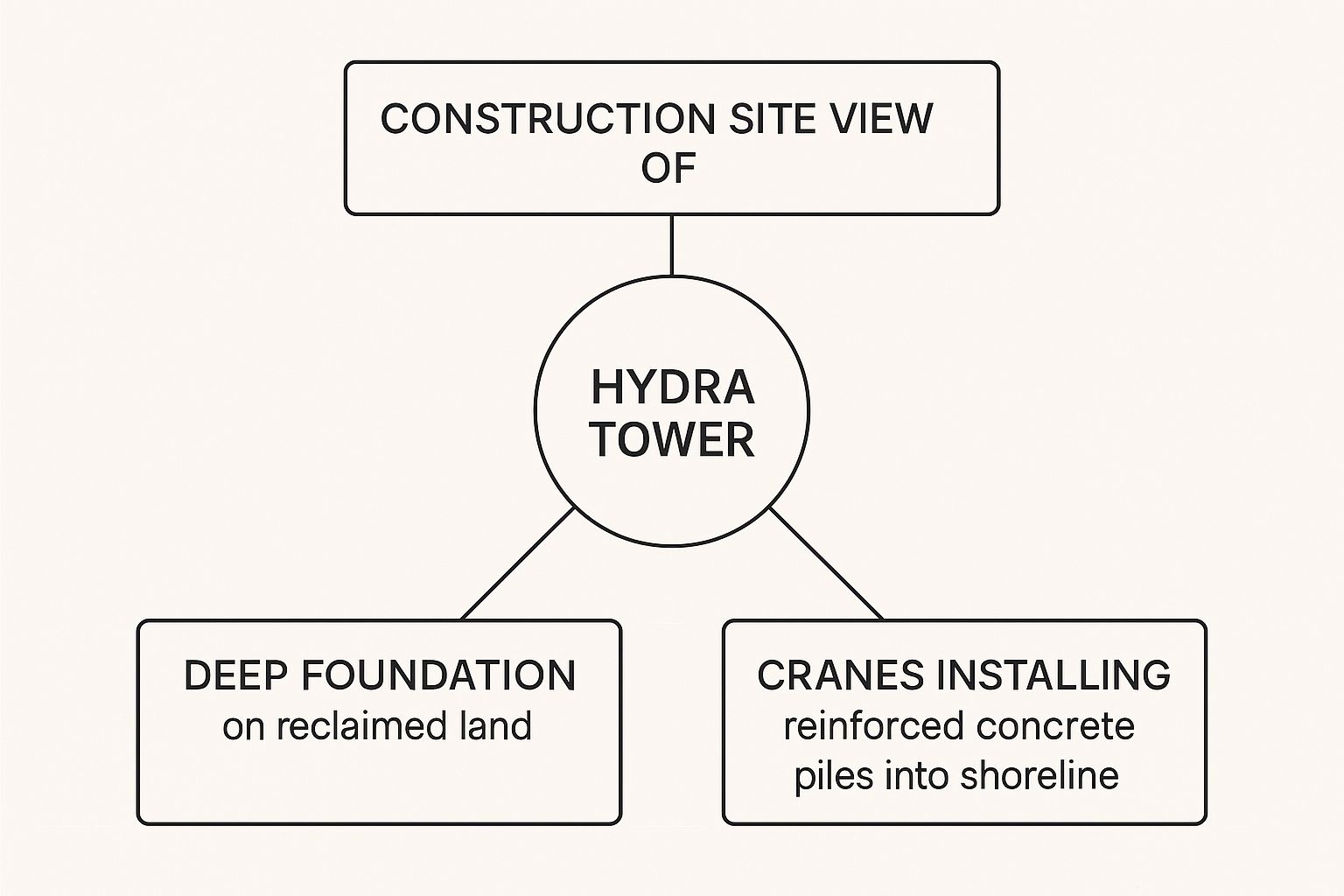
As you can see, the key is to anchor the structure deep into stable ground, completely bypassing the looser, less reliable top layers of the man-made land.
Anchoring Firmly On Reclaimed Land
The very first hurdle for Hydra Tower Abu Dhabi was its location. Reclaimed land doesn't have the natural density and stability of original soil, which makes it a poor base for something so heavy without some serious engineering work. The solution lies far beneath the surface, in a technique known as deep piling.
Think of the tower as a giant tree. For that tree to stand tall against strong winds, its roots need to dig deep into the earth to get a firm grip. It's the same idea here. Deep piling involves driving long, powerful columns of reinforced concrete—the "piles"—through the unstable reclaimed soil until they hit solid bedrock or a much denser soil layer far below.
These piles become the tower's roots. They transfer the immense weight of the entire building off the weak surface soil and down to the strong, unmoving ground beneath. It’s this foundational strategy that securely anchors the building, preventing it from settling or shifting over time.
The Reinforced Concrete Skeleton
Once the foundation was sorted, the next step was the tower's "skeleton"—its structural frame. For Hydra Tower, the team used reinforced concrete, a material picked for its massive strength, durability, and resistance to fire. This isn't just a simple grid; it’s a carefully designed system built to handle incredible forces.
The frame essentially has two main jobs:
- Handle Vertical Loads: It has to safely carry the gravitational weight of the entire building—from the concrete floors and walls to every piece of furniture and every person inside—all the way down to the deep pile foundation.
- Resist Lateral Forces: Being in a coastal spot like Abu Dhabi means the structure has to stand up to powerful horizontal forces, especially high winds, without swaying too much.
This dual-purpose design keeps the building stable and secure no matter the conditions, giving residents and investors total peace of mind. To get a better feel for how these elements work together, you can take a look at our insights into structural engineering in Dubai.
Choosing Materials For Coastal Durability
The coastal environment in the UAE is famously tough on building materials. The mix of high humidity, salty air, and intense sun can speed up the corrosion of steel and wear down concrete if they aren't managed correctly. The engineers behind Hydra Tower Abu Dhabi were very deliberate in their material choices to ensure the building would last.
In the Gulf's coastal climate, durability is not an option—it is a necessity. Selecting the right materials and construction techniques is the most critical decision in safeguarding a building’s structural integrity and asset value for the long term.
This meant using special concrete mixes with low permeability, which stops salt and moisture from seeping in and reaching the steel reinforcement inside. On top of that, specialised protective coatings are applied to steel components to shield them from the corrosive salty air. These forward-thinking measures are crucial for the building’s long-term health and keeping future maintenance costs down.
At Freeline Engineering Consultants, this is the level of foresight we bring to all our work in Dubai. Our deep understanding of local environmental conditions allows us to specify materials and techniques that guarantee longevity. We don't just build for today; we engineer robust structures designed to stand the test of time, protecting your investment for decades.
Advanced MEP Systems for Modern Urban Living
If you think of a building’s structure as its skeleton, then the Mechanical, Electrical, and Plumbing (MEP) systems are the vital organs working tirelessly behind the scenes. For a massive development like Hydra Tower Abu Dhabi, these systems are a complex network making sure residents are comfortable, safe, and that the building runs efficiently. They are the silent engines powering modern city life.
This is where real engineering mastery shines. It’s never just about installing pipes and wires; it’s about designing an integrated system that acts like a single, intelligent unit. For our clients in Dubai, getting this integration right is critical because it has a direct impact on long-term running costs and the overall quality of the build.
High-Efficiency Climate Control
In a climate like Abu Dhabi's, a building's Heating, Ventilation, and Air Conditioning (HVAC) system is its most crucial life-support feature. The big challenge for Hydra Tower was delivering powerful, consistent cooling to hundreds of apartments without the energy bills going through the roof.
The solution was found in high-efficiency systems, intelligently designed from the very start. These systems use advanced chillers and variable air volume (VAV) units that cleverly adjust cooling based on real-time demand. Instead of running at full blast all day, the system sends cooling only where it’s needed, which dramatically cuts down on energy waste. For projects of this scale, proper implementation is everything, often requiring specialised commercial HVAC installation services.
This smart design approach is a core principle here at Freeline Engineering Consultants. We focus on specifying MEP systems that deliver maximum comfort with a minimal environmental and financial footprint—a key selling point for any G+12 project in Dubai.
Smart Electrical and Safety Infrastructure
Powering a modern apartment complex is much more involved than just connecting to the grid. The electrical infrastructure inside Hydra Tower Abu Dhabi is like a miniature smart grid, built for reliability, safety, and efficiency. It guarantees a stable power supply for thousands of residents while embedding robust safety features.
Key elements of this include:
- Redundant Power Circuits: Essential systems like lifts, fire pumps, and emergency lights have backup power sources to ensure they keep running during an outage.
- Advanced Fire Detection: A sophisticated network of smoke detectors, heat sensors, and sprinklers is wired directly into the building's central command, allowing for instant alerts and automated responses.
- Efficient Lighting Solutions: Using LED lighting and motion sensors in common areas helps to further bring down the building's overall energy consumption.
Understanding what MEP in construction truly involves makes it clear how these separate fields—mechanical, electrical, and plumbing—must be perfectly synchronised to create a safe and functional building.
Sophisticated Plumbing and Water Management
Finally, the plumbing systems act as the building's circulatory network, managing everything from the fresh water supply to the safe disposal of wastewater. In a massive project like Hydra Tower, this demands meticulous planning to maintain consistent water pressure across every floor and to have a drainage system that can handle peak demand without issues.
A building's MEP system is its operational heartbeat. A well-designed system is invisible to its occupants, providing seamless comfort and safety, while a poorly designed one becomes a constant source of problems and expenses.
The Hydra Avenue Towers were designed to offer a luxury lifestyle, with amenities that lean heavily on this MEP backbone. The development's six towers—which include 906 residential units and 19 townhouses—are all supported by a five-story podium packed with swimming pools, gyms, and saunas. Each of these facilities places unique demands on the plumbing and electrical infrastructure, highlighting the need for a holistic design that anticipates what residents need and ensures everything runs flawlessly.
At Freeline Engineering Consultants, our expertise lies in designing and integrating these complex MEP systems for mid-rise projects across Dubai. We ensure that every component works in perfect harmony, delivering a building that is not only comfortable and safe but also efficient and cost-effective to run for years to come. This is the unseen engineering that defines a truly premium development.
Your Ideal Partner for Dubai G+12 Projects
The lessons learned from a landmark development like Hydra Tower Abu Dhabi are powerful, but they all boil down to one simple truth: ambitious projects need specialised expertise to succeed. When it comes to mid-rise G+12 developments in Dubai, our firm, Freeline Engineering Consultants, is that specialist. We don't just design buildings; we engineer long-term value for our clients.
Our focused approach is what really sets us apart. While many firms stretch their resources thin trying to be everything to everyone—from small villas to massive skyscrapers—we’ve deliberately honed our skills on the unique challenges of mid-rise construction. This specialisation means we bring a depth of knowledge to your project that a generalist firm simply can't match.
Navigating Dubai with Precision
A deep, practical understanding of Dubai Municipality regulations isn’t just a nice-to-have; it's absolutely critical for project success. Our team has spent decades navigating these complex frameworks, which allows us to anticipate requirements, prepare flawless documentation, and secure approvals much faster. This proactive approach helps you avoid the costly delays and redesigns that often plague projects managed by less experienced consultants.
We see our role as translating your vision into a practical, buildable plan that respects your budget without ever compromising on quality. This client-first mindset is at the heart of everything we do. We’re not just a service provider; we're your strategic partner, committed to de-risking your investment and maximising your return from day one.
In Dubai's fast-paced construction scene, speed to market is everything. Our specialised knowledge of G+12 regulations isn't just a convenience—it's a major commercial advantage that gets your project approved and built with more certainty and efficiency.
Our commitment to excellence also shapes our approach to building construction project management, where we integrate every phase for a truly seamless execution.
Our Specialised Approach to Mid-Rise Projects
A G+12 project demands a completely different mindset than a low-rise villa or a super-tall tower. Everything from the structural loads and MEP system integration to fire safety strategies has its own unique parameters. Our intense focus on this specific building type means we've refined our processes to tackle these challenges with maximum efficiency.
We’ve built our reputation on engineering solutions that are not only robust and compliant but also incredibly cost-effective. By optimising material selection and construction methods specifically for the mid-rise scale, we help our clients achieve superior results without unnecessary spending. This is how we build with certainty.
The table below gives you a clear, side-by-side look at how our dedicated services stack up against the industry standard for G+12 projects in Dubai.
Our Expertise vs Industry Standard for G+12 Projects
| Service Area | Industry Standard Approach | Our Specialized Approach |
|---|---|---|
| Regulatory Approvals | A general understanding of Dubai codes, often leading to multiple revisions and delays. | Deep, specialised knowledge of G+12 requirements for faster, first-time approvals. |
| Structural Design | Often uses over-engineered, one-size-fits-all solutions that can increase material costs. | Optimised structural systems specifically designed for mid-rise loads, ensuring safety and cost-efficiency. |
| MEP Engineering | Generic system designs that may not be fully optimised for the building's specific usage. | Integrated and right-sized MEP systems designed for peak performance and lower long-term operational costs. |
| Client Collaboration | A transactional relationship focused on completing deliverables. | A partnership approach focused on translating the client’s vision into a buildable, profitable asset. |
Choosing Freeline Engineering Consultants means choosing a partner that is fully invested in the success of your G+12 project. We bring the lessons from major developments like Hydra Tower Abu Dhabi and apply them with the precision and focus that only a specialist can offer. Let's talk about how our expertise can make all the difference for you.
Frequently Asked Questions About Development Projects
When you're diving into the world of UAE property development, questions are going to come up. It's just the nature of the business. Drawing from our experience on projects like Hydra Tower Abu Dhabi, we can tackle some of the most common queries we hear from clients planning their own mid-rise G+12 projects here in Dubai.
What Are The Biggest Structural Risks On Reclaimed Land?
Building on land reclaimed from the sea is a whole different ball game. You're not starting with solid, naturally compacted earth, and that introduces some serious challenges. The main worry is uneven settlement. This is where the building doesn't sink uniformly over time, which can put immense stress on the structure and lead to damage.
Another major risk, especially in a seismically active region, is liquefaction. During an earthquake, the loose, water-filled soil can suddenly act like a liquid, completely losing its strength. When that happens, the foundation's integrity is shot. This is why things like advanced ground improvement and deep piling foundations aren't just recommendations; they are absolutely essential. These methods bypass the unstable topsoil and anchor the building's weight directly onto solid bedrock far below the surface.
How Much Do Smart MEP Designs Really Save?
The long-term savings from a smart Mechanical, Electrical, and Plumbing (MEP) design are huge—we're talking 15-25% in reduced operational costs every year. It’s not just one thing; the savings come from a combination of smart choices.
For instance, high-efficiency HVAC systems that use advanced sensors and variable-speed drives only cool the spaces that need it, when they need it. This alone slashes the electricity consumption, which is always the biggest operational expense for any building in the UAE. Add in smart electrical grids with LED lighting and motion sensors to cut wasted power, and you see how the savings stack up.
Investing in a well-engineered MEP system during the design phase pays for itself many times over during the building's lifecycle. It is the single most effective way to reduce long-term operational costs and increase a property's net operating income.
That initial investment in better tech and smarter design isn't a cost—it's a direct route to a more profitable and valuable building for years to come.
What Are The Most Common Project Delays In Dubai?
In Dubai's fast-moving construction scene, a few common culprits are responsible for most project delays. Knowing what they are is the first step to avoiding them.
- Regulatory Approval Delays: This is the big one. Submitting incomplete or incorrect documents to authorities like Dubai Municipality can bring everything to a standstill. You need a deep, current understanding of the byelaws and a perfectionist's approach to paperwork to get approvals quickly.
- Poor Sub-Consultant Coordination: A project is a team sport with lots of specialists—soil engineers, fire safety experts, and more. If the lead consultant isn't integrating their work flawlessly, you end up with conflicting plans and on-site mistakes that stop progress dead in its tracks.
- Supply Chain Disruptions: An unexpected shortage of a key material can cause a domino effect, halting multiple stages of work. Good procurement planning is about anticipating these issues before they happen.
- Unforeseen Site Conditions: Sometimes you dig in and find things you weren't expecting, like old utility lines or tricky ground conditions. This can force you into costly and time-consuming redesigns.
An experienced lead consultant has seen all of this before and knows how to plan for it, ensuring the project keeps moving forward smoothly.
How Do Material Choices Impact A Building's Lifecycle?
The materials you choose have a massive effect on a building’s long-term costs, durability, and bottom line. Just picking the cheapest option upfront is a classic mistake that ends up costing a fortune later. Here in the UAE's harsh coastal climate, using standard concrete or unprotected steel is asking for trouble from salt and humidity.
You’ll find yourself facing high maintenance and repair bills just a few years in, which eats away at the building's value. Spending a bit more at the start for higher-grade, corrosion-resistant materials and protective coatings will dramatically cut those future expenses.
It's the same story with insulation. Materials like specialised glazing and high-performance facade panels mean lower energy bills for the life of the building. Making smart material choices isn't about spending more; it's a long-term investment in your asset's financial health and resilience. It’s a core principle we build into every G+12 project, ensuring our clients get buildings that are made to last and perform.
At Freeline Engineering Consultants, we provide the specialised expertise needed to navigate these challenges and deliver successful G+12 projects in Dubai. Our deep knowledge of local regulations and our focused approach to mid-rise engineering ensure your vision becomes a reality, on time and on budget.
Discover how our dedicated team can bring certainty and value to your next project. Visit us at https://www.freelineeng.ae to learn more.